Viral Hooks
Trending short videosExplaining the decline of spontaneity
A

@ashi.branding

Instagram · Talking Head Edit

@ashi.branding The most aspirational thing right now isn’t wealth, it’s the ability to be spontaneous. Anthropologist Robin Dunbar said that the strongest predictor of close friendships wasn’t how much you liked someone, but how often you saw them spontaneously. But today, spontaneity is economically and socially expensive, especially for Gen Z. And the brands that are building for the desire it left behind are becoming the most valuable. #socialmedia #loneliness #genz #branding #community

View original on Instagram

The edit1 shot · 13 text
Shots Text1:21

Performance

Views
862.9K
Likes
38.8K
Comments
328
Engagement
4.5%
Outlier
198.9×
Length · 28 Jun 2026
1:21

Video #35154 · Talking Head Edit

Explaining the decline of spontaneityfrom @ashi.branding

[01]

Overview

The creator presents and defends the thesis that modern loneliness is caused by a decline in spontaneity rather than a decline in community. She supports this argument with examples like the disappearance of unplanned parties, cites anthropological research on friendship, and details the financial and social pressures (like performance for social media) that make spontaneity a luxury for Gen Z. The video concludes by reframing intimacy and questioning who will build solutions for this lost desire for spontaneous connection.

[02]

Simple outline

  1. 1State counter-intuitive thesis
  2. 2Provide cultural & expert proof
  3. 3Diagnose the root cause
  4. 4Reframe concept as status symbol

[03]

Related videos

[04]

Classification

Concepts
Breakdown
Elements
B-Roll CutawayImage OverlayText Overlay

[05]

Hook analysis

What stops the scroll in the first 3 seconds

Title hook · 25%

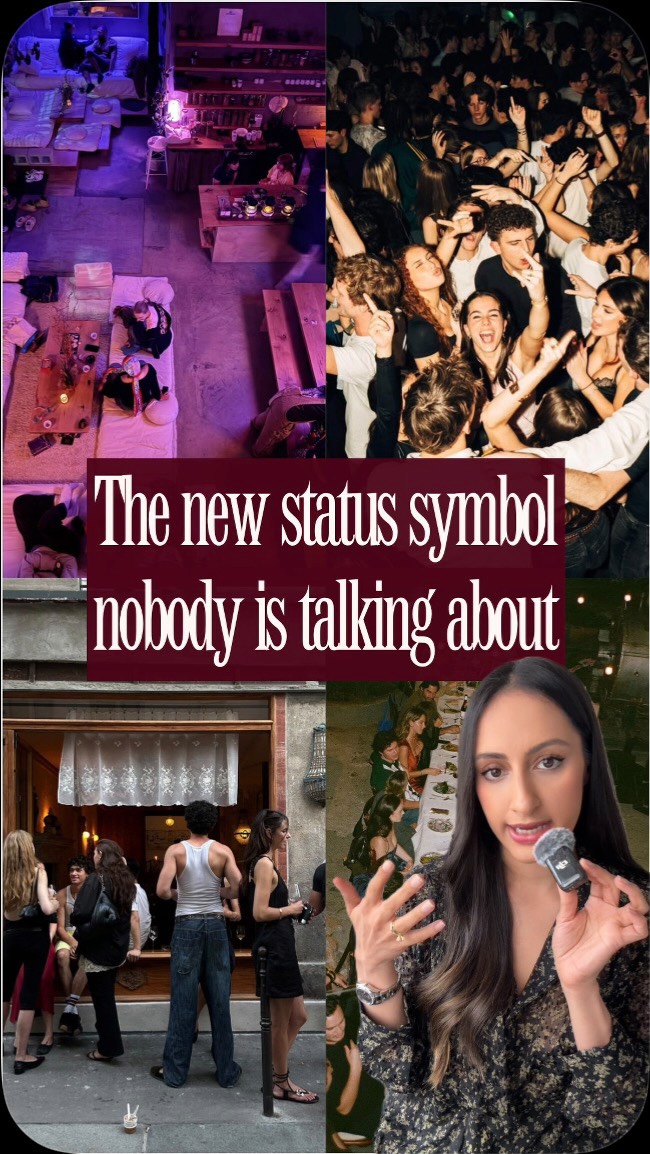
The new status symbol nobody is talking about

Verbal hook · 60%

We're lonely not because community is dying, but because we're not spontaneous anymore.

Visual hook · 15%

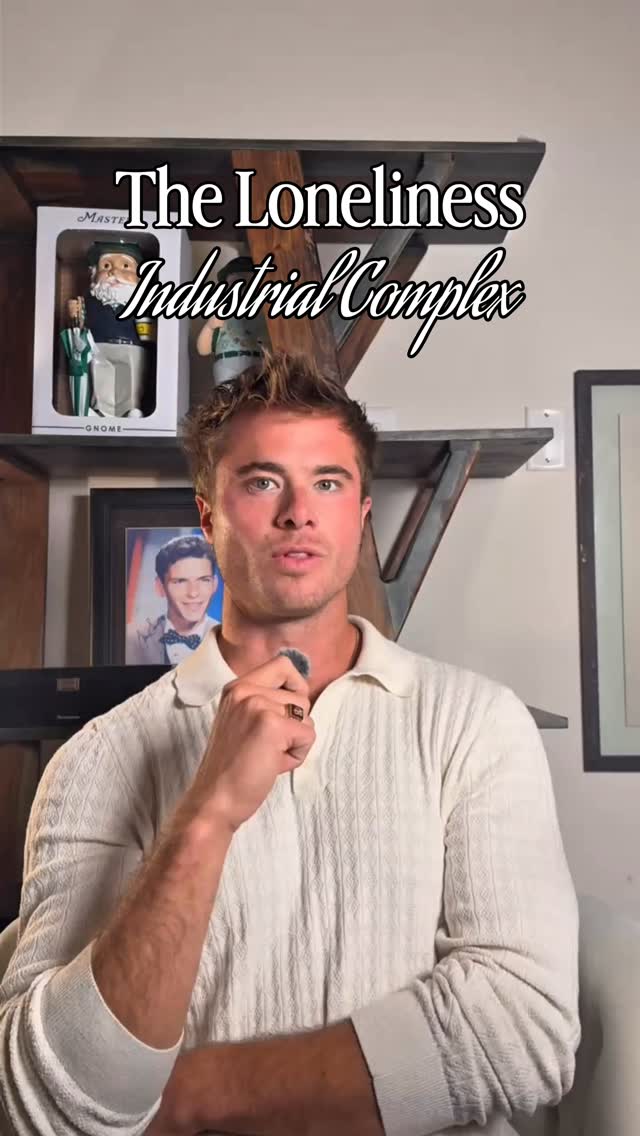
The video opens with a four-panel collage showing dynamic social scenes: an overhead view of a bar, a dense concert crowd, people standing outside a venue, and a long dinner party table. This immediately establishes the theme of social gathering and community.

[06]

Hook template

Steal this for your own video

We're not struggling with [widely accepted cause] — we're actually struggling with the loss of [overlooked root cause].

  • — We're not struggling with a lack of motivation — we're actually struggling with the loss of genuine rest.
  • — We're not struggling with bad spending habits — we're actually struggling with the loss of financial identity.
  • — We're not struggling with not enough content — we're actually struggling with the loss of creative silence.

[07]

Hook and payoff

The promise the opener makes, and how the video pays it back

Hook

A bold, counter-narrative statement that challenges a commonly held belief about a universal human experience.

Payoff

A powerful re-framing of the central theme into a high-status concept, followed by an open-ended question that leaves the viewer with a new perspective and a call to think further.

[08]

Narrative framework

The structural pattern this video runs on

Framework

The Cultural Diagnosis

To identify a widespread, relatable feeling and re-diagnose its cause by presenting a counter-intuitive thesis, supporting it with a mix of cultural observation and expert authority, and concluding by reframing the core concept as a new form of status or luxury.

  1. 1

    The Counter-Narrative Hook

    Introduce a provocative thesis that reframes a common problem, immediately positioning the argument against a conventional explanation.

  2. 2

    The Cultural Evidence Montage

    Rapidly present a series of relatable, real-world observations that serve as initial, anecdotal proof for the thesis.

  3. 3

    The Expert Validation

    Introduce an external, credible source (e.g., a study, an expert, a historical fact) to lend academic or authoritative weight to the thesis.

  4. 4

    The Personal Implication

    Shift from broad observation to direct, personal engagement by posing a rhetorical question that forces the viewer to apply the thesis to their own life.

  5. 5

    The Generational Diagnosis

    Narrow the focus of the problem to a specific demographic or context, making the argument more targeted and concrete.

  6. 6

    The Root Cause Analysis

    Systematically break down the underlying reasons for the problem, often separating them into distinct categories (e.g., economic, social, psychological) and providing specific examples for each.

  7. 7

    The Consequence & Redefinition

    Explain the negative outcome of the identified problem and redefine a core related concept, contrasting the current reality with an ideal state.

  8. 8

    The Status Reframe & Final Question

    Conclude by elevating the core concept into a new form of scarce resource or status symbol, and end with a thought-provoking, open-ended question that extends the conversation.

Themes

  • Social connection
  • Modern loneliness
  • Generational differences
  • Economic pressures
  • Social media performance

Techniques

  • Voiceover narration
  • Visual evidence
  • Montage editing

Trends

  • Cultural commentary
  • Sociological analysis

Post caption

The most aspirational thing right now isn’t wealth, it’s the ability to be spontaneous. Anthropologist Robin Dunbar said that the strongest predictor of close friendships wasn’t how much you liked someone, but how often you saw them spontaneously. But today, spontaneity is economically and socially expensive, especially for Gen Z. And the brands that are building for the desire it left behind are becoming the most valuable. #socialmedia #loneliness #genz #branding #community

Text overlays

  • title · beginning

    The new status symbol nobody is talking about

  • contextual · beginning

    We're lonely not because community is dying, but because we're not spontaneous anymore.

  • contextual · beginning

    Think about it: Unplanned house parties no longer exist,

  • contextual · beginning

    Restaurant walk-in culture is declining.

  • informational · beginning

    The dying art of the spontaneous restaurant walk-in is ruining food for me

  • contextual · middle

    found that the strongest predictor of close friendships and community wasn't how much you like someone, but how often you saw them spontaneously.

  • informational · middle

    Why is social connection so hard for Gen Z?

  • contextual · middle

    because for them, spontaneity is financially and socially expensive.

  • contextual · middle

    While socially every activity has become a performance

  • contextual · end

    As spontaneity disappears, friendships become dependent on scheduled contact.

  • contextual · end

    but the experience of being chosen even when it's inconvenient.

  • contextual · end

    spontaneity is now a luxury good.

  • call-to-action · end

    Who's building for the desire it left behind?

Transcript

We're lonely no because community is dying, but because we're not spontaneous anymore. Think about it. Unplanned house parties no longer worst, restaurant walking culture is declining, and the pressure to perform online means every post comes with the fear of being vulnerable. Anthropologist Robin Dunbar found that the strongest predictor of close friendships and community wasn't how much you liked someone, but how often you saw them spontaneously. Tier feeling of genuinely being known is built in those impulse moments. But when was the last time you showed up at your friend's door without notice? And it's not just you. Research says gen z are impulsively socializing less than previous generations because for them, spontaneity is financially and socially expensive. 42% live paycheck to paycheck, and last minute plans often carry a financial penalty like surge pricing, while socially, every activity has become a performance for the algorithm. It's why even the Gen z dinner party is a curated act with elaborate themes. Because if you didn't document it, did it even happen? Spontaneity disappears, friendships become dependent on scheduled contacts, calendar invites, and a mutual agreement to actively prioritize each other. Intimacy isn't built on the time spent with other people, but the experience of being chosen even when it's inconvenient. And like everything else that becomes rare, spontaneity is now luxury good. Who's building for the desire it left behind?

Explaining the decline of spontaneity | Viral Hooks