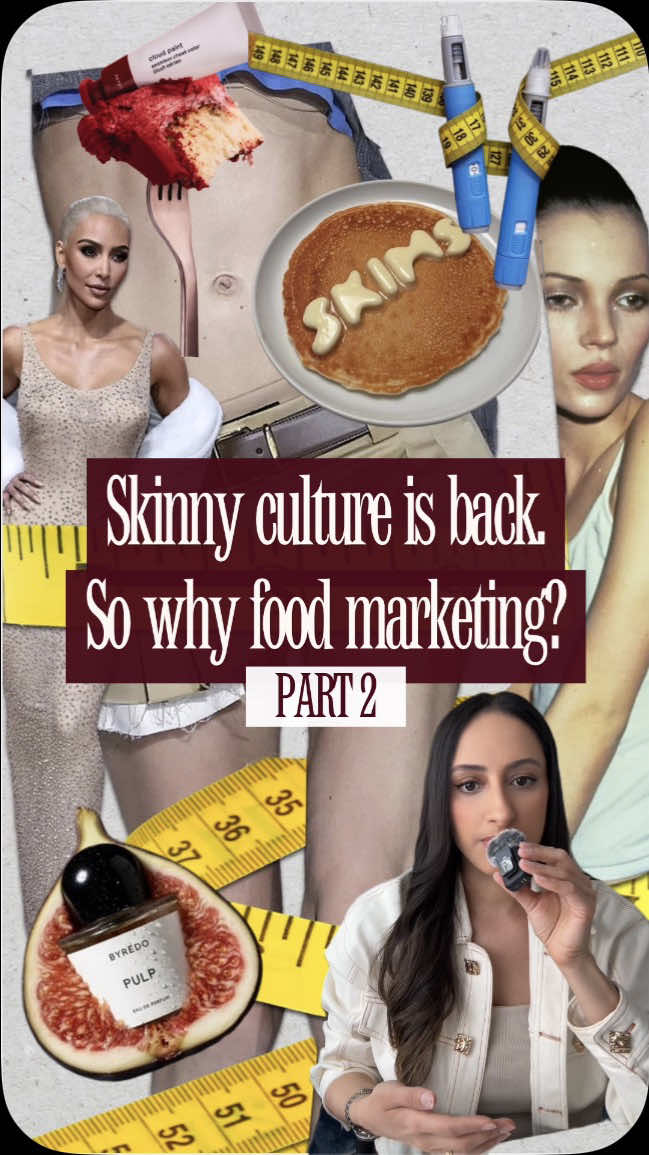
Video #35760 · Talking Head Edit
Explaining study on thinness and salaryfrom @sammicohentalks
The creator breaks down a new Harvard study, explaining its finding that unemployed women taking GLP-1 weight-loss drugs were hired at a significantly higher rate. She specifies this effect is tied to first impressions in the hiring process, then connects this data to the broader, pre-existing concepts of 'pretty privilege' and the 'beauty premium' in the workplace, citing other research. She concludes by framing this knowledge as a tool to help viewers get ahead professionally.
- 1State provocative thesis
- 2Present specific data
- 3Add critical nuance
- 4Connect to broader concept
ConceptsBreakdownCase Study BreakdownHeadlines
ElementsB-Roll CutawayImage OverlayTitle Text HookFollow / Subscribe CTA
[05]
Hook analysis
What stops the scroll in the first 3 seconds
Title hook · 55%
being thin has a salary
Verbal hook · 40%
Harvard just measured what being thin is worth.
Visual hook · 5%
A direct-to-camera shot of the speaker using hand gestures, with the Harvard University crest graphic overlaid next to her head, establishing authority and a clear topic.
[06]
Hook template
Steal this for your own video
[prestigious institution] just measured what [socially taboo advantage] is worth
- — MIT just measured what being attractive is worth.
- — Yale just measured what being tall is worth.
- — Oxford just measured what having an accent is worth.
[07]
Hook and payoff
The promise the opener makes, and how the video pays it back
Hook
A provocative, quantifiable statement that connects two seemingly unrelated concepts, promising a surprising insight from a credible source (e.g., 'Being thin has a salary').
Payoff
A direct call to action that positions the creator as an expert guide who provides similar valuable insights, encouraging a follow for future content.
[08]
Narrative framework
The structural pattern this video runs on
Framework
The Data-Driven Reframe
To present a surprising, data-backed finding, add a critical layer of nuance, and then reframe it within a broader, more familiar concept to make the new information feel both shocking and inevitable.
- 1
The Core Finding Reveal
State the central, surprising discovery in a clear and direct sentence, establishing the main point of the argument.
- 2
The Data-Driven Proof
Substantiate the core finding with a specific, impactful statistic or piece of hard data to make the claim tangible and credible.
- 3
The Critical Qualifier
Introduce a crucial limitation or condition to the finding. This adds nuance, demonstrates expertise, and focuses the argument on a specific mechanism.
- 4
The Causal Interpretation
Explain the 'why' behind the qualifier, identifying the specific context or mechanism where the effect is most potent (e.g., 'at the point where the first impression matters').
- 5
The Broader Context Bridge
Connect the specific, new finding to a larger, well-understood concept or societal trend, making the new information feel like a logical extension of existing knowledge.
- 6
The Concluding Moral
Summarize the entire argument with a powerful, memorable statement that reframes the viewer's perspective and provides a clear, thought-provoking takeaway.
Themes
- Social bias
- Economic inequality
- Beauty standards
- Career advancement
Techniques
- Data interpretation
- Storytelling with statistics
- Social commentary
Trends
- Explainer content
- News analysis
Post caption
ok the backstory on this study is the best part. Harvard economist Rebecca Diamond only dug into this because a friend told her people started treating her completely differently after she went on a GLP-1 so she pulled data on 10,000+ people to check.
So yeah… unemployed women who started GLP-1s got hired way more. But only the ones actively job hunting, so if they already had a job, there was basically no bump.
What these numbers ultimately tell us is that the behavior change is rooted in the “improvement” during that first impression.
Text overlays
Transcript
Harvard just measured what being thin is worth. This new paper from a Harvard economist has a wild finding. Unemployed women who started GLP ones got hired at way higher rates. The employment rate for women who weren't working jumped 27 percentage points when they were on a GLP one, and that percentage is from a year and a half after they started taking it. Yet this bump only showed up for women who were job hunting. Women who were already working and taking GLP ones weren't more likely to get a promotion or a better job. So the outcome really changes here at the point where the first impression matters the most. This is at the interview and ultimately tier hiring decision. And if we take a step back, let's be real tier. This isn't that surprising given all of the research that's already come out around what is essentially pretty privileged in the workplace. Sociologists have long documented a beauty premium where workers that are deemed conventionally attractive earn more on average than their peers. In fact, one study found that attractive people earn about 20% more. So pretty privilege is real, and it's not fair, but pretending that it isn't real is actually its own kind of tax. And I'm Sammy talking about stats like these to help you get ahead and the hottest business lower, so follow along for more.