@var.aunevik
Instagram · Yap
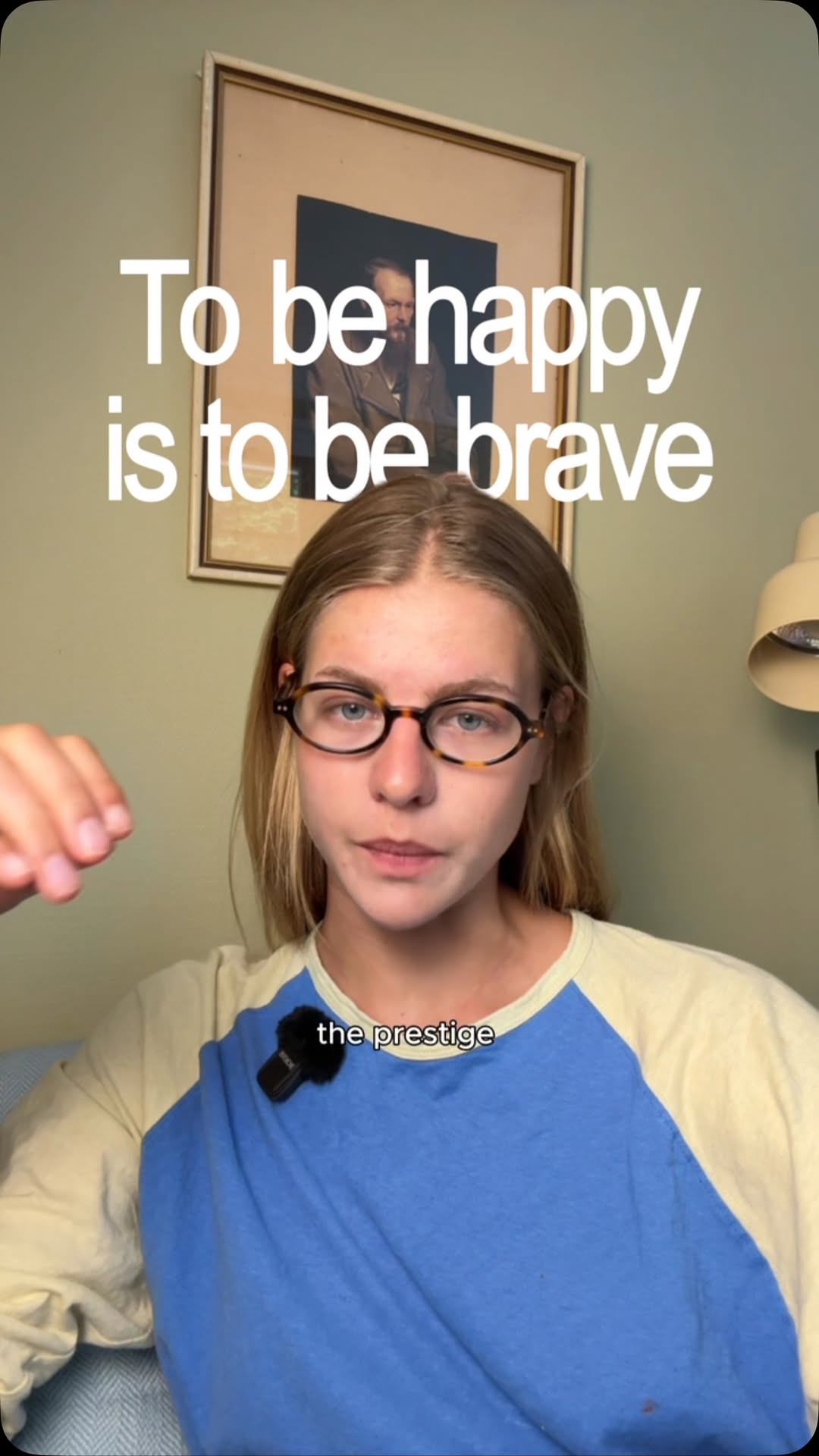
@var.aunevik don’t mind the stain on my shirt while i talk about how happiness feels kind of embarrasing

@var.aunevik
Instagram · Yap
@var.aunevik don’t mind the stain on my shirt while i talk about how happiness feels kind of embarrasing
Performance
Video #35896 · Yap
[01]
The creator delivers a monologue directly to the camera, arguing that society romanticizes unhappiness as a sign of depth while viewing happiness as naive. She refutes this by stating that appreciating simple joys is intelligent, then shares her personal fear of happiness due to its temporary nature, concluding that choosing happiness despite its risks is an act of bravery.
[02]
[03]
 659.7K2.4×Energetic monologue against haters@oldfashonedhussle · Cultural Rant
 424.9K8.3×Direct talk on happiness perspective@joeysdayinthelifee · Motivational Mantra
 502.8K32.4×Direct to camera mindset advice@viralclubhouse_ · Motivational Mantra
 2.8M82.3×Monologue on supporting other people@viralclubhouse_ · Vulnerable Monologue
 138.2K1.4×Direct advice on risk vs stability@morganhoong · Hot Take
 113.5K3.4×Passionate monologue reframing humility@bellasolanot · Motivational Mantra
 386.8K32.6×Monologue over montage about success@kolbykirschner · Motivational Mantra
 944.7K3.9×Passionate car rant about self-worth@amandanelz · Motivational Mantra
 295KExplaining why happiness is overrated@_glassmuseum · Breakdown
 568.8K49.5×Motivational speech over scenic B-roll@michelleylens · Motivational Mantra
 1.6M8.7×Raw monologue on internet culture@paigelorenze · Vulnerable Monologue
 196.7K7.5×Tough love motivational rant@higherupwellness · Motivational Mantra
[04]
[05]
What stops the scroll in the first 3 seconds
Title hook · 50%
To be happy is to be brave
Verbal hook · 45%
The prestige of being unhappy runs so deep that we protest when someone calls us happy.
Visual hook · 5%
A static, medium close-up shot of the speaker making direct eye contact with the camera, combined with a large, bold text overlay stating the video's thesis.
[06]
Steal this for your own video
To is to be
[07]
The promise the opener makes, and how the video pays it back
Hook
A bold, paradoxical statement presented as a definitive truth, which creates immediate curiosity and a desire for explanation.
Payoff
The Thesis Reaffirmed: Circle back to the opening hook, restating it as the final conclusion. The statement now carries the full weight of the preceding argument, transforming it from a provocative claim into an earned insight.
[08]
The structural pattern this video runs on
Framework
The Vulnerable Thesis Loop
Presenting a counter-intuitive thesis, deconstructing the popular opposing viewpoint, grounding the argument in personal vulnerability, and then returning to the original thesis as an earned conclusion.
The Common Misconception
Introduce a widely accepted societal norm or belief that directly contradicts the hook, establishing the central conflict of the argument.
The Misconception's Logic
Articulate the underlying (but flawed) reasoning that makes the common belief seem plausible and even prestigious, adding depth to the opposing view.
The Counter-Argument
Pivot sharply to challenge the common belief, offering an alternative, more nuanced interpretation that reframes the topic.
The Personal Vulnerability
Shift from a philosophical argument to a personal confession, revealing an emotional struggle or fear that makes the abstract concept deeply relatable and human.
The Synthesis of Fear
Connect the personal vulnerability back to the societal misconception, explaining how the two reinforce each other to create a difficult emotional state that justifies the initial thesis.
don’t mind the stain on my shirt while i talk about how happiness feels kind of embarrasing
title · throughout
To be happy is to be brave
The prestige of being unhappy runs so deep that we protest when someone calls us happy. Being a bit miserable is understood to mean that you have a certain depth, while being happy means that you haven't really looked around. Blissful ignorance or ignorance is bliss and so on. And we lean into it. Slightly off the rail reads as intelligent. But happiness is not a lack of complexity. One of the most intelligent things you can do might be to actually notice life's simple joys and take them seriously. The problem for me is that I'm often scared of feeling happiness precisely because I know that it is temporary. When it disappears, tier drop into dread feels bigger than if I just never let myself get that happy in the first place. So unhappiness ends up not only feeling safe, but also respectable, and simple joy feels risky, almost embarrassing, which is why I think to be happy is to be brave.