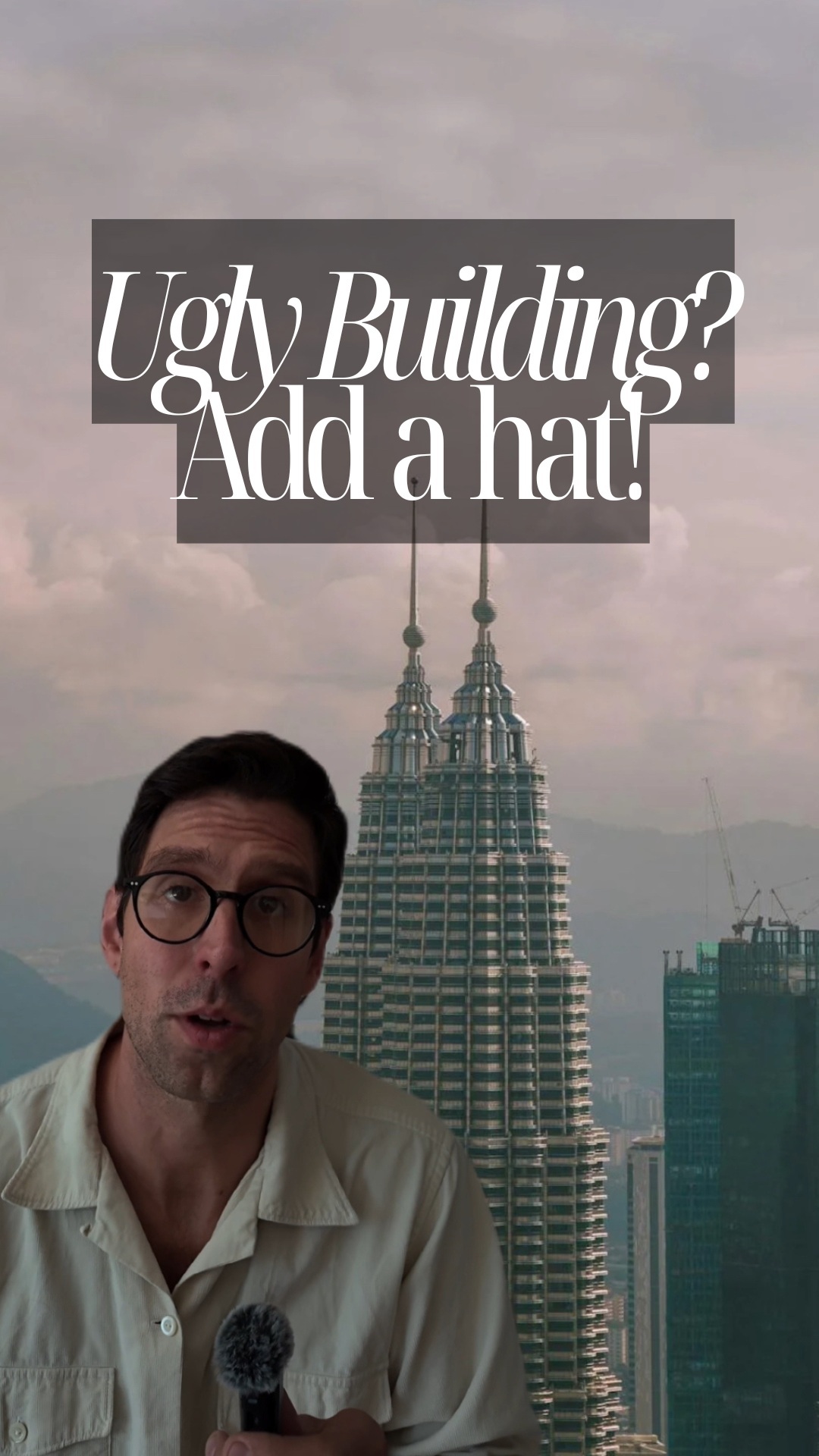
@mwmoedinger1 If there's one phrase I wish we could delete from the face of the earth, it's "break up the massing." Everyone loves historic buildings, but as architects, every time we try to design something with the same simple proportions, it gets shot down...because "you need to break up the massing."
The result??
Everything looks the same. Every new apartment project in the US is a hodge podge of bumps and articulations and materials and colors, a yard sale of design nonsense.
It doesn't have to be that way!
#design #city planning #architecture #residentialarchitecture #breakupthemassing
Architect critiques modern city buildingsfrom @mwmoedinger1
[01]
Overview
The creator, an architect, explains that the unappealing, chaotic look of new American city buildings is caused by a pervasive design principle called 'breaking up the massing.' She argues that local design review boards force architects to use multiple materials, colors, and 'bump-outs,' preventing them from creating simpler, more timeless designs. She contrasts these modern buildings with more beloved historic ones and advocates for a return to core principles like good proportion and simple materials.
Why do all new buildings in American cities look like this?
Visual hook · 5%
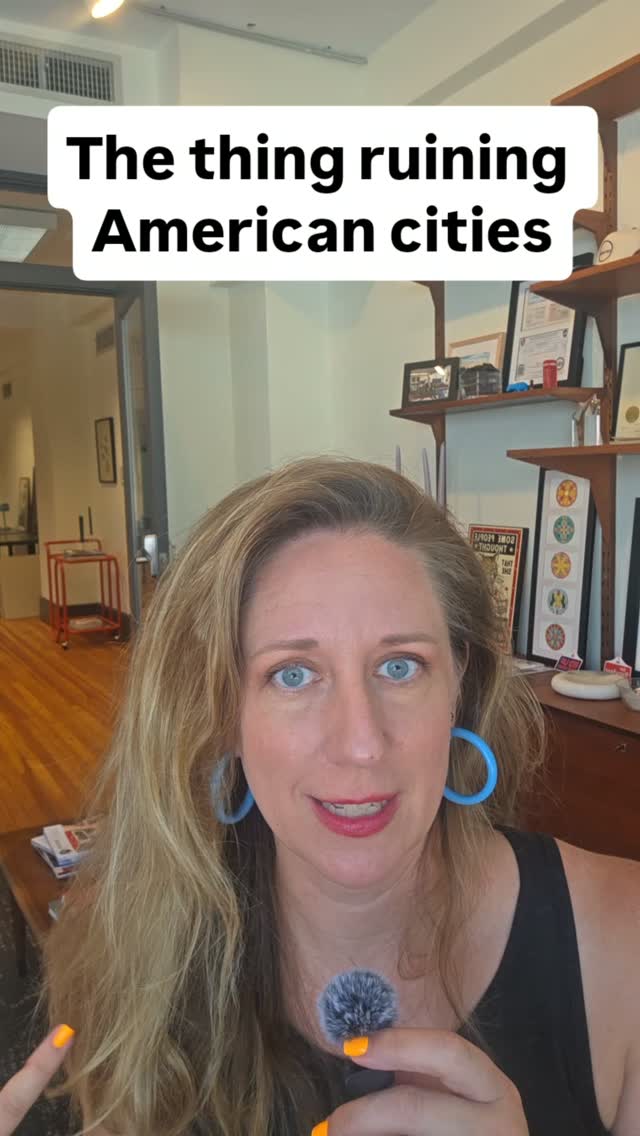
A woman speaks directly to the camera in a well-lit, professionally designed interior space, holding a small microphone, which establishes her as an expert or authority on the topic.
[06]
Hook template
Steal this for your own video
The [design rule / policy] that's quietly ruining [place or space type]
— The zoning rule that's quietly ruining American downtowns
— The open-office trend that's quietly ruining workplace productivity
— The algorithm change that's quietly ruining independent restaurants
[07]
Hook and payoff
The promise the opener makes, and how the video pays it back
Hook
Pose a direct, relatable question about a common visual annoyance ('Why do all X look like this?'), immediately showing examples to ground the viewer in a shared experience.
Payoff
The payoff is intellectual empowerment. The viewer leaves not just with an answer to the initial question, but with a new framework for understanding their environment, a named villain for their frustration, and a clear set of principles to advocate for.
[08]
Narrative framework
The structural pattern this video runs on
Framework
The Secret Culprit
Exposing the hidden, counterintuitive reason behind a widely observed but poorly understood negative phenomenon, thereby validating the audience's intuition and empowering them with insider knowledge.
1
The Culprit Reveal
Isolate and name a single, often obscure, concept or rule as the primary cause of the problem, giving the audience a specific 'villain' for their frustration.
2
The Ironic Contradiction
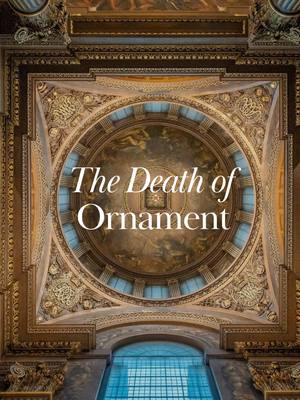
Highlight the absurdity of the situation by contrasting the negative outcome with a universally beloved or common-sense alternative that is being prevented by the 'culprit'.
3
The Mechanism of Failure
Explain the step-by-step process of how the 'culprit' forces a negative outcome, detailing the flawed logic or actions it mandates.
4
The Origin Story
Briefly contextualize the 'culprit' by explaining when and why it became popular, adding a layer of authority and historical depth to the argument.
5
The Alternative Manifesto
Clearly articulate the superior principles or methods that should be used instead, presenting a positive, constructive vision that contrasts with the flawed approach.
6
The Call to Witness
Provide the audience with a simple, tangible way to verify the claims independently (e.g., 'go to a meeting,' 'look for this next time'), which builds trust and transforms them from passive viewers to informed observers.
7
The Concluding Thesis
Summarize the core argument by reframing it around fundamental principles versus superficial details, and reiterate the call to abandon the flawed 'culprit' in favor of the superior alternative.
Themes
Urban design
Aesthetics
Regulation
Architectural principles
Techniques
Problem-solution narrative
Visual comparison
Trends
Expert commentary
Niche deep dive
Post caption
If there's one phrase I wish we could delete from the face of the earth, it's "break up the massing." Everyone loves historic buildings, but as architects, every time we try to design something with the same simple proportions, it gets shot down...because "you need to break up the massing."
The result??
Everything looks the same. Every new apartment project in the US is a hodge podge of bumps and articulations and materials and colors, a yard sale of design nonsense.
It doesn't have to be that way!
#design #city planning #architecture #residentialarchitecture #breakupthemassing
Text overlays
title · beginning
The thing ruining American cities
contextual · beginning
It's
contextual · beginning
up
contextual · beginning
design
contextual · beginning
often
contextual · beginning
architects
contextual · beginning
same
contextual · middle
buildings
contextual · middle
architects
contextual · middle
these
contextual · middle
materials,
contextual · middle
all
contextual · middle
bump
contextual · middle
colors
contextual · middle
lines.
contextual · middle
up
contextual · middle
chaotic
contextual · middle
phrase
contextual · middle
massing
contextual · middle
the
contextual · middle
became
contextual · middle
pervasive
contextual · middle
aesthetic
contextual · middle
country
contextual · middle
makes
contextual · middle
design
contextual · middle
not
contextual · middle
massing.
contextual · middle
materials,
contextual · middle
good
contextual · middle
proportion,
contextual · middle
street
contextual · middle
presence.
contextual · end
not
contextual · end
waterproofing
contextual · end
happen.
contextual · end
action,
contextual · end
a
contextual · end
Design
contextual · end
local
contextual · end
town,
contextual · end
see
contextual · end
regulations
contextual · end
enforced
contextual · end
make
contextual · end
buildings
contextual · end
everyone
contextual · end
kinds
contextual · end
by
contextual · end
this
contextual · end
aesthetics
contextual · end
building
contextual · end
or
contextual · end
letting
contextual · end
useless
contextual · end
break
contextual · end
massing
contextual · end
returning
contextual · end
principles
contextual · end
proportion,
contextual · end
line,
contextual · end
activation,
contextual · end
stuff
Transcript
Why do all new buildings in American cities look like this? It's the obsession with breaking up the massing. Everyone loves old buildings, but local design review boards often don't let architects use those same techniques in new building. They force architects to use all these different materials, all these different bump outs rank colors and lines. It just ends up looking cheap and chaotic. The phrase breaking up the massing came into vogue in the February and became so pervasive that now this aesthetic is all over the country. What makes a great design for a building is not breaking up the massing. It's simple materials. It's good proportion. It's meeting the street with good presence. It's not a waterproofing nightmare waiting to happen. If you wanna see this in action, just go to a public meeting of the design review board in your local town, and you'll see how the regulations that are being enforced make architects make these kinds of buildings when really everyone wants these kinds of buildings. By the way, this isn't about the aesthetics of whether a building is modern or historic. It's about letting go of useless phrases like break up the massing and returning to core principles like proportion, line, street activation, and all that good stuff.
Architect critiques modern city buildings | Viral Hooks