Viral Hooks
Trending short videosWhy social media content is aspirational
V

@var.aunevik

Instagram · Talking Head Edit
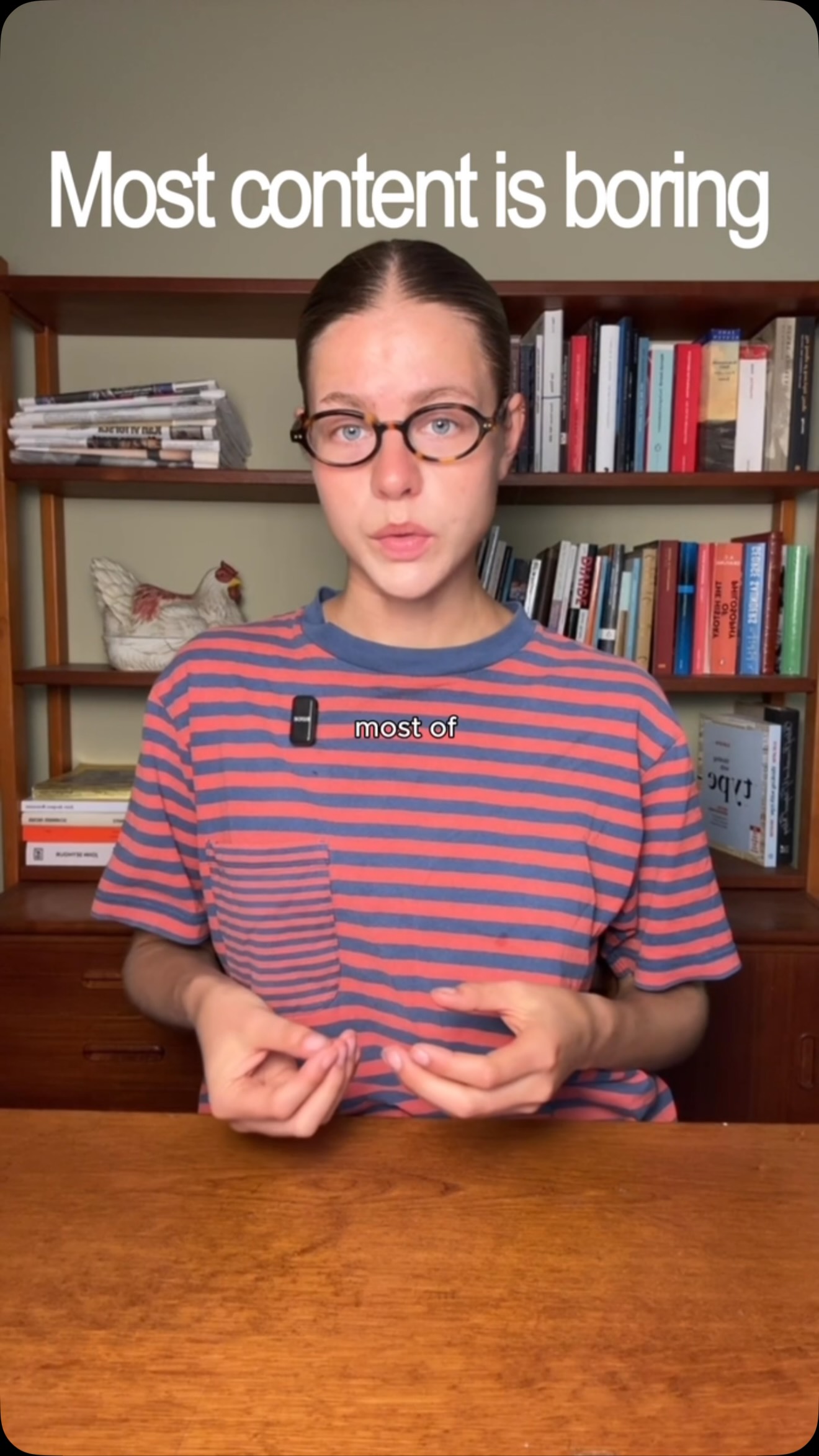
@var.aunevik Most of the content you consume online is actually not entertaining. it’s aspirational. «what I eat in a day» Building an off grid cabin Waking up at 5am to journal and exercise Most of these videos are not funny nor dramatic. Most are not even that interesting. You are watching them because it gives your imagination something to work with. You might save it for later and compare yourself to it. Suddenly, you’re imagining yourself with a six-pack, a sharp jawline, and loafers from Loro Piana. Or building a log cabin alone, wearing an overshirt made from organic cotton. The entertainment then, is your imagination, constructing scenarios for yourself. Which is also why social media can make you feel SO bad, without even changing anything in your real life. You look in the mirror and you’re exactly the same person you were 5 minutes ago. But somehow, you still feel like you’ve deteriorated. Because you have a new aspiration. In the end it is not you who consume the fantasy, it is the fantasy that consumes you

View original on Instagram

The edit1 shot · 7 text
Shots Text0:53

Performance

Views
179.8K
Likes
9.4K
Comments
82
Engagement
5.3%
Outlier
5.4×
Length · 23 Aug 2026
0:53

Video #40109 · Talking Head Edit

Why social media content is aspirationalfrom @var.aunevik

[01]

Overview

The creator presents a thesis that most online content is aspirational rather than entertaining. She provides examples like 'what I eat in a day' and 'off-grid cabin' videos, explaining that their value comes from feeding the viewer's imagination for self-comparison. The creator argues this process is why social media can make people feel bad about themselves, concluding that the fantasy presented in the content ultimately consumes the viewer.

[02]

Simple outline

  1. 1State a contrarian thesis
  2. 2Provide relatable examples
  3. 3Reveal the hidden negative effect
  4. 4Deliver a memorable final insight

[03]

Related videos

[04]

Classification

Concepts
Breakdown
Elements
B-Roll CutawayText OverlayJump Cut

[05]

Hook analysis

What stops the scroll in the first 3 seconds

Title hook · 55%

Most content is boring

Verbal hook · 40%

Most of the content you consume online is actually not entertaining.

Visual hook · 5%

A medium close-up of the speaker looking directly and seriously into the camera, establishing an authoritative and intellectual tone. The background of a bookshelf further reinforces the video's analytical theme.

[07]

Hook and payoff

The promise the opener makes, and how the video pays it back

Hook

A bold, counter-intuitive statement that challenges the viewer's perception of a common activity or type of content, forcing them to question their own behavior.

Payoff

The Final Inversion. The video concludes with a powerful, aphoristic statement that completely inverts the conventional understanding of the subject, reframing the relationship between the viewer and the topic. It's designed to be memorable, profound, and shareable.

[08]

Narrative framework

The structural pattern this video runs on

Framework

The Consumption Reversal

To deconstruct a common user behavior by revealing its hidden psychological mechanism and negative emotional consequence, culminating in a powerful re-framing of the user's relationship with the subject.

  1. 1

    The Contrarian Thesis

    The initial hook is immediately followed by a re-definition. The creator doesn't just state a problem; they re-frame the entire subject, offering a new lens through which to view it (e.g., 'It's not entertaining, it's aspirational').

  2. 2

    The Evidence Gauntlet

    The new thesis is immediately supported by a rapid-fire montage of highly specific and relatable examples that the target audience will instantly recognize. This grounds the abstract argument in concrete, shared experience.

  3. 3

    The Psychological Mechanism

    The creator explains the hidden 'why' behind the viewer's own behavior. It shifts from describing the external phenomenon to dissecting the viewer's internal process, making the argument feel personal and insightful.

  4. 4

    The Emotional Consequence

    The newly explained psychological mechanism is directly linked to a negative, relatable emotional outcome. This beat articulates a feeling the viewer has likely experienced but couldn't name, creating a moment of validation and recognition.

Themes

  • The psychological impact of social media
  • The nature of modern entertainment
  • Consumerism and identity
  • The gap between online fantasy and reality

Techniques

  • Direct address
  • Thesis-driven argument
  • Visual exemplification

Post caption

Most of the content you consume online is actually not entertaining. it’s aspirational. «what I eat in a day» Building an off grid cabin Waking up at 5am to journal and exercise Most of these videos are not funny nor dramatic. Most are not even that interesting. You are watching them because it gives your imagination something to work with. You might save it for later and compare yourself to it. Suddenly, you’re imagining yourself with a six-pack, a sharp jawline, and loafers from Loro Piana. Or building a log cabin alone, wearing an overshirt made from organic cotton. The entertainment then, is your imagination, constructing scenarios for yourself. Which is also why social media can make you feel SO bad, without even changing anything in your real life. You look in the mirror and you’re exactly the same person you were 5 minutes ago. But somehow, you still feel like you’ve deteriorated. Because you have a new aspiration. In the end it is not you who consume the fantasy, it is the fantasy that consumes you
Text overlays

  • title · beginning

    Most content is boring

  • informational · beginning

    aspirational

  • contextual · beginning

    what i eat in a day

  • contextual · beginning

    building an off grid cabin

  • contextual · beginning

    waking up at 5am to journal and exercise

  • contextual · middle

    a sharp jawline

  • contextual · middle

    and loafers from Lora Piana

Transcript

Most of the content you consume online is actually not entertaining. It's aspirational. What I eat in a day videos, building an off grid cabin or waking up at 5AM to journal and exercise. Most of these videos are not funny nor dramatic. Most are not even that interesting. You're watching them because it gives your imagination something to work with. You might save it for better and compare yourself to it. Suddenly you're imagining yourself with a six rank, a sharp jawline and loafers from Laura Piana. Or building a log cabin alone wearing an over shirt made from organic cotton. The entertainment then is your imagination, constructing scenarios for worse, which is also why social media can make you feel so bad without even changing anything in your real life. You look in the mirror and you're exactly the same person you were five minutes ago, but somehow you still feel like you deteriorated. In the end it is not you who consume the fantasy, it's the fantasy that consumes you.