@fineasjackson
Instagram · Talking Head Edit
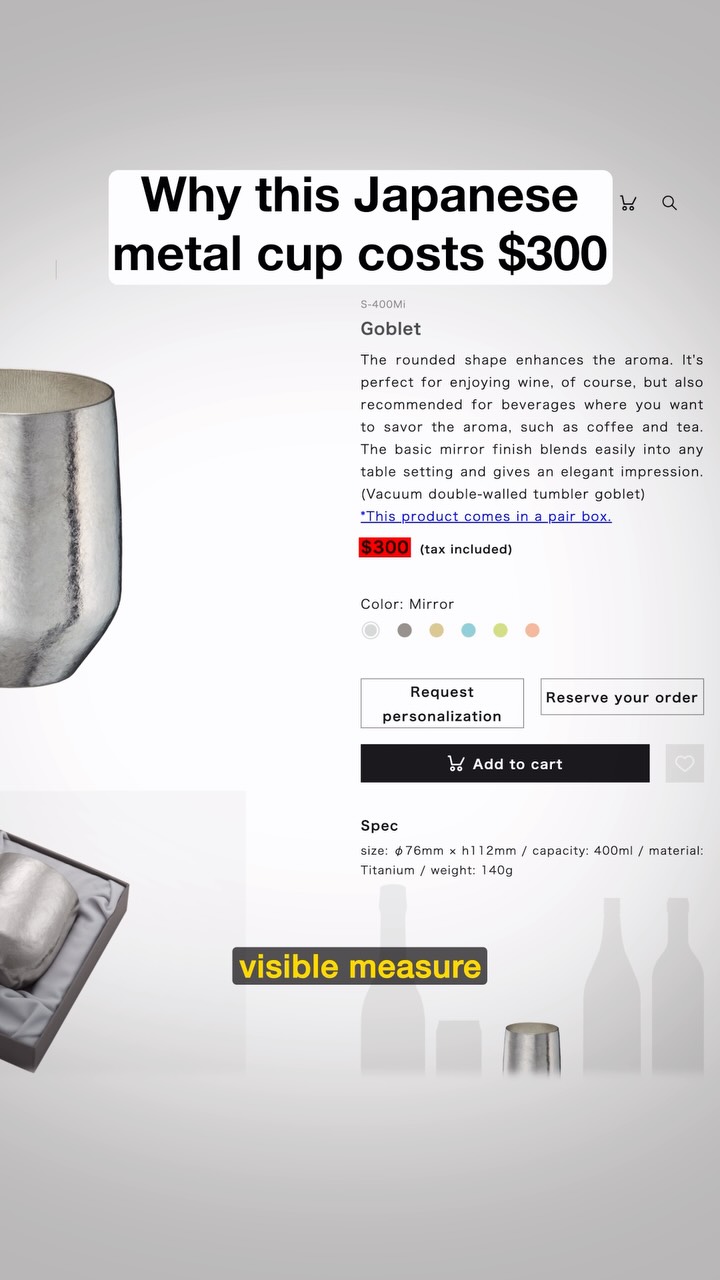
@fineasjackson $300 for a simple metal cup…why? How is that even possible?

@fineasjackson
Instagram · Talking Head Edit
@fineasjackson $300 for a simple metal cup…why? How is that even possible?
Performance
Video #40290 · Talking Head Edit
[01]
The creator poses the question of why a Japanese metal cup costs $300 when a similar one costs $5 on Amazon. He first analyzes the cheap stainless steel cup, explaining its composition and the issue of metal ion leaching affecting taste. He then introduces the expensive cup, revealing it's made of pure titanium, and details its superior properties: lightweight, high strength-to-weight ratio, and non-ionization. The creator explains the manufacturing challenges of titanium, which justifies its rarity and cost, before telling the story of the Japanese company in Tsubame that mastered the process. Finally, he explains the cup's double-wall vacuum insulation, contrasting its benefits (no condensation, temperature retention) with the flaws of the cheap cup, concluding that the titanium cup is a lifelong investment.
[02]
[03]
 974.1K3.5×Creator explains brand positioning using a water bottle price comparison@mofe_ade · Breakdown
 2.7M19.7×Expert compares tea bags vs loose leaf@alanlinplus · Explainer
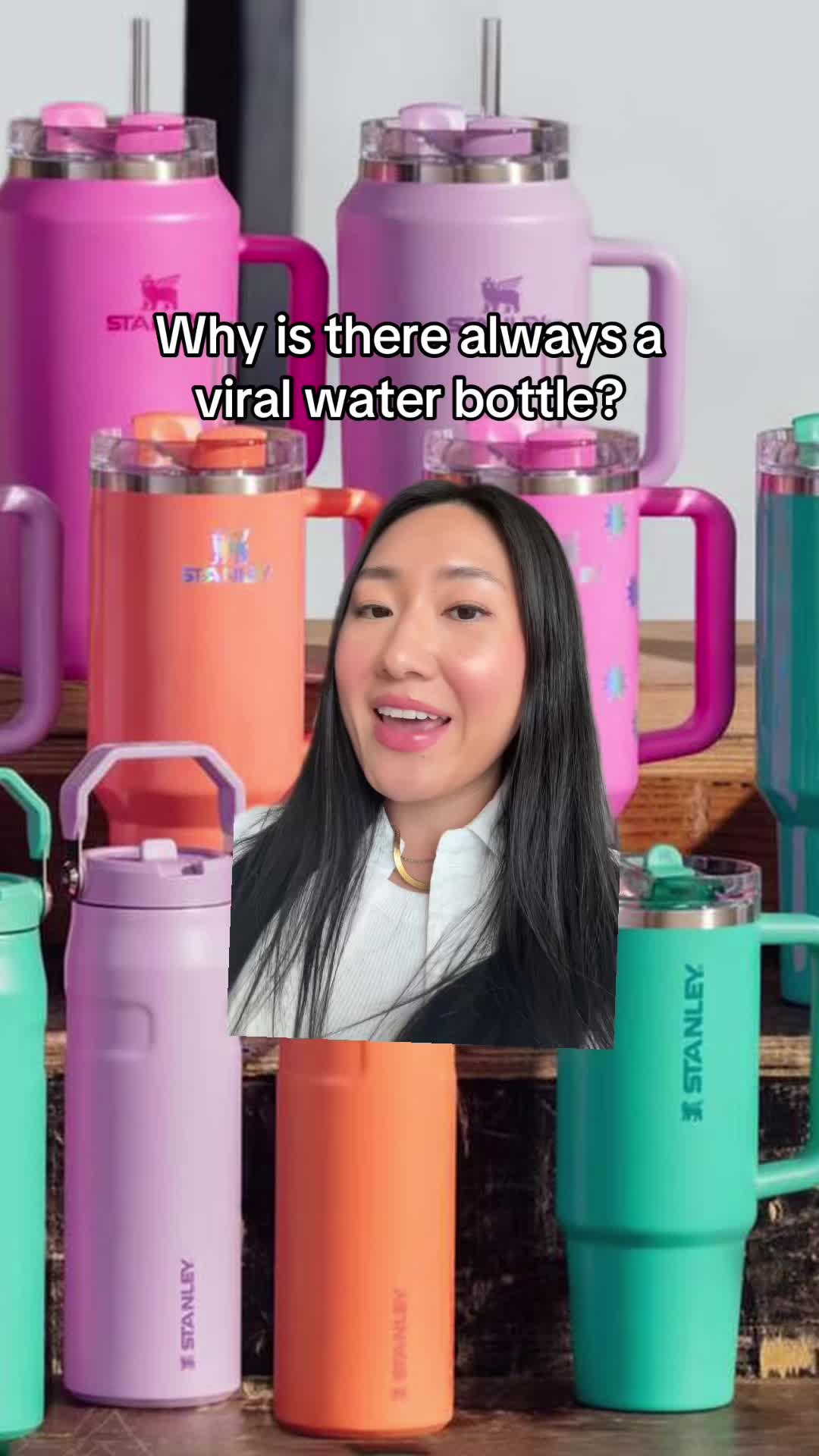 199.4K33.9×Analyzing the viral water bottle trend cycle.@betherewearthat · Culture Profile
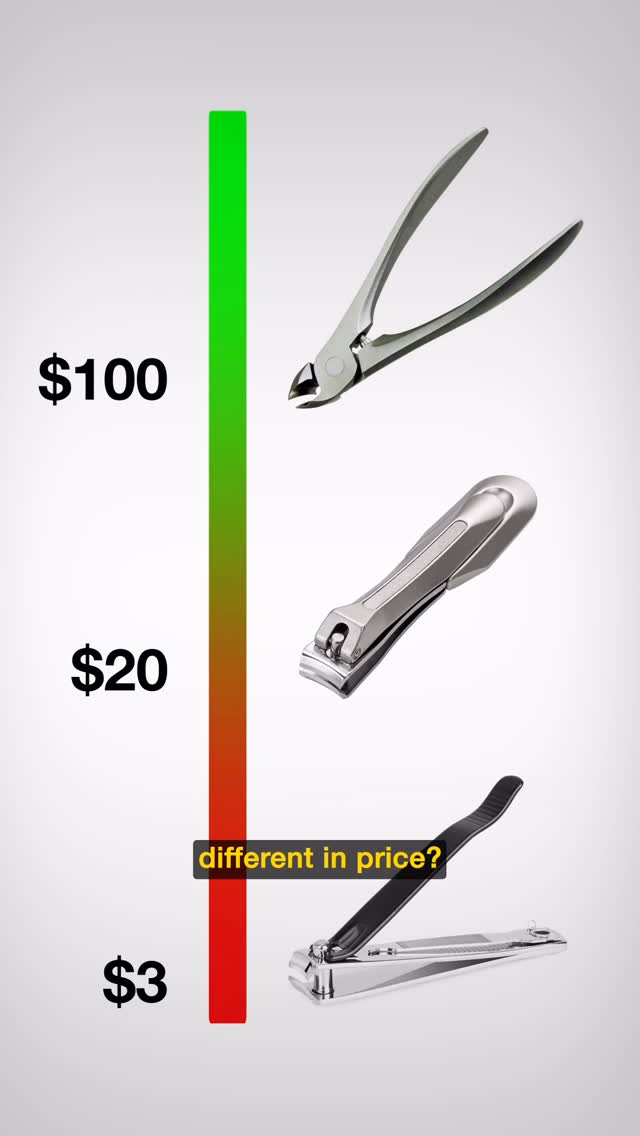 1.6M112.4×Cheap vs expensive product breakdown@fineasjackson · Breakdown
 2.7M13.9×List of affordable luxury items@calebulf · Buying List
 332.4K8.6×Relatable rant about coffee lids@grillguy · Cultural Rant
 853.6K5.9×Rapid fire pan brand reviews@calebulf · Expert Rate/Rank
 784.2KCurated list of affordable luxuries@calebulffers · Buying List
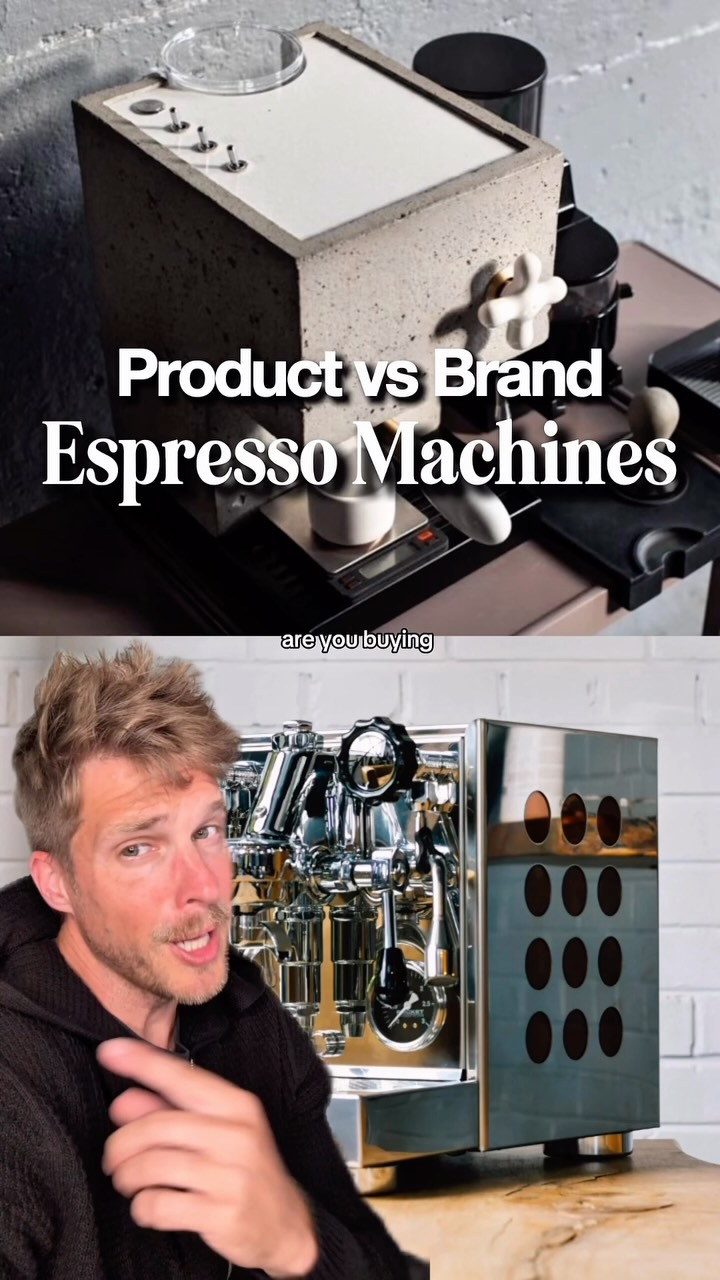 818.2K227.8×Rapid fire product vs brand reviews@orenmeetsworld · Rapid Fire Listicle
 1.2M5.9×Questioning a health brand's safety@the.lead.lady · Public Service Announcement
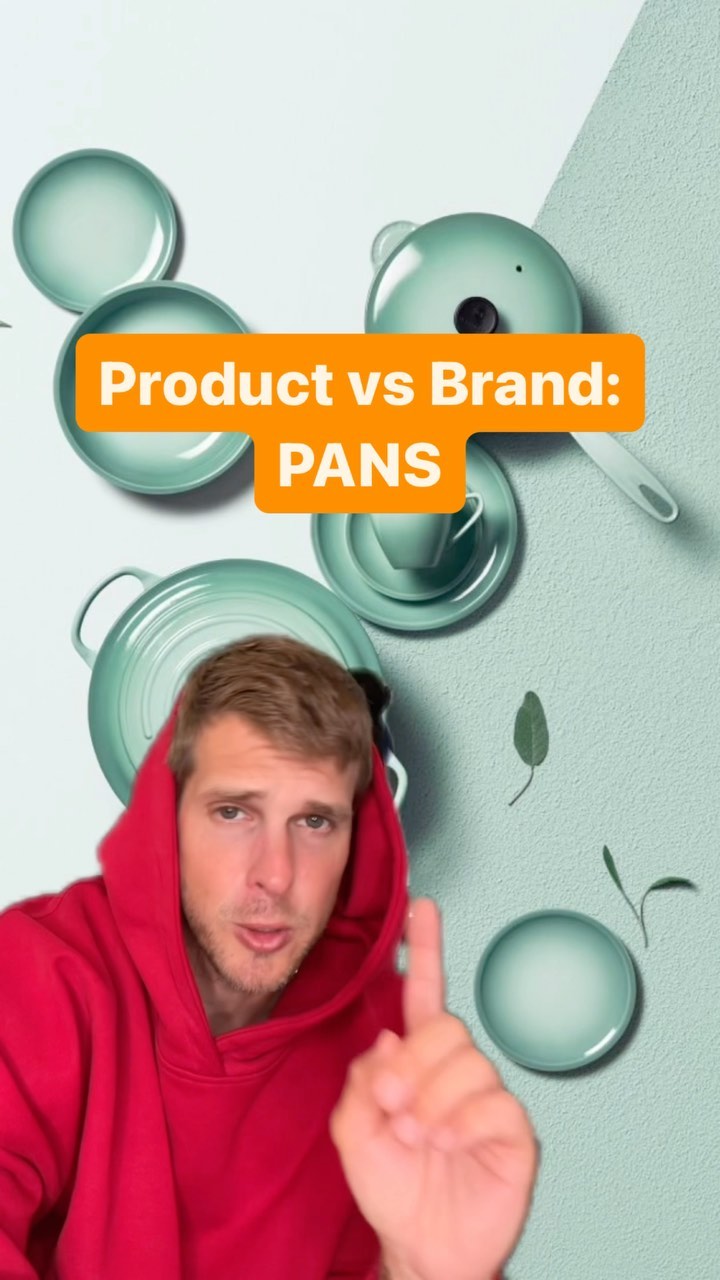 9.2M30.6×Rapid fire opinions on cookware brands@orenmeetsworld · Rapid Fire Listicle
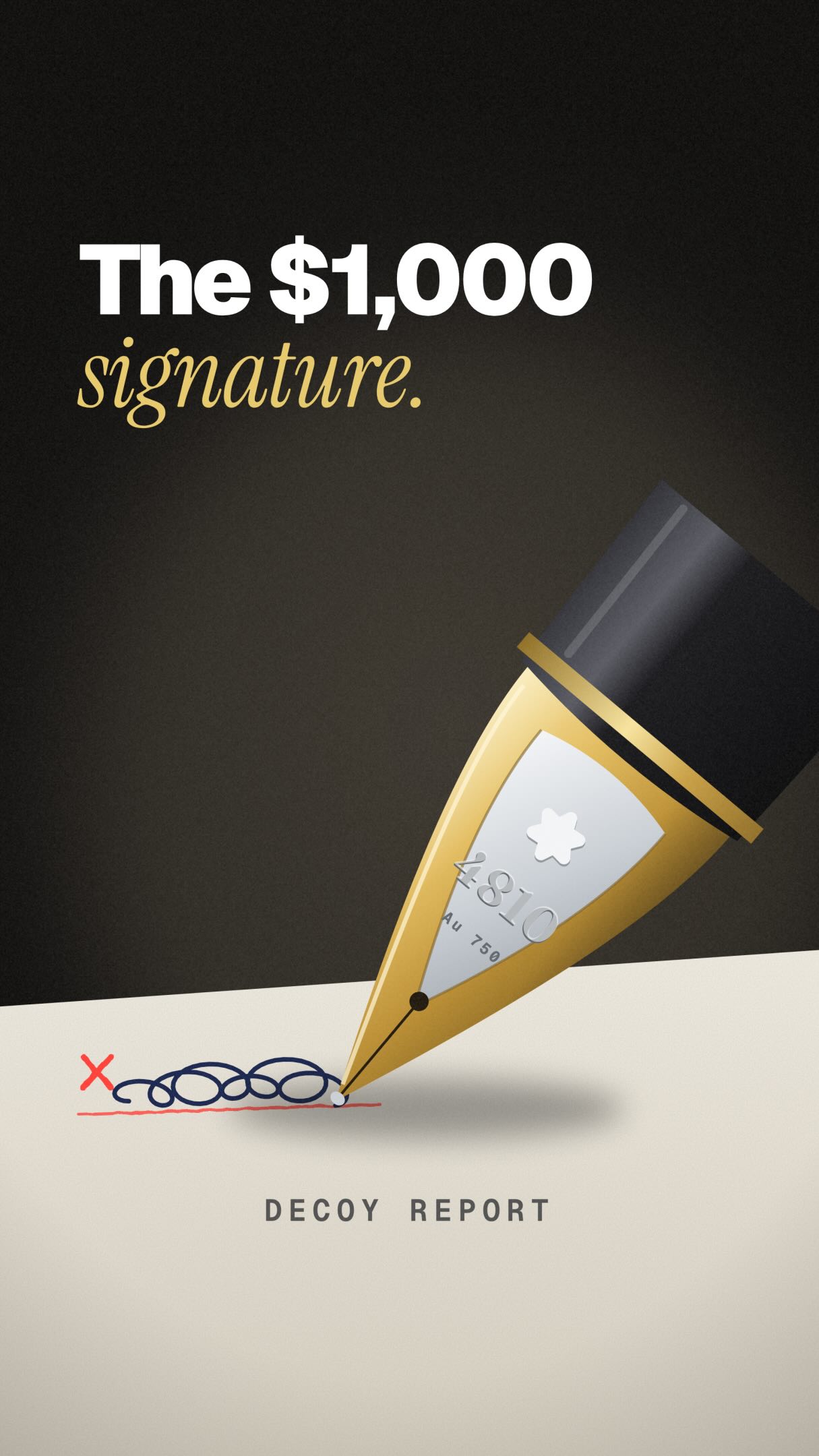 412.4K31.9×Cheap vs luxury branding lesson@decoyreport · Case Study Breakdown
[04]
[05]
What stops the scroll in the first 3 seconds
Title hook · 55%
Why this Japanese metal cup costs $300
Verbal hook · 30%
You can buy a metal cup on Amazon for $5.
Visual hook · 15%
A man wearing a distinctive cowboy hat and a stylish scarf speaks directly to the camera, creating an immediate and unique visual identity that breaks from typical presenters.
[06]
Steal this for your own video
Why this costs (when you can get one for )
[07]
The promise the opener makes, and how the video pays it back
Hook
Present a dramatic and seemingly illogical price comparison between a cheap, ubiquitous item and an expensive, niche alternative, framing it as a mystery of value that the video will solve.
Payoff
Deliver a final, powerful re-framing of value. Contrast the 'disposable' nature of the common item with the permanence of the premium one, positioning the high price not as an expense, but as a one-time, lifelong investment in quality ('the last one you'll ever need').
[08]
The structural pattern this video runs on
Framework
The Justified Superiority Framework
To justify a high price point or perceived superiority of one option over a common alternative by systematically deconstructing both, revealing a hidden flaw in the common option, and building a multi-layered case for the premium option based on material, craftsmanship, and performance.
The Common Standard's Hidden Flaw
Establish a baseline by analyzing the common, affordable item. Then, introduce a non-obvious, scientific flaw (e.g., 'metal ion leaching') that degrades the user experience, creating a problem the viewer may not have known they had.
The Premium Alternative's Inherent Benefit
Introduce the expensive alternative as the solution. Detail its core material or component, explaining its objective, scientific superiority and how it directly solves the previously established flaw.
The Justification Gauntlet
Systematically build the case for the high price by revealing the barriers to entry. This beat layers three types of justification: 1) The Manufacturing Hurdle (it's incredibly difficult to make), 2) The Origin Story (it comes from a place of deep heritage and craftsmanship), and 3) The Innovation Breakthrough (it represents a novel solution to a difficult problem).
The Performance Payoff
Translate the technical superiority and innovative design into tangible, real-world user benefits. This beat demonstrates how the item performs better in a practical sense, moving from abstract concepts to a concrete user experience.
$300 for a simple metal cup…why? How is that even possible?
title · beginning
Why this Japanese metal cup costs $300
informational · beginning
Only the chosen can drink from this chalice
branding · beginning
"Chasing Beauty" Episode 75
informational · middle
Stainless Steel vs Titanium
informational · middle
YOUR COFFEE SHALL REMAIN THE SAME
informational · middle
Tsubame Solves Titanium
informational · middle
CAN YOU BUILD A VACUUM-INSULATED DOUBLE-WALL TUMBLER OUT OF PURE TITANIUM?
informational · middle
Why Double-Wall Works
You can buy a metal cup on Amazon for $5. So why are people paying 300 for what is by every visible measure the same thing? A simple metal cup. Is the difference real or is this just rich people cope for a cup? This is chasing beauty episode 75 and today we're going inside the metal. Let's start with the $5 cup. It's stainless tier, an alloy of chromium iron and often nickel. It's the default material for anything metal that touches good. But stainless steel has a problem most people never think about. Pour hot coffee into a stainless steel cup. Wait ten minutes. There's a faint sharpness riding on the top flavor that wasn't there when you brewed it. That's metal ion leaching. Tiny amounts of iron and chromium migrating into the liquid, especially when it's hot or acidic. No, pick up the $300 cup. This is a SAS gallery titanous goblet. It's made from 99% pure titanium. The same metal used in jet turbines, surgical implants, and the chassis of satellites. And the first thing you'll notice is that it feels like it weighs nothing. A 400 milliliter Titanous weighs about a 140 grams. That's lighter than most phones. But light doesn't mean fragile. Titanium has one of the highest strength to weight ratios of any metallic element. And the most important part for a drinking vessel, it doesn't ionize. Your coffee tastes exactly the way the roaster intended. So why isn't every cup made of titanium? Because it's a nightmare to work with. Stainless steel is forgiving. Titanium cracks. It's so hard that standard tooling breaks against it. That's why it's found almost nowhere in everyday consumer good, which brings us to Tsubame. Tsubame is a small city in the Niigata Prefecture on the Sea Of Japan coast. Its metalworking tradition goes back over four hundred years to the early Edo period. SAS gallery is based in Tsubame. The company started in stainless steel vacuum containers. But at some point, the president became obsessed with a question. Can you build a vacuum insulated double wall tumbler out of pure titanium? No one had done it. You need two perfectly formed walls of titanium, an inner cup and an outer shell with a sealed vacuum between them. Every step that's routine with stainless steel becomes a research project with titanium. It took years of trial and error, but they figured it out. The Titaness became the world's first vacuum insulated double wall titanium tumbler. So what does the double wall vacuum actually do? Pour an ice cold matcha into the tumbler. The outside stays room temperature. No condensation. No wet ring on your table. Meanwhile, the drink inside stays dramatically colder than it would in a single wall cup because there's literally nothing between the walls to conduct heat. Your $5 Amazon cup, a single wall of stamped tier, condensation everywhere, burns your hands with hot drinks. So is this ridiculous? A $300 cup for drinking better? Maybe. But it's also a cup you'll use every single day for the rest of your life. Titanium doesn't degrade. It doesn't rust. One is disposable metal. The other is the last cup you'll ever need.