Video #37438 · Greenscreen Talking Head
Analyzing the viral water bottle trend cycle.from @betherewearthat
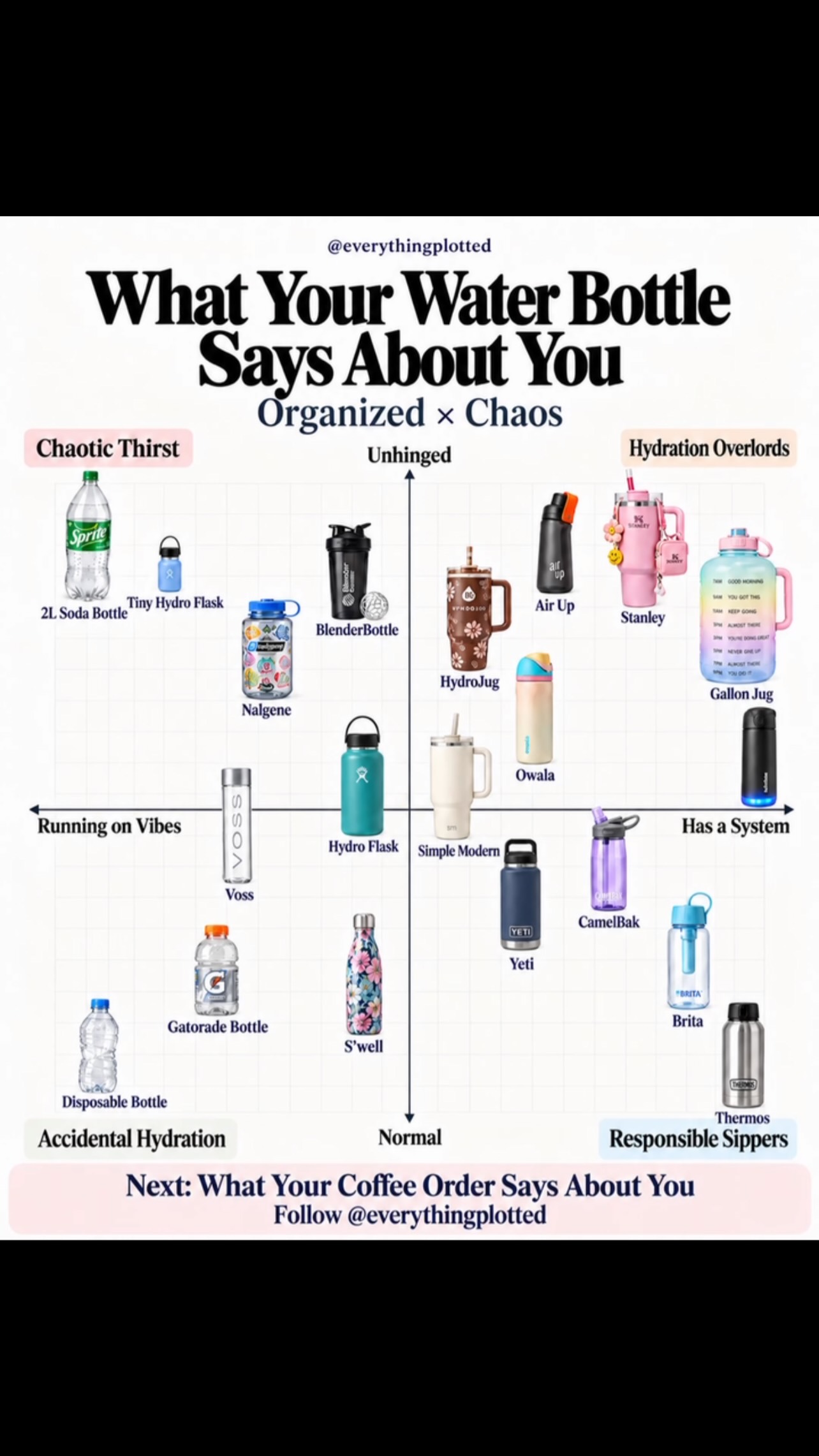
The creator poses a question about the recurring trend of viral water bottles. She then presents a chronological history of popular water bottles, from Camelbak in the 2010s to S'well, Yeti, Hydro Flask, Stanley, and the current Owala. Finally, she analyzes the consumer psychology behind this phenomenon, arguing it's not about product quality but about social signaling, identity, and the desire to belong, concluding that the cycle will continue as products become commoditized.
- 1Pose relatable observation
- 2Present chronological evidence
- 3Reveal psychological driver
- 4Conclude with future prediction
ConceptsCulture ProfileEvolution ShowcaseBreakdown
ElementsGreen Screen CompositePicture-in-PictureTitle Text Hook
[05]
Hook analysis
What stops the scroll in the first 3 seconds
Title hook · 50%
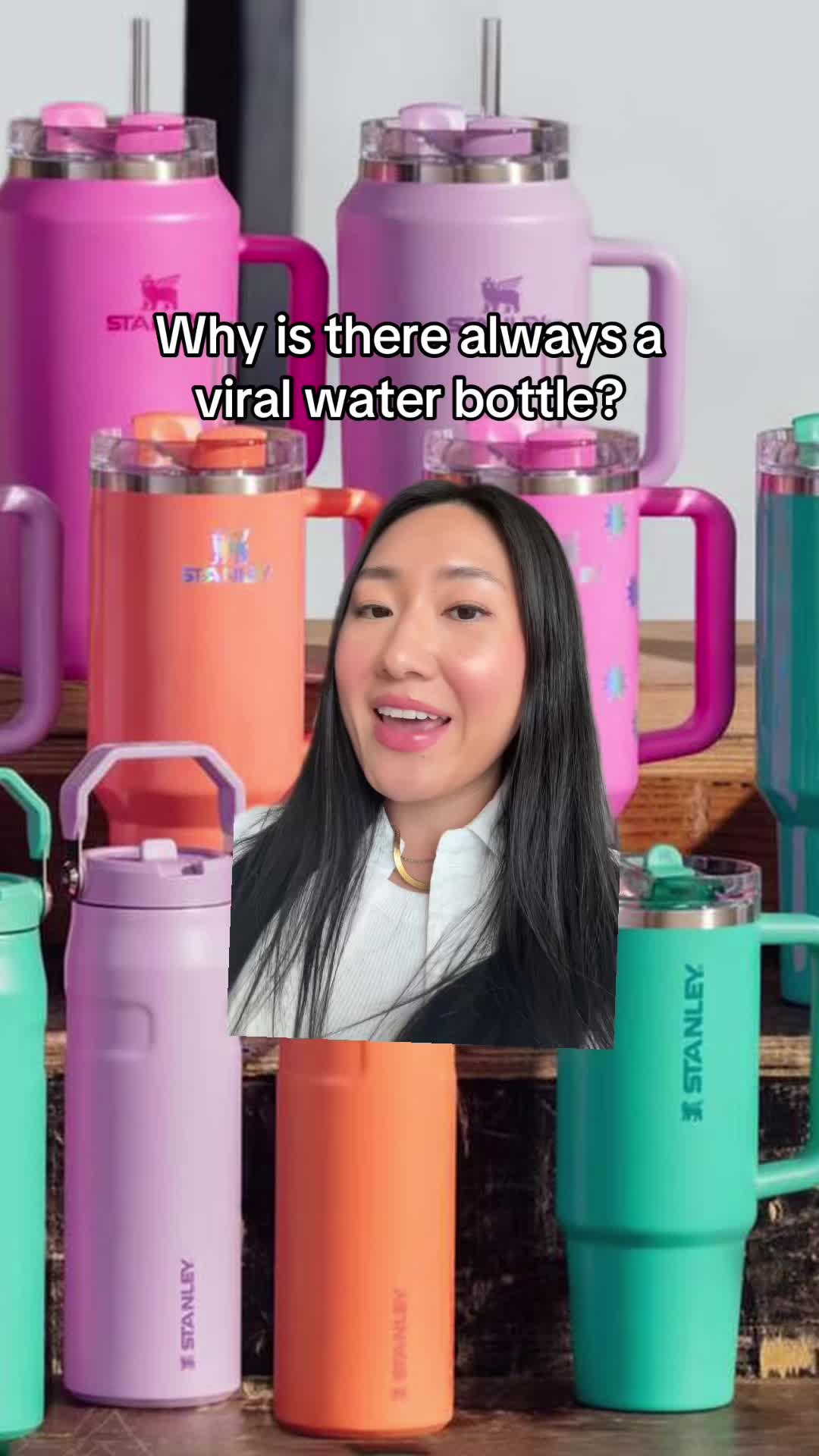
Why is there always a viral water bottle?
Verbal hook · 35%
Have you ever noticed that every few years, there's a new viral water bottle?
Visual hook · 15%
A speaker is overlaid on a visually dense background of many brightly colored Stanley cups, creating immediate visual interest and establishing the video's topic.
[07]
Hook and payoff
The promise the opener makes, and how the video pays it back
Hook
A direct, relatable question that frames a common but unexamined cultural phenomenon, priming the audience for an explanation.
Payoff
The Inevitable Cycle: To conclude by explaining why the pattern is doomed to repeat, framing it as a predictable cycle of adoption and commoditization. This provides a satisfying, conclusive answer to the opening hook.
[08]
Narrative framework
The structural pattern this video runs on
Framework
The Chronological Thesis
To establish a recurring cultural pattern by presenting a rapid-fire chronological list of examples, and then revealing the underlying psychological driver that explains the cycle.
- 1
The Historical Gauntlet
To rapidly present a series of chronological examples that serve as evidence for the video's central thesis. Each example is characterized by a brief, witty, and relatable stereotype.
- 2
The Pivot to 'Why'
To transition from the 'what' (the list of examples) to the 'why' by explicitly stating that the phenomenon is not about the objective quality of the items, but about a deeper human need.
- 3
The Psychological Reveal
To deliver the core thesis of the video, explaining that the trend is driven by a desire for identity signaling and belonging, not utility.
Themes
- Consumerism
- Social signaling
- Trend cycles
- Identity
Techniques
- Chronological storytelling
- Psychological analysis
- Historical review
Trends
Post caption
Am I forgetting any others? We’re in the Owala era now, though there may be a new it viral water bottle soon (and sorry Apple, not sure if the Apple Park water bottle is it) #greenscreen #waterbottle #marketing @Owala @Stanley 1913 @S'well Bottle @CamelBak @hydroflask @apple #viralwaterbottle #sports
Text overlays
Transcript
You ever noticed that every few years, there's a new viral water bottle? In the twenty tier, you had a Camelback water bottle. Easy worst out of. May or may not have had your college logo on it. Not saying this was me. Then you got a Swell, the skinny one that looked cute on your yes, but you could barely fit an ice cube in it. Then Then it was a Better for those who wanted to feel outdoorsy. Then the Hydro Flask era came and went. Then the Stanley Cup became the newest accessory for every single 25 year old woman out there. And now we're in the Awala era. If you look at an Awala, it's not objectively a better water bottle than a Hydro Flask. So it's not about the quality of the water bottle itself, rather wanting to feel like you're part of something, signaling to others what rank your identity aligns with. That's why there will always be another water bottle trying to be the newest it water bottle because the moment that everybody has the same water bottle, it becomes over commoditized and will need something else to signal to people, this is who I am.