@zephzoid
Instagram · Talking Head Edit
@zephzoid Countries that rejected patents on nature to evoke food sovereignty for their small farmers

@zephzoid
Instagram · Talking Head Edit
@zephzoid Countries that rejected patents on nature to evoke food sovereignty for their small farmers
Performance
Video #40396 · Talking Head Edit
[01]
The creator narrates a series of historical examples where countries and farmers rejected corporate-controlled seeds, specifically from Monsanto and US food aid. He details the cases of Haiti, Zambia, and Peru, explaining their motivations were to protect food sovereignty and avoid dependency, not just reject food. The video concludes by advocating for local farming and promoting the 'Localize' app to find local farmers.
[02]
[03]
 14.2M275.7×Reacts, then explains seed privatization.@denny_dure · Breakdown
 304.7K31.1×Pesticide PSA and call-to-action@myhealthforward · Public Service Announcement
 116.8K4.8×Explainer on farmers rejecting tech@zephzoid · Headlines
 273.5K12.3×Explaining a local tech conflict@zephzoid · Headlines
 241.7K22.4×Greenscreen farmer vs Trump story@zephzoid · Storytime
 160.4K12.6×Explains dystopian law, offers solution@zephzoid · Headlines
 209.6K6.4×Exposing MrBeast's corporate partnerships@zephzoid · Advocacy Journalism
 582.7K6.5×Greenscreen economic supply chain breakdown@denny_dure · Predictions
 837.9K2.1×Explaining conspiracy while on golf course@swaggylaggygolfdaddy · Conspiracy Breakdown
 390.4K7.9×Fast-paced local activism story@yoonj_kim · Headlines
 213K8.7×Connecting four tick conspiracy theories.@zephzoid · Breakdown
 163.2K33.1×Rancher gives hot take on beef imports@grantsgrassfed · Hot Take
[04]
[05]
What stops the scroll in the first 3 seconds
Title hook · 25%
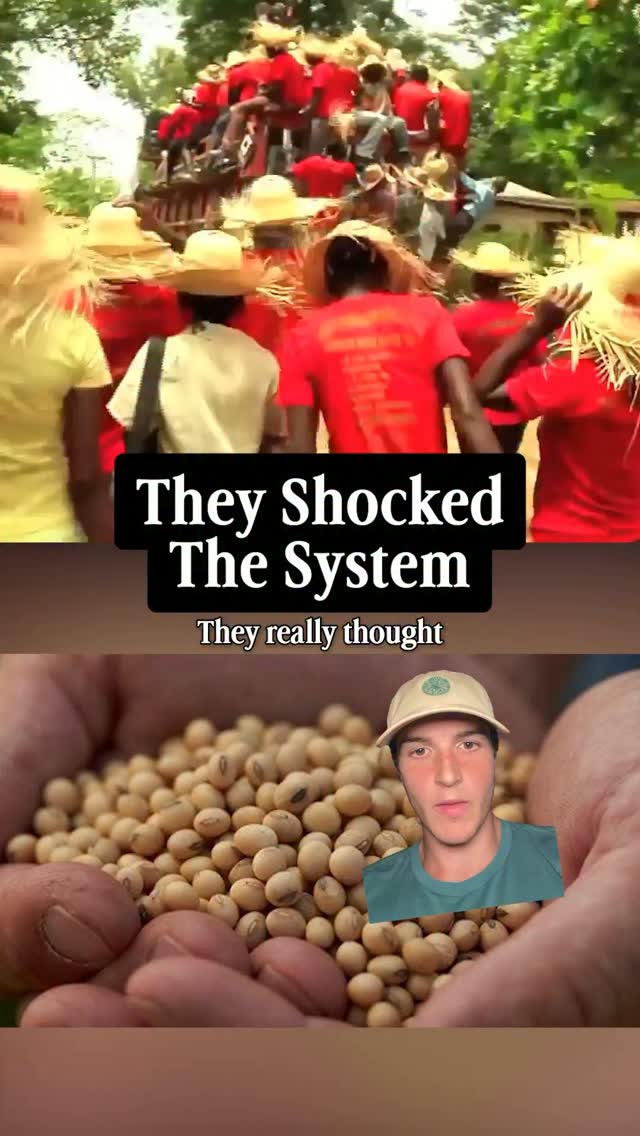
They Shocked The System
Verbal hook · 55%
They really thought they could get away with this, and they paid the price for it.
Visual hook · 20%
A dynamic, crowded scene of many people in matching red shirts and straw hats, some riding on the back of a truck, which creates immediate visual interest and raises questions about the event.
[06]
Steal this for your own video
They really thought could — and paid the price for standing up.
[07]
The promise the opener makes, and how the video pays it back
Hook
A provocative, conflict-driven statement that establishes a clear antagonist and protagonist, promising a story of rebellion and consequence.
Payoff
A direct call to action that grounds the universal principle in the viewer's local reality and provides a specific, actionable tool or solution to participate.
[08]
The structural pattern this video runs on
Framework
The Case Study Cascade
To build a powerful argument by presenting a series of escalating, real-world examples (case studies), then re-interpreting them to reveal a deeper, unifying principle, and finally connecting that principle to a tangible call to action for the viewer.
The Evidence Montage
A rapid succession of 3 escalating case studies that establish a clear pattern of defiance. The examples progress from grassroots action to official policy to long-term law.
The Grand Unifying Theory
A single, concise statement that explains the common motivation behind all the examples in the montage, providing an 'aha!' moment for the viewer.
The Forensic Analysis
A beat that revisits each piece of evidence from the montage, adding a layer of deeper meaning and context (e.g., dependency, sovereignty, heritage) to prove the Grand Unifying Theory.
The Universal Maxim
A beat that elevates the specific theory into a timeless, universal principle about power, choice, or identity, making the issue feel bigger than the examples shown.
Countries that rejected patents on nature to evoke food sovereignty for their small farmers
title · throughout
They Shocked The System
informational · beginning
Monsanto gifted Haiti seeds after an earthquake
informational · beginning
10,000 farmers lit them on fire in protest.
informational · middle
The leader of Zambia rejected GMO grain
informational · middle
Peru got so serious about protecting native crops that it banned GMOs until 2035.
informational · middle
Lighting 475 tons of seeds on fire in Haiti wasn't a rejection of food. It was a rejection of dependency.
branding · end
Localize
Tier really thought they could get away with this, and they paid the price for it. Monsanto gifted Haiti seeds after an earthquake expecting to be thanked, but instead, 10,000 farmers lit them on fire in protest. The leader of Zambia rejected GMO grain from The US donated as good aid, calling it poison and saying we'd rather starve than eat it. Peru got so serious about protecting native crops that it banned GMOs until tier. The reason is simple. Every single one of these decisions was about rejecting the corporate control that takes power away from farmers. Lighting 475 tons of seeds on fire in Haiti wasn't a rejection of good, it was a rejection of dependency since hybrid seeds can't be saved and replanned the way traditional ones can. Zombie's rejection wasn't about the food either. It came at the height of a famine while millions face starvation, which means the decision to say no anyway was about protecting long term sovereignty over short term relief. When Peru wrote GMO rejection directly into law, they were protecting over 4,000 native potato varieties and generations of seed knowledge held by 2,200,000 small farming families. Every time a country or a farmer chooses to reject a corporate seed system, they're choosing to keep the power in their own hands instead of this corporate one. We, the people, and the farmers raising our food should control the seeds, not corporations. You can find farmers like this protecting that same independence near you on the localized farmers market app.