Viral Hooks
Trending short videosExpert breaks down divorce psychology
M

@mightypursuit

Instagram · Clip

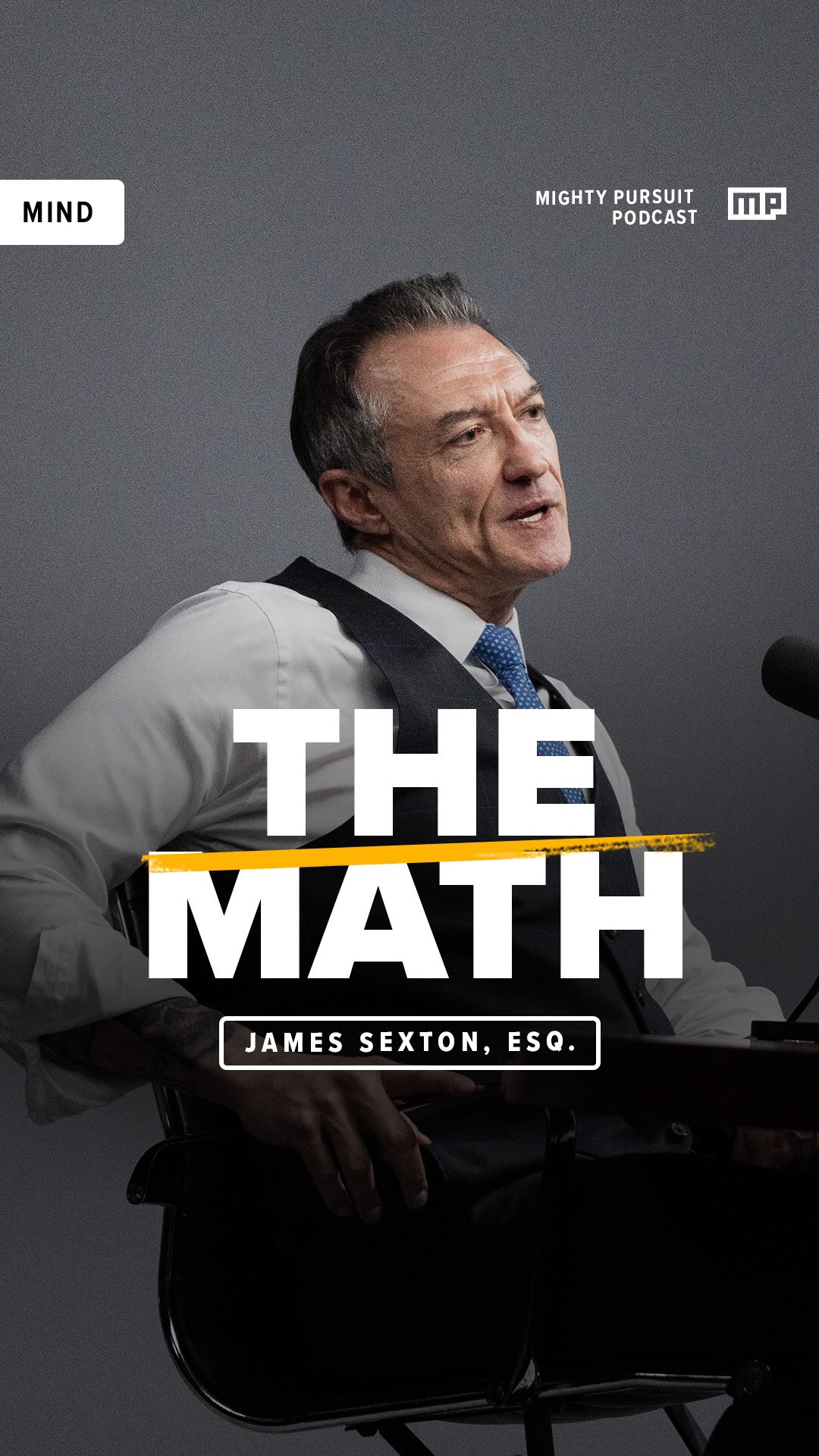
@mightypursuit **LINK IN BIO FOR FULL EPISODE** A divorce can end the marriage without ending the pattern. That may be the most alarming thing hidden inside the math. People often leave a relationship with a clean explanation for what happened: they cheated, they changed, they were selfish, they were impossible to live with. Sometimes that explanation is true, at least partially. But if it becomes the whole story, there is nothing left to examine. You’ll bring the same blind spots, survival strategies, and ways of disconnecting travel into the next relationship. That is what makes James Sexton’s perspective so valuable. Marriage has never come with more advice, more therapy, or more language for what healthy relationships should look like—and yet nearly half still end. After more than two decades inside thousands of divorces, James sees the patterns people often recognize only after it is too late. In the full episode, we examine: • Why women initiate 69% of divorces
• Why expensive weddings can predict failure
• How changing gender roles are reshaping marriage
• Why people repeat the same mistakes in second and third marriages
• And somehow, what blowjobs and granola have to do with all of it Watch via the link in bio or search Mighty Pursuit Podcast on YouTube, Apple Podcasts, or Spotify.

View original on Instagram

The edit1 shot · 7 text
Shots Text1:22

Performance

Views
894.1K
Likes
38.7K
Comments
550
Engagement
4.4%
Outlier
17.5×
Length · 30 Aug 2026
1:22

Video #40624 · Clip

Expert breaks down divorce psychologyfrom @mightypursuit

[01]

Overview

The speaker, an expert, presents statistics showing that divorce rates increase with each subsequent marriage. He argues this is because people fail to self-reflect on their own role in the divorce, instead opting for simple explanations, and thus repeat the same mistakes in future relationships.

[02]

Simple outline

  1. 1State a counterintuitive pattern
  2. 2Expose a common misinterpretation
  3. 3Reveal the underlying human flaw
  4. 4Connect flaw back to pattern

[03]

Related videos

[04]

Classification

Format
Concepts
Breakdown
Elements
Jump CutPodcast SetupPromotional End Card

[05]

Hook analysis

What stops the scroll in the first 3 seconds

Verbal hook · 25%

Look at the math.

Visual hook · 75%

A professionally dressed man with prominent arm tattoos makes a direct, dismissive hand gesture to the camera, creating a strong visual contrast and commanding attention.

[06]

Hook template

Steal this for your own video

A [identity contrast: unexpected visual trait on authority figure] makes a [dismissive/commanding gesture] directly at the camera while standing in [professional or neutral setting].

  • — A heavily tattooed man in a tailored suit throws a dismissive wave directly at the lens while standing in a clean, minimal office.
  • — A young woman in scrubs rolls her eyes and cuts the air with her hand while facing the camera dead-on in a hospital corridor.
  • — A soft-spoken elderly man in a cardigan points a firm, cutting gesture straight at the camera against a plain white background.

[07]

Hook and payoff

The promise the opener makes, and how the video pays it back

Hook

Begins with a direct command to the viewer followed by a rapid-fire delivery of surprising, escalating statistics to establish a clear, data-backed problem.

Payoff

Closes the narrative loop by explicitly connecting the 'Universal Truth' back to the initial statistics from the hook, proving that the revealed human flaw is the direct cause of the pattern and providing a complete, satisfying explanation.

[08]

Narrative framework

The structural pattern this video runs on

Framework

The Pattern Deconstruction

To present a surprising statistical pattern, debunk the common surface-level explanation for it, and reveal a deeper, more universal human behavior as the true cause, thereby providing a profound insight.

  1. 1

    The Statistical Hammer

    Presents a series of escalating, hard-to-dispute data points that establish a clear, counterintuitive trend or problem.

  2. 2

    The Core Question

    Poses a direct, open-ended question to the audience that frames the rest of the video as the answer to a mystery, creating an information gap.

  3. 3

    The Common Mistake

    Identifies and articulates the simple, common, and ultimately flawed explanation that most people use to understand the problem, often by using a relatable, concrete example.

  4. 4

    The Deeper Inquiry

    Contrasts the simple explanation with a more complex, introspective line of questioning, shifting the focus from external blame to internal responsibility.

  5. 5

    The Acknowledgment & Pivot

    Validates the audience's potential counter-arguments or exceptions to the rule, building credibility before pivoting back to the main thesis.

  6. 6

    The Universal Truth

    Delivers the core insight of the video as a concise, memorable, and universally applicable statement about human psychology or behavior.

  7. 7

    The Call to Self-Audit

    Translates the universal truth into a practical mental model or actionable step the viewer can apply to their own life.

Themes

  • self-awareness
  • accountability
  • relationship patterns

Techniques

  • statistical evidence
  • anecdotal examples
  • psychological analysis

Trends

  • podcast clips
  • expert advice

Post caption

**LINK IN BIO FOR FULL EPISODE** A divorce can end the marriage without ending the pattern. That may be the most alarming thing hidden inside the math. People often leave a relationship with a clean explanation for what happened: they cheated, they changed, they were selfish, they were impossible to live with. Sometimes that explanation is true, at least partially. But if it becomes the whole story, there is nothing left to examine. You’ll bring the same blind spots, survival strategies, and ways of disconnecting travel into the next relationship. That is what makes James Sexton’s perspective so valuable. Marriage has never come with more advice, more therapy, or more language for what healthy relationships should look like—and yet nearly half still end. After more than two decades inside thousands of divorces, James sees the patterns people often recognize only after it is too late. In the full episode, we examine: • Why women initiate 69% of divorces
• Why expensive weddings can predict failure
• How changing gender roles are reshaping marriage
• Why people repeat the same mistakes in second and third marriages
• And somehow, what blowjobs and granola have to do with all of it Watch via the link in bio or search Mighty Pursuit Podcast on YouTube, Apple Podcasts, or Spotify.

Text overlays

  • contextual · beginning

    look at the math

  • informational · beginning

    first marriages? roughly 50% divorce rate

  • informational · beginning

    second marriages? 60 to 70% divorce rate

  • informational · beginning

    third marriages? 70 and greater divorce rate

  • title · end

    FULL EPISODE

  • informational · end

    ON YOUTUBE / SPOTIFY / APPLE PODCASTS EPISODE 96 OF MIGHTY PURSUIT PODCAST WITH JAMES SEXTON, ESQ.

  • call-to-action · end

    CLICK THE LINK IN OUR BIO

Transcript

Look at the math. First marriages, roughly fifty percent divorce rate. Second marriages, sixty to seventy percent divorce rate. Third marriage is 70 and greater divorce rate. We're not getting better and better at this. So what does that tell us? Most people, after they divorce, they don't really do the hard work of going, okay. What happened here? Like, what where's my part of it? Because it's just tier simple explanation's easier. Why did we get divorced? She was sleeping with his secretary. Not why was he sleeping with his secretary? Because he's a he's a scumbag and a narcissist. No. We we disconnected, and we weren't, you know, honest with each other. Okay. Why did that happen? What's my share of it? What's his share of it? Like, there are awful people. There are malignant narcissists. There are people who gaslight and love bomb and whatever other TikTok terms you wanna throw at it. But the truth is that when people tell you the story of their life, they're usually the hero of the story. Put your radar up on that one and no, is there another version of this story where maybe I'm not the hero of the story a 100% of the time? I think a lot of people don't ever postgame that, and they just repeat the same mistakes over and over again. That's why the divorce rate for second marriages is higher than first, for third is higher than first and second, for fourth is higher than worst, second, and third, and it gets catastrophically worse as time goes on.

Expert breaks down divorce psychology | Viral Hooks