@douggrindstaff
Instagram · Talking Head Edit
@douggrindstaff Type “NEXT” and I’ll send you my list

@douggrindstaff
Instagram · Talking Head Edit
@douggrindstaff Type “NEXT” and I’ll send you my list
Performance
Video #41812 · Talking Head Edit
[01]
The creator presents a case study on Guild Garage Group, a company that successfully consolidated the garage door industry. He breaks down the four key attributes they looked for in an industry ripe for a roll-up (fragmentation, market size, lack of sophistication, economies of scale) and explains their strategy of waiting for a proof-of-concept company before entering the market, ultimately leading to an $800 million sale. The video concludes with a call-to-action for viewers to comment for a list of other potential industries with similar characteristics.
[02]
[03]
 860.9K5.8×Aspirational vlog explaining business exit@marshallhaas · Anecdotal Philosophy
 154.3K1.3×Entrepreneur explains selling his businesses@marshallhaas · Origin Story
 415.5K3.6×Creator explains niche business idea@thekoerneroffice · Opportunity Explainer
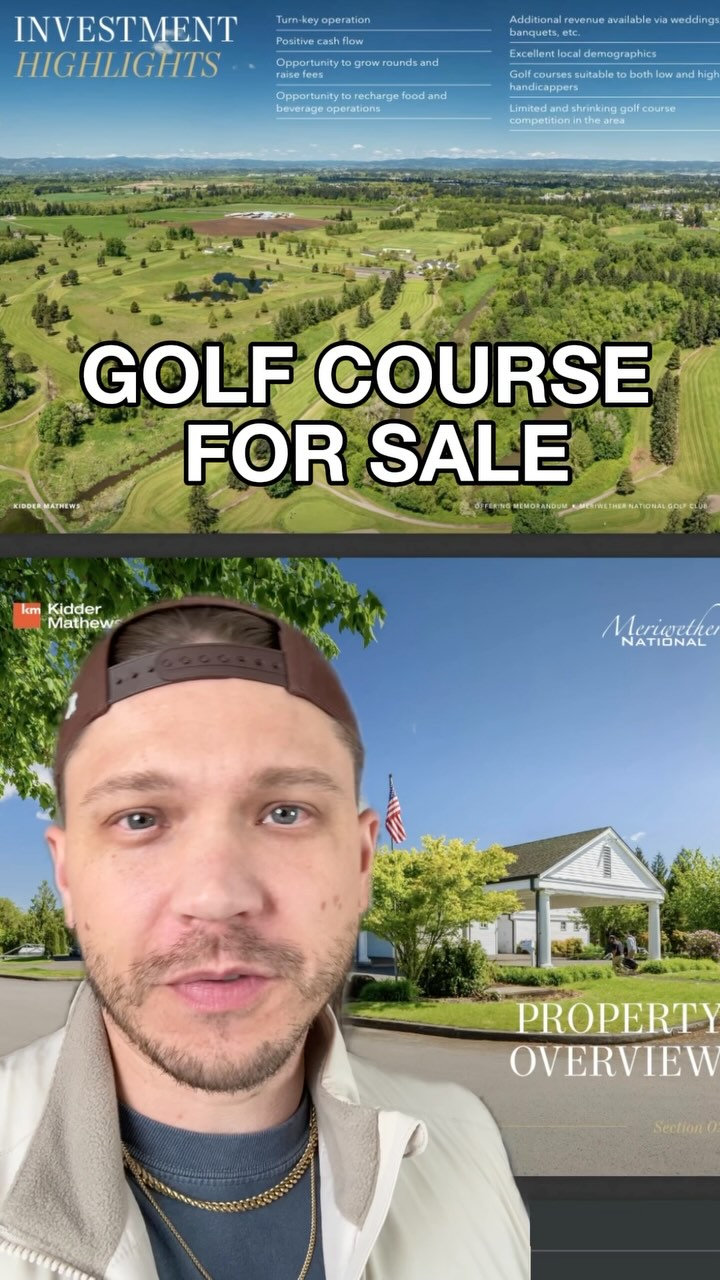 1.2M19.9×Analyzing a golf course for sale as a business investment@landforce · Opportunity Explainer
 124.5K18.7×Telling her story of buying a business@jadesprake · Origin Story
 2.9M26.8×Entrepreneur's 20-year business journey@marshallhaas · Origin Story
 389.3K4.4×Founder's four-year business journey@marshallhaas · Origin Story
 124.8K1.3×Explaining three stock investment picks@mikes.ai · Buying List
 3M35.2×Voiceover analyzes profitable crafting business@durable.ai · Case Study Breakdown
 212.6K3.6×Entrepreneurial thought at driving range@landforce · Relatable One Shot
 1.2MTells origin story through vlog@yohnmav · Origin Story
 2.1M7.5×Motivational business journey montage@dubleads · Journey Documentation
[04]
[05]
What stops the scroll in the first 3 seconds
Title hook · 25%
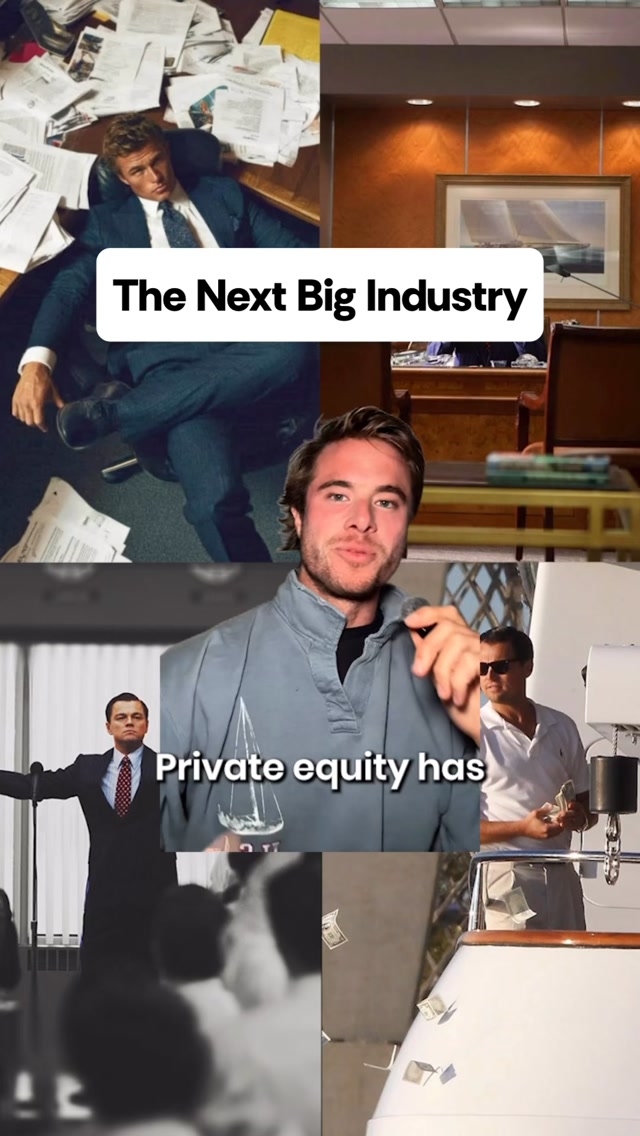
The Next Big Industry
Verbal hook · 60%
Private equity has found its next gold rush, and it's garage doors.
Visual hook · 15%
The video opens with a dramatic, high-angle shot of a man in a suit sitting amidst a chaotic mountain of paperwork, immediately creating a sense of high-stakes business and overwhelming work.
[06]
Steal this for your own video
Private equity just found its next gold rush, and it's .
[07]
The promise the opener makes, and how the video pays it back
Hook
A bold, counter-intuitive claim about an overlooked industry being the 'next big thing', creating an immediate curiosity gap.
Payoff
A direct call-to-action that leverages the knowledge just shared, offering a gated list of new opportunities that fit the revealed framework, converting viewer education into a lead.
[08]
The structural pattern this video runs on
Framework
The Secret Formula Reveal
Deconstructing a surprising, real-world success story to extract a replicable framework, then offering access to further application of that framework as a lead magnet.
The Aspirational Problem
Translates the opening claim into a high-stakes question for the viewer, framing the narrative as a solution to their own ambition to find the next opportunity.
The Case Study Introduction
Introduces the protagonists and their massive success ($800M exit), establishing the story's credibility and the scale of the opportunity.
The Market Observation
Provides the strategic context, showing how the protagonists analyzed existing, popular trends (PE in HVAC) not to follow them, but to find an adjacent, untapped market.
The Strategic Pivot Question
Reveals the single, powerful question that unlocked the opportunity ('What's the NEXT version of the popular thing?'), positioning their success as a result of superior thinking.
The Investment Thesis Reveal
Presents a numbered list of the specific, logical criteria the protagonists used to evaluate the opportunity. This is the 'secret formula' that the viewer can learn and apply.
The 'Fast Follower' Insight
Adds a layer of sophisticated, non-obvious strategy by revealing a crucial criterion: the need for a single 'proof of concept' to validate the market before going all-in.
The Trailblazer Validation
Names the specific entity that served as the proof of concept, making the abstract strategy concrete and proving the thesis was sound before the protagonists even started.
The Opportunity Window Principle
Defines the ideal timing for entry as a 'tiny window' between 'unproven' and 'saturated,' giving the viewer a powerful mental model for timing.
The Exponential Payoff
Reiterates the protagonists' success and then escalates it by showing how the trailblazer company achieved an even larger valuation, confirming the massive scale of the trend.
The Universal Formula
Summarizes the entire case study into a simple, actionable rule that the viewer can apply to their own search for opportunities.
Type “NEXT” and I’ll send you my list
title · beginning
The Next Big Industry
Private equity has found its next gold rush, and it's garage doors. But here's the question you should be asking yourself. How do you figure out what the next big industry is before private equity starts buying everything? Because three guys figured this out with garage doors at almost the perfect time. They launched Guild Garage Group in 2024. Rank less than two years better, after buying 30 garage door companies, they sold for 800,000,000. Now luck may have played a small role, but they were very diligent in their research. They watched as private equity poured everything into HVAC plumbing and electrical. Rather than competing with every PE firm and search fund in the country, they asked themselves, what's the next HVAC? Garage doors had four attributes that they looked for. First, it was 92% fragmented with roughly 15,000 independent operators. Worth noting because you can't roll up in an industry that already is consolidated by five major players. Second, it was a huge market, roughly $13,000,000,000 on the residential side alone and projected to grow between 89%. Third, the industry was still boomer coded. Most operators just hadn't adopted the technology, the branding, the digital marketing, and everything else that transformed HVAC. Fourth, there were just massive economies of scale. If you own 30 garage door companies, you can negotiate much better pricing on things like garage doors, vans, motors, insurance, software, and everything else better than a single person shop. But here's one of the more important thing they look for. They didn't wanna be first. They wanted at least one successful company ahead of them that proved this thesis. And that company was a one Garage Door. At the time, a one had already built a 9 figure business and sold half of it to private equity. They found this tiny window between nobody has proven this and everybody knows this worse. And that's exactly where you wanna look. Because in just two years, Guild went from 0 to 800,000,000. And now a one itself is being acquired by KKR in a deal valued around 2,000,000,000. So if you're trying to figure out what industry could be next, don't look at what's popular. Look for a large, fragmented, growing industry with independent operators that are unsophisticated. Now I pulled four industries that I think have some of these same characteristics today. Comment next, and I'll send you the list.