Viral Hooks
Trending short videosNews analysis of political indictment
N

@nytimes

Instagram · Talking Head Edit

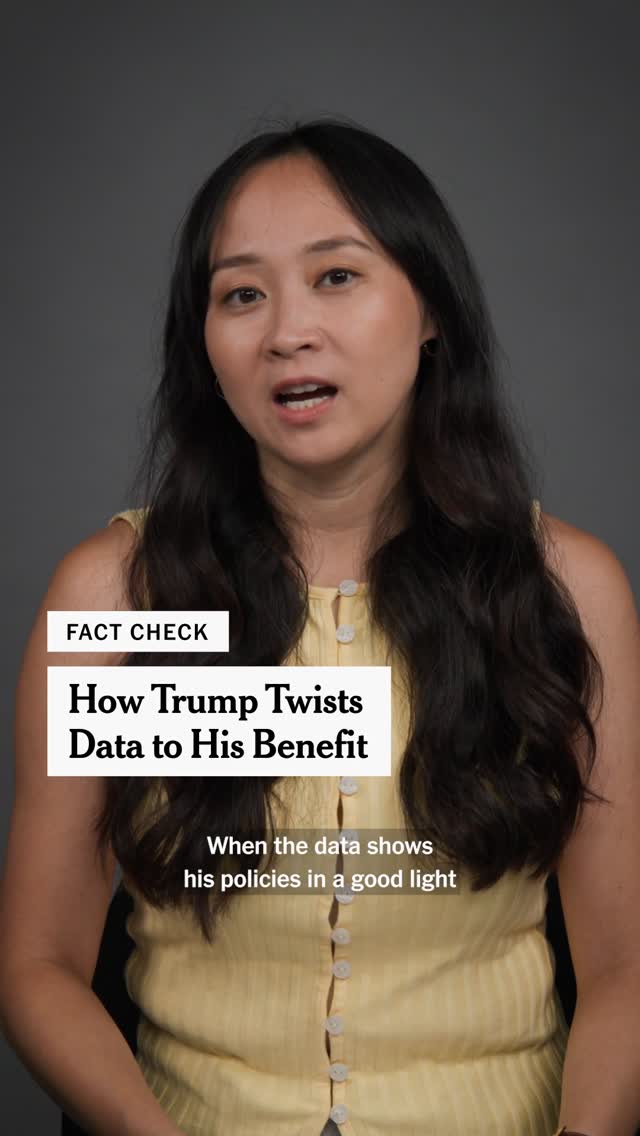
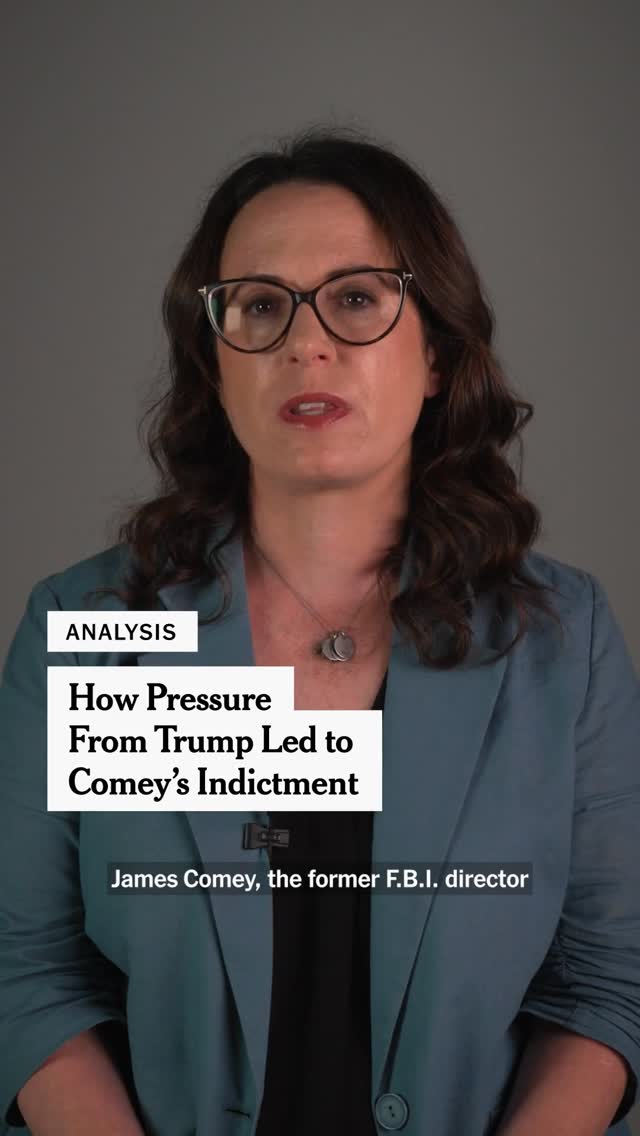
@nytimes How did pressure from President Trump lead to this week’s extraordinary indictment of the former FBI director James Comey? Maggie Haberman, White House correspondent at The New York Times, explains. Tap the link in our bio to read more. Video by Maggie Haberman, Alexandra Ostasiewicz and Stephanie Swart/The New York Times

View original on Instagram

The edit1 shot · 15 text
Shots Text

Performance

Views
386.1K
Likes
5.7K
Comments
340
Engagement
1.6%

Video #4228 · Talking Head Edit

News analysis of political indictmentfrom @nytimes

[01]

Overview

A New York Times correspondent explains the indictment of former FBI director James Comey, detailing the charges and attributing the legal action to political pressure from President Trump. She provides historical context on the fraught relationship between the two, including Trump's demand for loyalty, and discusses the controversial replacement of a U.S. attorney to secure the indictment. The speaker concludes by analyzing the broader implications for the independence of the Justice Department and the potential chilling effect on public dissent.

[02]

Simple outline

  1. 1State shocking event
  2. 2Reveal contradictory context
  3. 3Explain historical motive
  4. 4State future implications

[03]

Related videos

[04]

Classification

Concepts
Breakdown
Elements
B-Roll CutawayText OverlayTitle Text Hook
Topics

[05]

Hook analysis

What stops the scroll in the first 3 seconds

Title hook

How Pressure From Trump Led to Comey's Indictment

Verbal hook

James Comey, the former F.B.I. director who President Trump fired in 2017, was indicted on two counts

Visual hook

A medium shot of a professional speaker looking directly at the camera, establishing an authoritative and direct tone for a news analysis piece.

[07]

Hook and payoff

The promise the opener makes, and how the video pays it back

Hook

Present a startling, high-stakes event as a breaking news headline, immediately posing an implicit 'how/why did this happen?' question.

Payoff

The Societal Consequence. Conclude by explaining the broader, negative implications this event could have for society, serving as a final warning or call to awareness.

[08]

Narrative framework

The structural pattern this video runs on

Framework

The Investigative Deep Dive

Deconstruct a surprising current event by revealing the hidden political or historical forces that caused it, culminating in a warning about its future impact.

  1. 1

    The Counter-Intuitive Detail

    Introduce a piece of information that contradicts the initial event, creating a mystery and suggesting a hidden story. (e.g., 'The indictment happened, but experts thought the case was weak.')

  2. 2

    The Mechanism of Force

    Explain the specific actions taken by a powerful entity to override the normal process and achieve their desired, contradictory outcome.

  3. 3

    The Origin of Conflict

    Provide crucial historical context that reveals the long-standing motive behind the powerful entity's actions.

  4. 4

    The Strategic Framework

    Place the specific event within a larger, ongoing strategy or agenda of the powerful entity, showing it's not an isolated incident.

  5. 5

    The Target's Response

    Briefly show the reaction of the person or group affected by the event, adding a humanizing element of conflict.

  6. 6

    The Broken Rule

    Define the established norm, rule, or principle that was violated by the event, educating the audience on the stakes.

Themes

  • Political influence
  • Justice system
  • Executive power
  • Accountability

Techniques

  • Expert analysis
  • Historical context
  • Documentary storytelling

Post caption

How did pressure from President Trump lead to this week’s extraordinary indictment of the former FBI director James Comey? Maggie Haberman, White House correspondent at The New York Times, explains. Tap the link in our bio to read more. Video by Maggie Haberman, Alexandra Ostasiewicz and Stephanie Swart/The New York Times

Text overlays

  • contextual · beginning

    ANALYSIS

  • title · beginning

    How Pressure From Trump Led to Comey's Indictment

  • informational · beginning

    James Comey, the former F.B.I. director

  • contextual · beginning

    Washington March 20, 2017

  • contextual · beginning

    Washington March 27, 2017

  • informational · beginning

    who President Trump fired in 2017,

  • informational · beginning

    was indicted on two counts:

  • informational · middle

    Erik Siebert Former U.S. attorney in the Eastern District of Virginia

  • informational · middle

    Lindsey Halligan Trump-appointed U.S. attorney

  • contextual · middle

    Washington Jan. 22, 2017

  • contextual · end

    Washington Jan. 20, 2025

  • contextual · end

    Posted Sept. 25, 2025

  • informational · end

    “We will not live on our knees, and you shouldn’t either.”

  • contextual · end

    Washington June 8, 2017

  • branding · end

    The New York Times

Transcript

James Comey, the former FBI director who President Trump fired in 2017, was indicted on two counts, one of making a false statement and one count of obstruction of a congressional proceeding. It wasn't surprising that Comey was indicted because president Trump wanted him to be. What was surprising was that it came after several prosecutors memorialized in writing their concerns about proceeding with an indictment against Comey because they thought it would be too weak to take to trial. Nonetheless, President Trump fired the US attorney in the Eastern District Of Virginia and replaced him with a personal lawyer of his who has no prosecutorial experience to get the indictment done. The history between Trump and Comey is both long and particularly fraught. Comey was the director of the FBI when president Trump himself was under investigation in 2017 for possible ties between his 2016 campaign and Russians looking to impact the outcome of that race. According to memos that Comey wrote, president Trump demanded loyalty, in Trump's word, from Comey. Trump wanted that loyalty to be displayed publicly and Comey refused. President Trump came into office a second time with a long list of targets he wanted to see face some kind of payback for his own investigations and the indictments that he faced in the years that he was out of office. James Comey was at the top of that list. Comey responded to this indictment saying We will not live on our knees, and you shouldn't either. Presidents have generally tried to respect the norm of Justice Department independence, meaning not directing specific prosecutions that could be perceived as political. President Trump is now surrounded by advisors who believe in a maximalist approach to executive power. They believe there is no agency in the executive branch that is not within the president's control, including the justice department. Even if this case does not result in a conviction of James Comey, the mere fact of its existence, given how many prosecutors suggested this was too weak to take to court, could have a chilling effect on public dissent from critics of president Trump going forward.

News analysis of political indictment | Viral Hooks