@kidflamess
Instagram · Talking Head Edit
@kidflamess This is why alligators are important in the Everglades. Thank you @d_outback_ for helping me to film this ! #wetlands #ecology #stem

@kidflamess
Instagram · Talking Head Edit
@kidflamess This is why alligators are important in the Everglades. Thank you @d_outback_ for helping me to film this ! #wetlands #ecology #stem
Performance
Video #42627 · Talking Head Edit
[01]
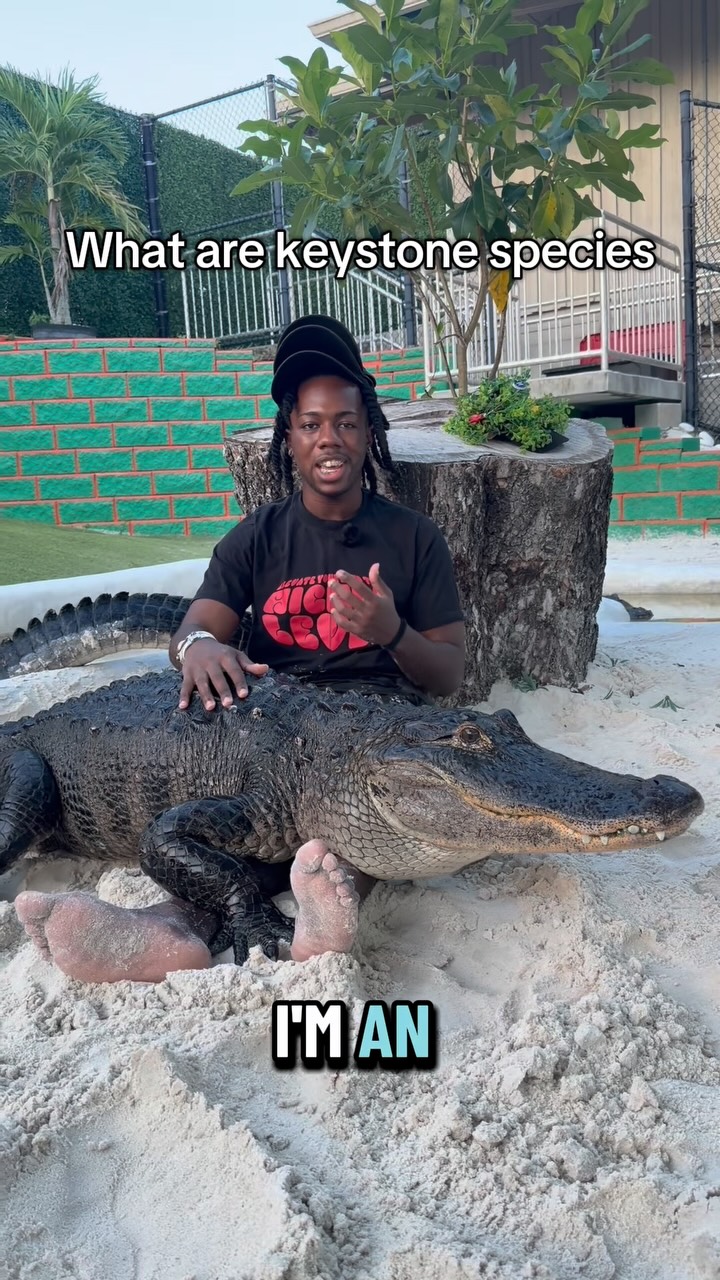
An Everglades scientist, sitting next to a live alligator, defines the term 'keystone species' and explains why alligators are a prime example. He details their role in creating 'gator holes' for other wildlife, building nests that foster new plant growth, and acting as apex predators to balance the ecosystem, using illustrative B-roll footage for each point.
[02]
[03]
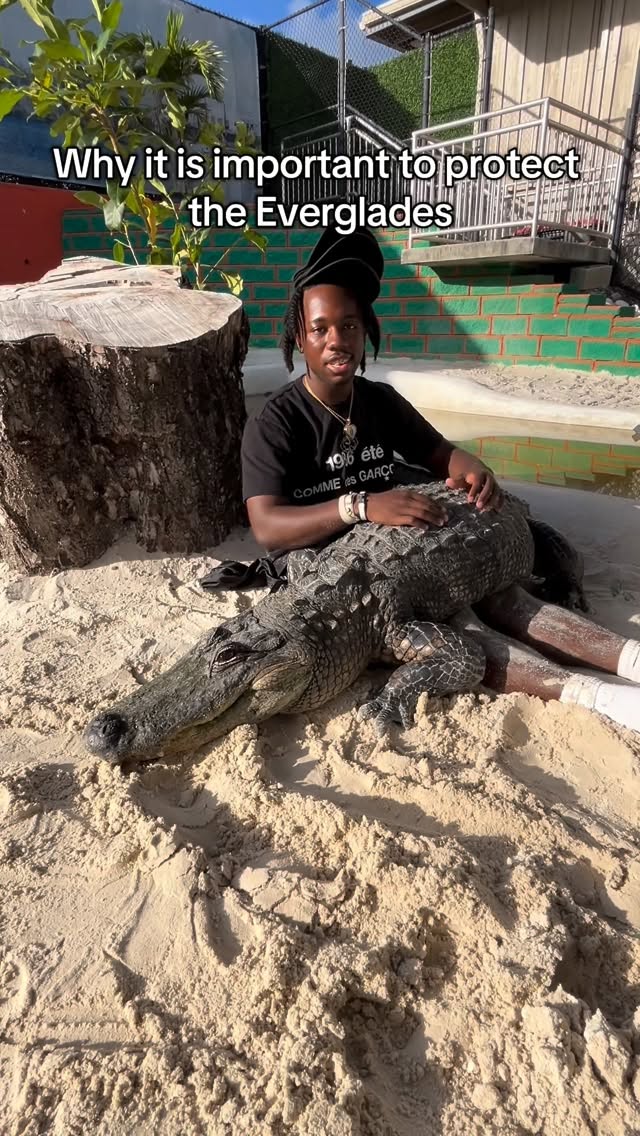 426K19.3×Explaining Everglades importance with alligator.@kidflamess · Breakdown
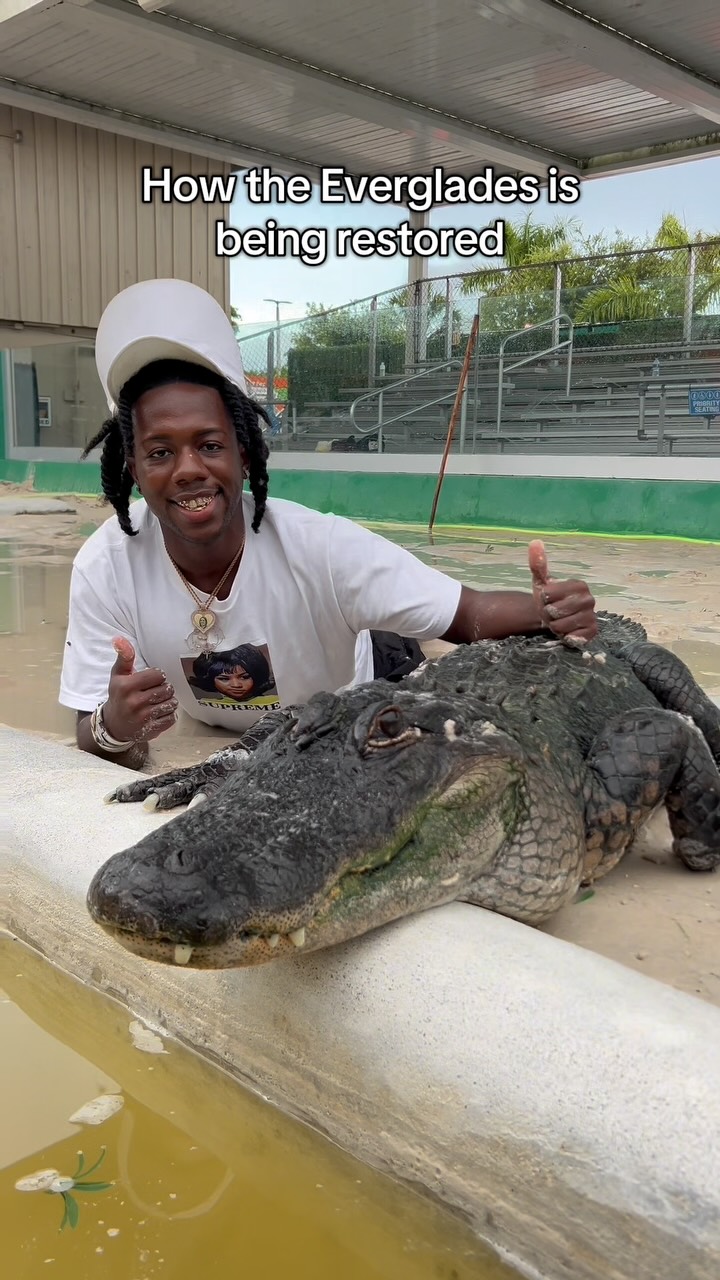 288.1K8.9×Scientist explains restoration with alligator@kidflamess · Pope In The Pool Multitask
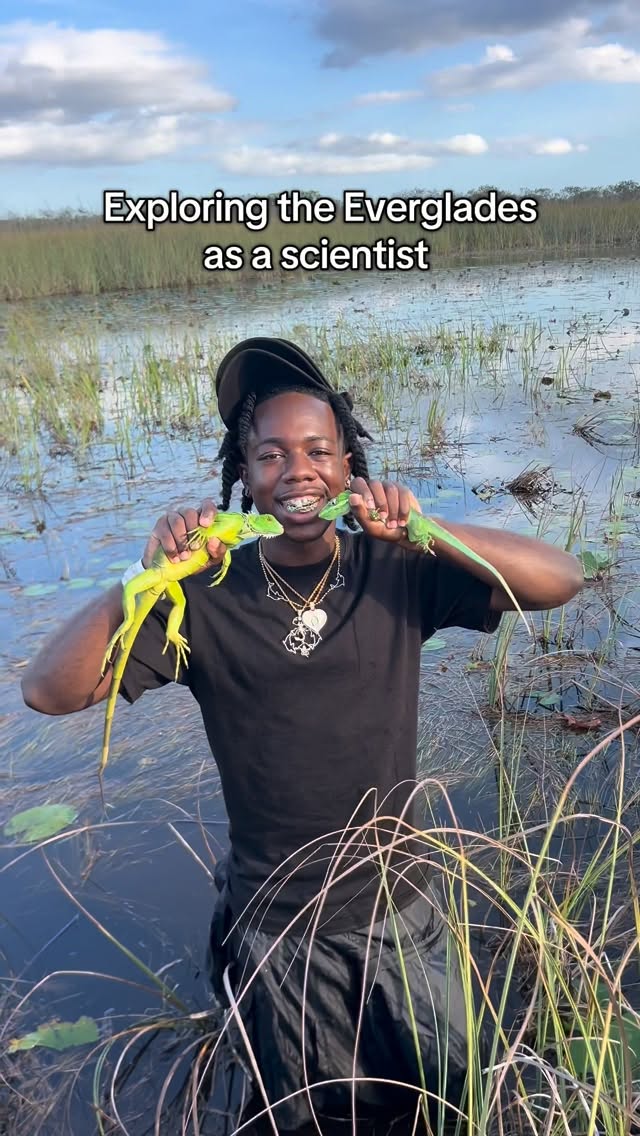 2.8M96.1×In-field invasive species explainer@kidflamess · Show and Tell
 276KCreator shows off captured animals@kidflamess · Show and Tell
 646.8K23.1×Creator shares facts while with alligators@kidflamess · Rapid Fire Listicle
 777.2K27.1×Debunking five alligator myths@kidflamess · Breakdown
 228.4KIn-field science explainer video@kidflamess · Pope In The Pool Multitask
 497.3K18.1×In-field science concept explanation@kidflamess · What Is X?
 119.1KScientist explains invasive chameleon@kidflamess · Show and Tell
 784.1K2.2×Scientist shows off cool lizard@kidflamess · Show and Tell
 604.4K21.6×Staged event explains nature fact@kidflamess · What Is X?
 508.8K18.2×Scientist explains what marl soil is@kidflamess · What Is X?
[04]
[05]
What stops the scroll in the first 3 seconds
Title hook · 25%
What are keystone species
Verbal hook · 20%
This is a keystone species.
Visual hook · 55%
A man is sitting calmly on the sand with his bare feet next to a large, live alligator, creating immediate visual tension and curiosity.
[07]
The promise the opener makes, and how the video pays it back
Hook
A visually arresting scene featuring the subject, paired with an on-screen text question that creates an immediate curiosity gap. The speaker then makes a bold, declarative statement linking the subject to the concept.
Payoff
The final point of the evidence cascade also functions as the conclusion, summarizing the subject's overall importance and providing a satisfying and complete resolution to the question posed in the hook.
[08]
The structural pattern this video runs on
Framework
The Expert Explainer
To take a complex or unfamiliar concept, define it clearly, and then prove its importance using a compelling, real-world example broken down into multiple, visually-supported points.
The Setup: Authority & Definition
The narrator establishes their expertise on the topic and then provides a clear, concise definition of the central abstract concept, giving the audience the necessary framework to understand what follows.
The Thesis Application
The narrator directly applies the universal definition to the specific subject of the video, creating a clear thesis statement that the rest of the video will prove.
The Evidence Cascade
A rapid succession of distinct points that prove the thesis. Each point is immediately substantiated with its own unique visual evidence (B-roll, diagrams, etc.), creating a compelling, fast-paced, and undeniable argument.
This is why alligators are important in the Everglades. Thank you @d_outback_ for helping me to film this ! #wetlands #ecology #stem
title · throughout
What are keystone species
informational · beginning
THIS IS A KEYSTONE SPECIES.
informational · middle
GATOR HOLES
informational · end
APEX PREDATORS,
This is a keystone species. I'm an Everglades scientist, and a keystone species is an important organism that helps to maintain the health and balance of an ecosystem. Alligators are a keystone species in better Everglades because they dig these gator holes that hold better, and that helps to provide refuge for fish, turtles, and also other aquatic wildlife. Their nest creates mounds of mud and vegetation that allow other plants to grow and other reptiles no nest. They're also apex predators, so they help to regulate the population of prey in the ecosystem.