Video #32235 · Speaker address
In-field invasive species explainerfrom @kidflamess
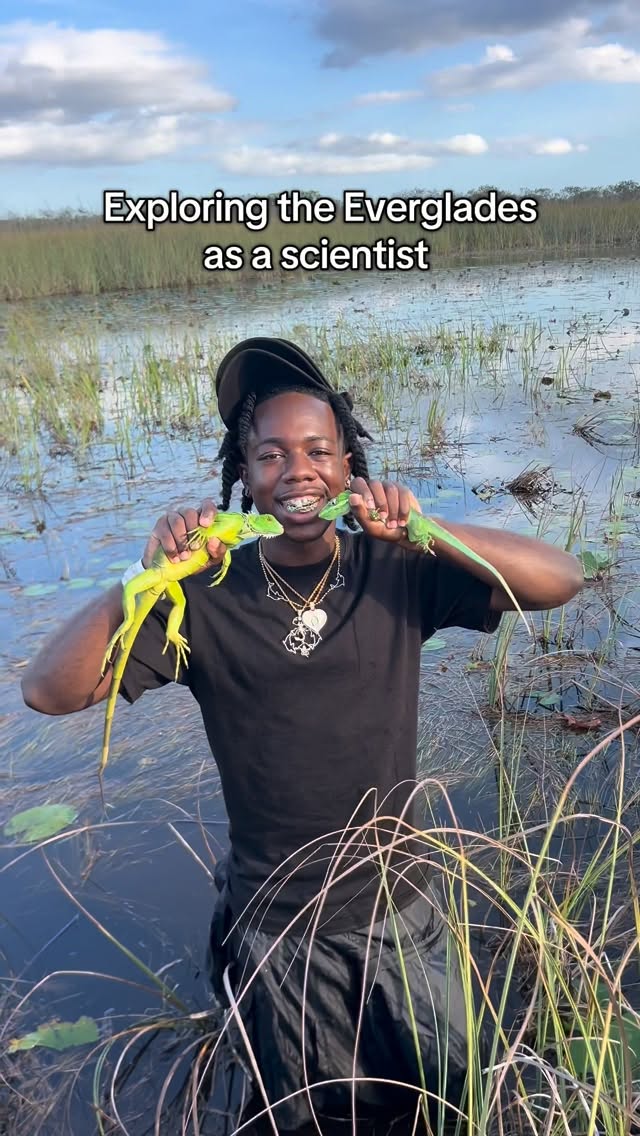
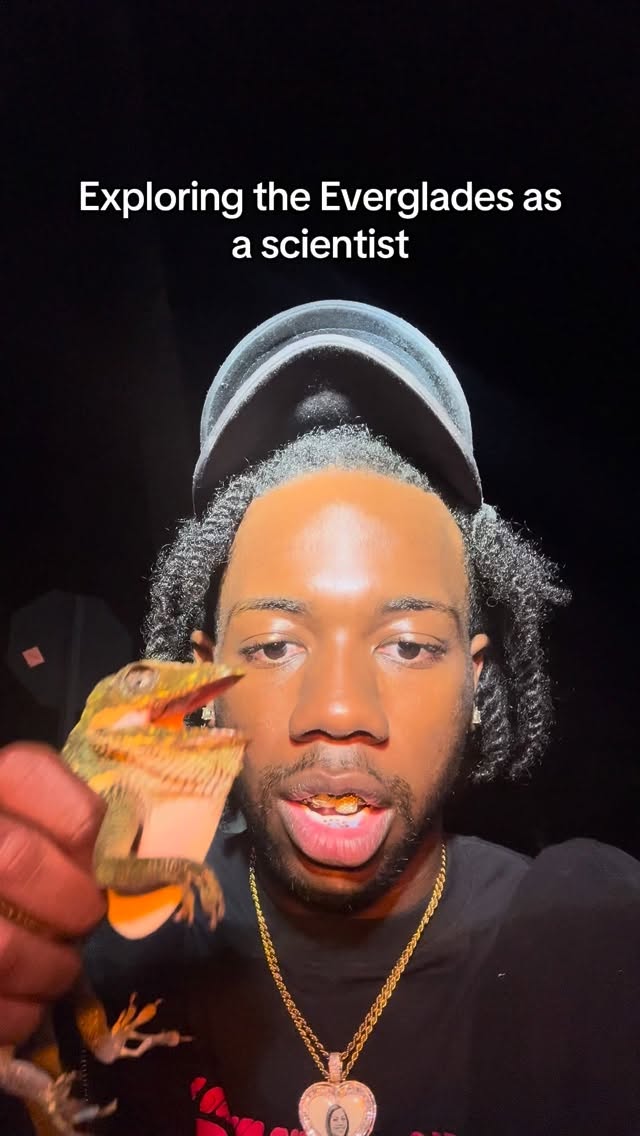
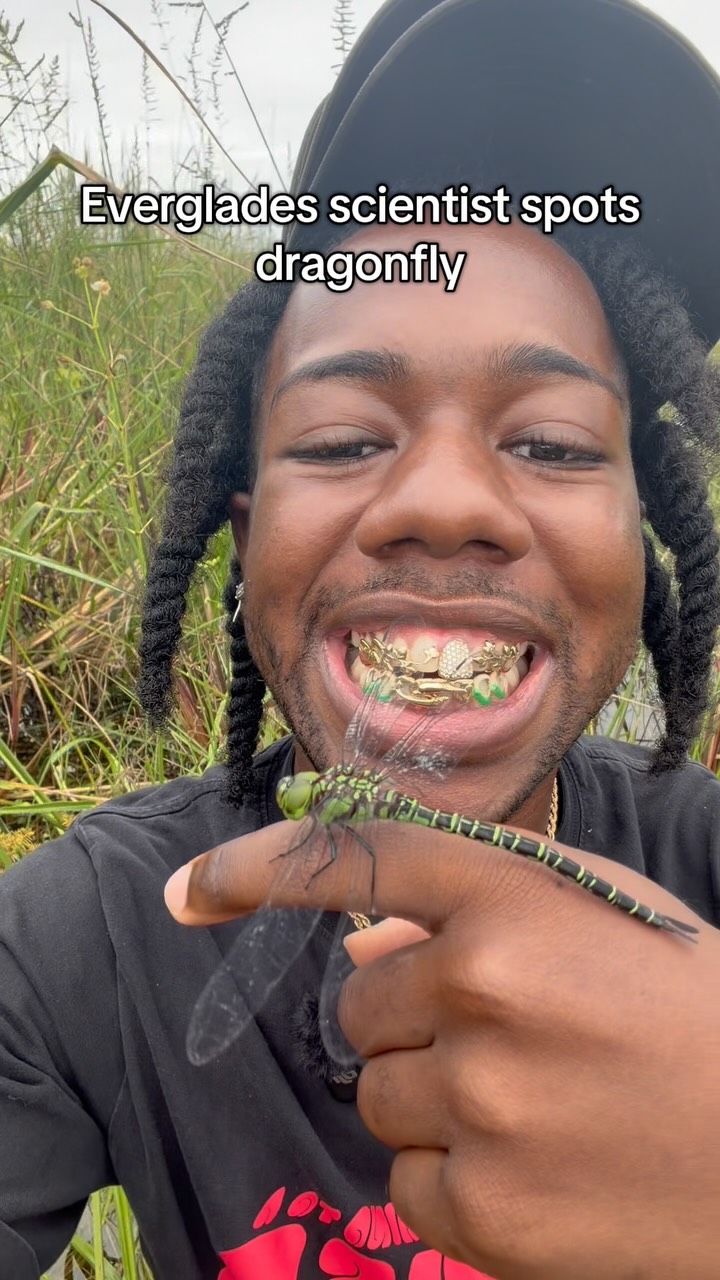
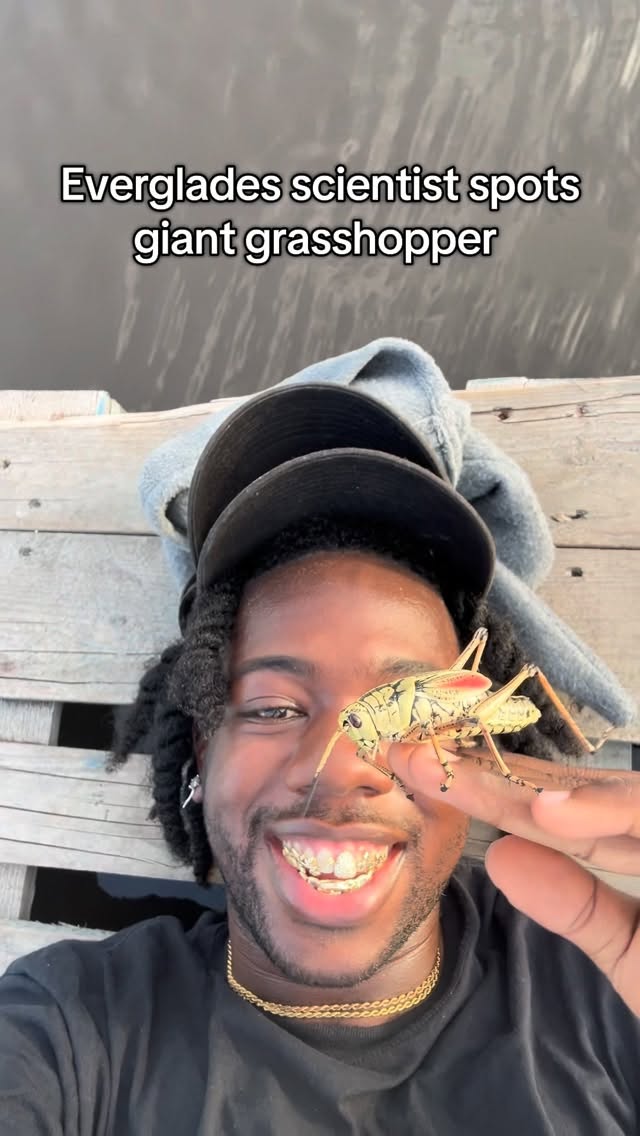
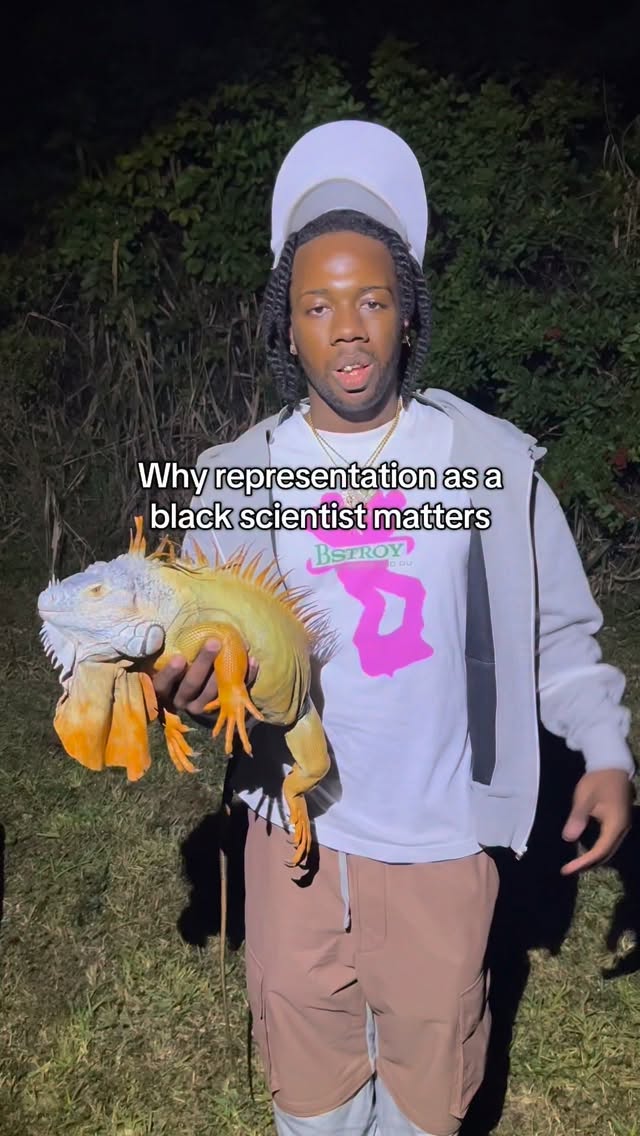
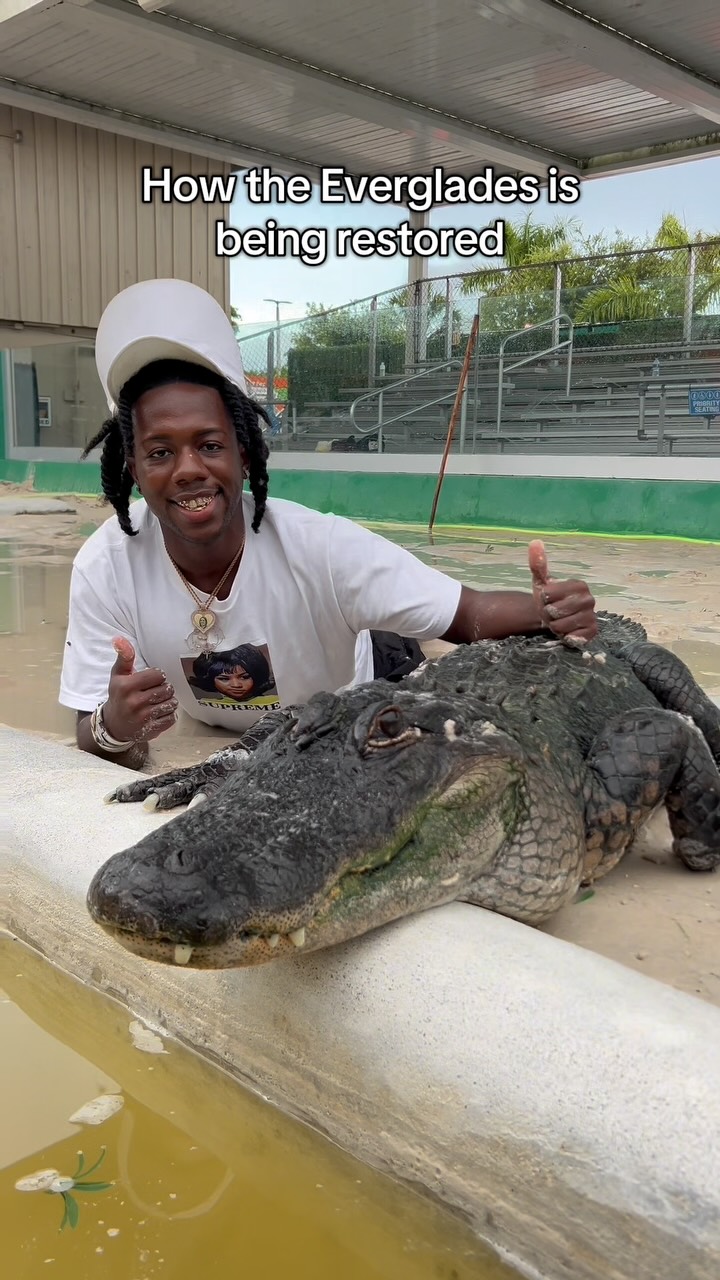
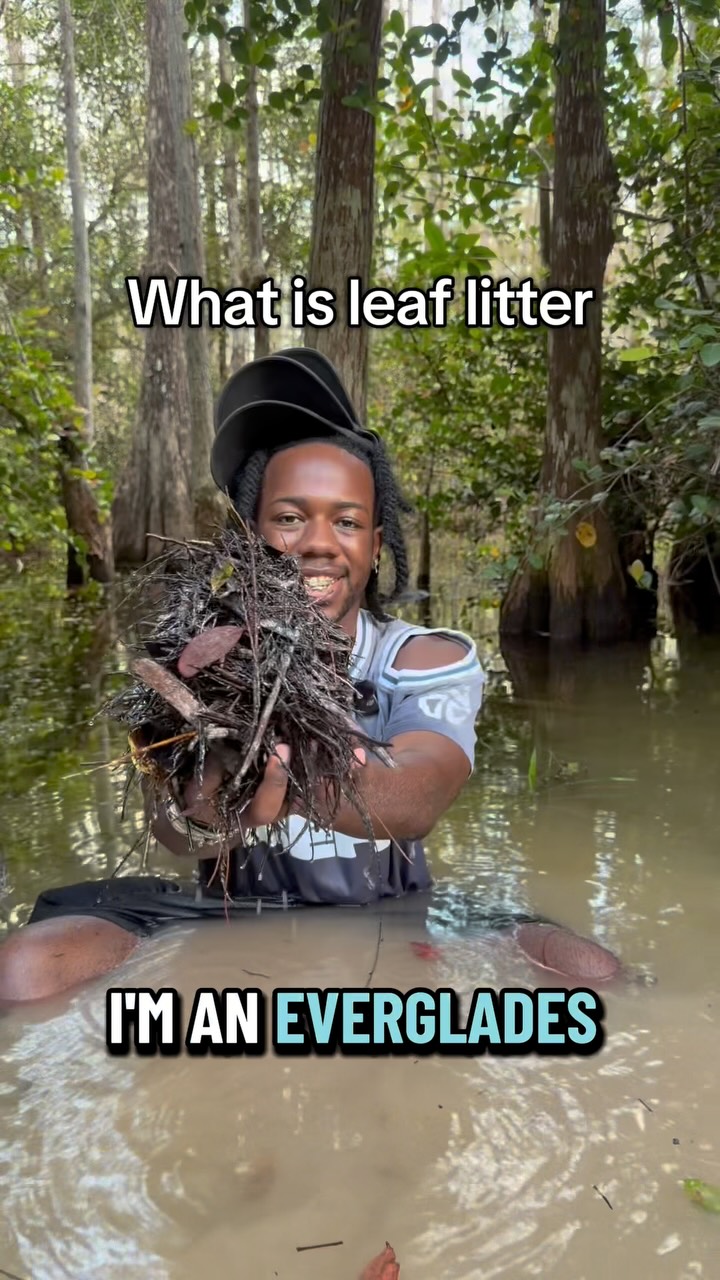
The creator, presenting as a scientist, stands waist-deep in the Everglades holding two live lizards. He identifies them as an invasive iguana and a Cuban knight anole, explains that they are harmful to the environment because they outcompete native species for food, and concludes with a humorous observation that their green color matches his grills.
- 1State authoritative premise
- 2Present tangible evidence
- 3Explain evidence's meaning
- 4Deliver personal punchline
ConceptsShow and TellBreakdownPope In The Pool Multitask
ElementsTitle Text HookDynamic Word-by-Word Captions
[05]
Hook analysis
What stops the scroll in the first 3 seconds
Title hook · 15%
Exploring the Everglades as a scientist
Verbal hook · 15%
Exploring the Everglades of the sciences.
Visual hook · 70%
A man stands waist-deep in a swampy, natural environment while holding two bright green lizards, one in each hand.
[06]
Hook template
Steal this for your own video
Film [expert role] waist-deep in [natural field setting], holding one [visually striking subject] in each hand for a direct-to-camera explanation.
- — Film a marine biologist waist-deep in a tide pool, holding one venomous lionfish in each hand for a direct-to-camera explanation.
- — Film a botanist waist-deep in a wildflower meadow, holding one invasive plant specimen in each hand for a direct-to-camera explanation.
- — Film an entomologist waist-deep in a rainforest stream, holding one giant beetle in each hand for a direct-to-camera explanation.
[07]
Hook and payoff
The promise the opener makes, and how the video pays it back
Hook
A visually striking opening that immediately establishes the creator's authority and the video's unique context, often through an on-screen text overlay.
Payoff
A final visual and verbal punchline that humanizes the expert, subverts the initial serious tone, and creates a highly memorable and shareable moment.
[08]
Narrative framework
The structural pattern this video runs on
Framework
The Expert Pivot
This framework establishes credibility on a topic, delivers a concise piece of information using tangible examples, and then pivots to a surprising, personal, or humorous punchline that connects the subject matter to the creator's personality.
- 1
The Thesis Declaration
The creator introduces the central concept or problem being demonstrated, using specific, physically-held items as evidence.
- 2
The Specimen Roll Call
The creator briefly identifies each piece of evidence individually, giving the audience specific examples to latch onto.
- 3
The Core Explanation
The creator provides a concise, easily digestible explanation for why the central concept is important or relevant, establishing the educational value.
- 4
The Personality Pivot
The creator abruptly shifts from an objective, educational tone to a subjective, personal, and often humorous observation that connects the subject matter directly to themselves, creating a pattern interrupt.
Themes
- environmental science
- conservation
- invasive species
Techniques
- direct address
- on-location demonstration
Trends
- educational content
- field science
Post caption
As a scientist doing research in the Everglades, I rarely came across invasive reptiles. However, when I do, I'm always fascinated by them. I briefly explained how iguanas and Cuban knight anoles negatively impact the environment. These lizards may outcompete other native species for food or their habitats. Understanding them plays a key role in protecting native wildlife and the ecosystem. #scientist #invasivespecies #everglades #reptiles #lizard
Text overlays
title · throughout
Exploring the Everglades as a scientist
informational · beginning
EXPLORING THE SCIENTIST.
informational · beginning
WE GOT TWO INVASIVE SPECIES.
informational · middle
RIGHT HERE WE GOT AN IGUANA,
informational · middle
AND CUBAN KNIGHT ANOLE.
informational · middle
THESE SPECIES ARE BAD FOR THE ENVIRONMENT
informational · middle
OUTCOMPETE FOR FOOD.
informational · end
AND LOOK, THEY'RE BOTH GREEN SO THEY MATCH MY GRILLS.
Transcript
Exploring the Everglades of the sciences. So right tier, we got two invasive species. Right here, we got an iguana, and we got also got a Cuban nitinol. Now both of these species are bad for the environment because they out compete other species for food. And look, they're both green, so they match my drills.