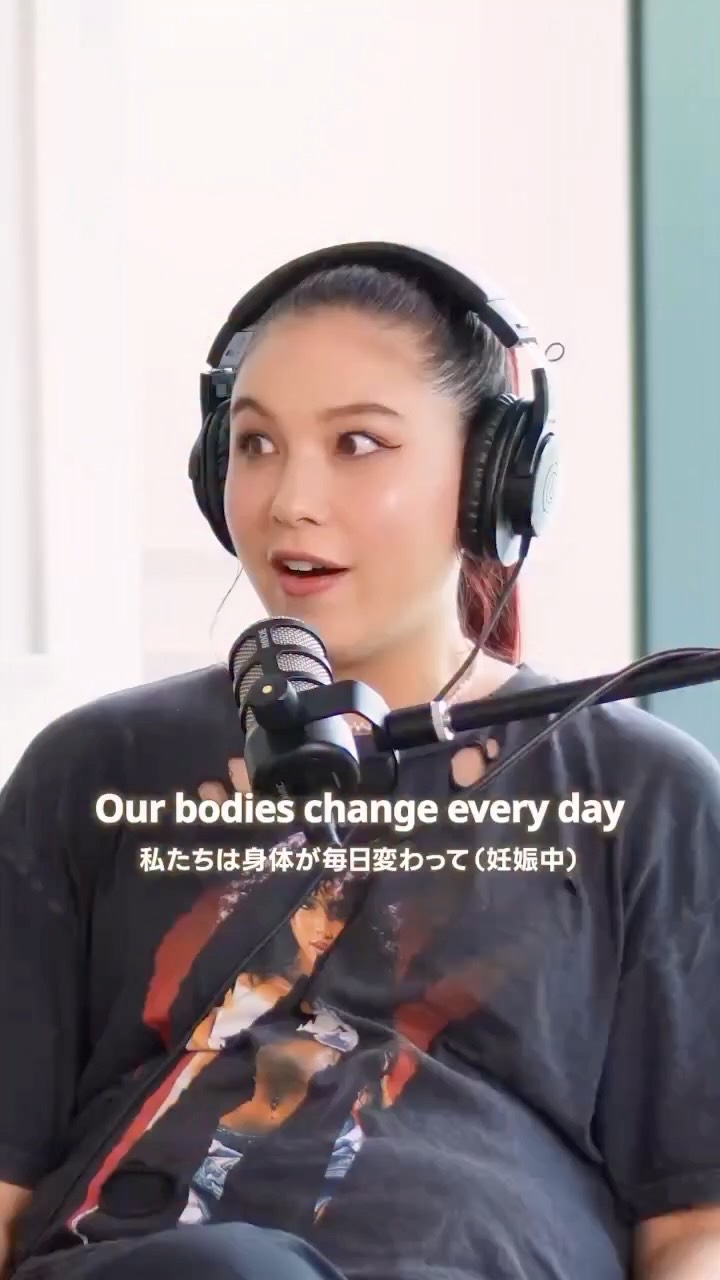
The speaker presents his personal theory that major differences in how men and women handle relationships and discomfort stem from women's experience with menstruation. He contrasts this with the common "man flu" trope, where men overreact to minor illness, which elicits laughter from his female co-host. He argues that from a young age, women are conditioned to function and plan their lives despite recurring discomfort, building resilience and planning skills that men typically do not develop, leading men to panic and want to quit when things become uncomfortable in life or marriage.
Post caption
I have a theory about men and women that might explain a lot about how we approach relationships.
From a young age, many women learn something men often don't.
You can be uncomfortable and still have to get on with your life.
Transcript
I have a theory about women and men. I haven't said it out loud. I'm gonna say it out loud for the first time. So I have a theory that almost everything about, like, major differences in relationship between men and women can be traced back to women getting their period. Go with me on this. So here's a great trope that's that's safe. I'm like any rank. When I get a head cold, I'm dying. I'm I'm just dying. Just go on without me. I'm dying. I've never... No one's ever been this ill. I'm so sick. Okay? Every... You're laughing because it is such a thing. So true. It's so true. Okay. Here's the thing. Yeah. Women from a quite young age learned the following lesson. You're going to be uncomfortable roughly every twenty eight days, and you still have to get shit done. Uh-huh. So the fact that you're uncomfortable, you still have to operate under those conditions. You don't get to say, I have cramps. I'm gonna be staying home for the next two days. You don't get to do that. You get told early on, yeah. You're uncomfortable. Sorry. You're gonna be uncomfortable. This happens. K? So one, you learn how to operate when you're rank. Uncomfortable. K? Two, you actually have to plan ahead. Like, a woman getting her period, like, from a fairly young age, you have to be like, okay. I have to bring sanitary products. I have to think about, oh, if if I'm planning a thing, I don't wanna plan it for this particular week because probably that's where I'll be in my cycle. And if you're really thinking ahead, you're like, oh, we're doing this. I wanna wanna do that when I'm ovulating because that'll be really fun, and I'll be really into it. Like... So you have to plan. So I think that that thing at such a young age creates, like, certain habits of of thought, like a willingness to be uncomfortable and still push through and operate, a a planning ahead of things, a realizing that, like, your body and your emotional state are gonna fluctuate sometimes due to circumstances beyond your control rank you just have to ride with it. Like, men don't have anything like that. We're uncomfortable even for a second, and we're like, well, this is broken. This is done. There's something seriously wrong. So that's the reason why, like, I I think a lot of men, the minute something's gone uncomfortable in their marriage, like, well, we're done. Roll up the sleeve. We're done. We're finished. This is it. It's wrong. It's like, no. No best that big. You gotta good. You'll be alright.