@brandonbalfourr
Instagram · Talking Head Edit
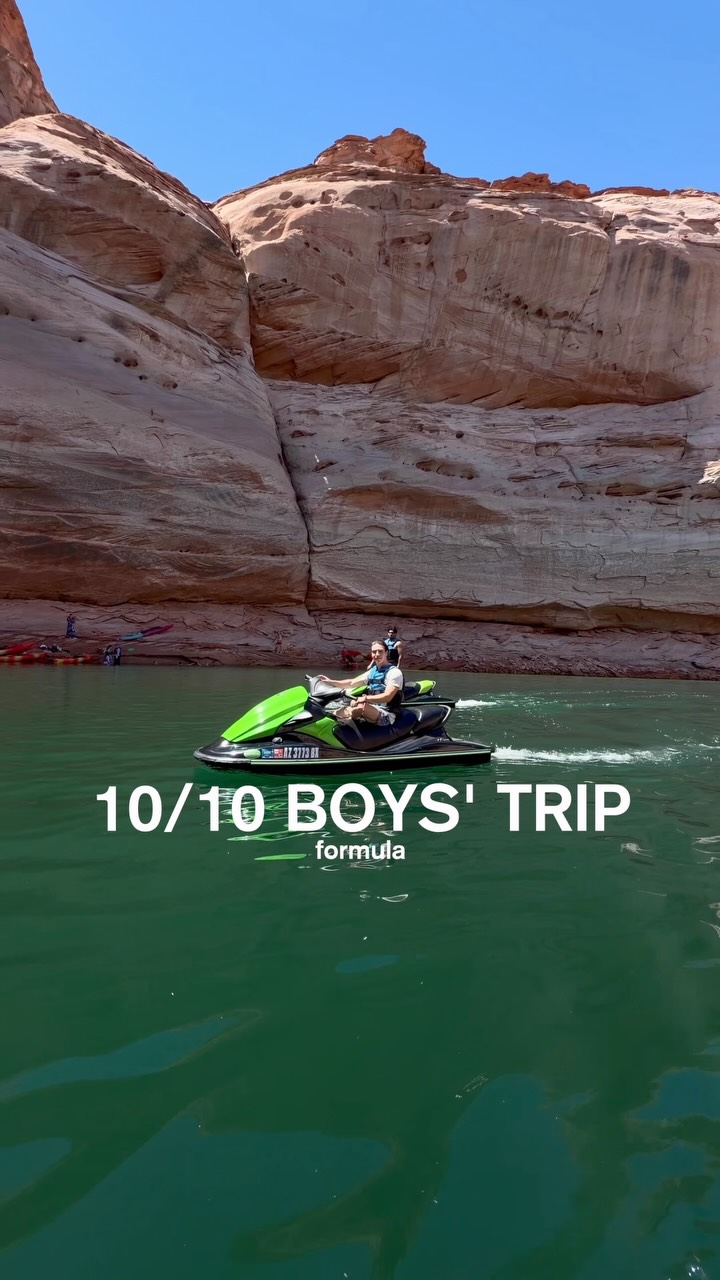
@brandonbalfourr Send this to the group chat that’s been planning a boys trip for the last 3 years 😂

@brandonbalfourr
Instagram · Talking Head Edit
@brandonbalfourr Send this to the group chat that’s been planning a boys trip for the last 3 years 😂
Performance
Video #48117 · Talking Head Edit
[01]
The creator presents his four-step formula for planning a perfect 'boys' trip.' He explains each step sequentially: first, choosing activities before the destination; second, finding unique accommodations that are part of the experience; third, using AI for logistics; and finally, keeping the group small. Each point is illustrated with B-roll footage from his own trips.
[02]
[03]
 1.3M43.9×Solo travel side quest vlog@ciaragan · Lifestyle Showcase
 1.2M7.3×Creator shares three Tokyo tips@hotelsdotcom · Rapid Fire Listicle
 336.7K4.6×Remote Costa Rican resort tour@iambenwolff · Lifestyle Showcase
 547.1K56.3×Explaining an extreme travel alternative.@davidkijlstra · Opportunity Explainer
 1.8M1×Ironic luxury travel montage@angelagiakas · Lifestyle Showcase
 1.3M171.9×Travel vlog showcasing all-inclusive value@taylordonoghuee · Value Vlog
 292.8K35.4×Brand founder's success principles explained@davidkylechoe · Case Study Breakdown
 2.5M1.4×Rapid list of luxury European hotels@gstaadguy · Rapid Fire Listicle
 222.9K131.8×Critiquing modern 'backdrop' travel culture@bhadshah_khango · Breakdown
 1.5M1.4×Luxury lifestyle montage with trending audio@gstaadguy · Lifestyle Showcase
 195.2K27.4×Talking head travel recommendation list@aashhhhh · Rapid Fire Listicle
 154.7K56.4×One strong tip for vacation@leightonwrites · Anecdotal Philosophy
[04]
[05]
What stops the scroll in the first 3 seconds
Title hook
10/10 BOYS' TRIP formula
Verbal hook
I have now planned multiple 10 out of 10 worst trips. I'd like to consider myself a bit of a goat, one would say.
Visual hook
The video opens with a rapid montage of high-energy B-roll clips, including a man on a jet ski in a canyon, someone jumping into turquoise water, and a group canyoning through a river, creating an immediate sense of adventure and aspiration.
[07]
The promise the opener makes, and how the video pays it back
Hook
The Credibility Hook: The creator makes a bold claim of expertise and success in a specific domain, promising to reveal the formula that guarantees a perfect result.
Payoff
The payoff is the completed formula. The viewer leaves with a full, actionable blueprint that feels both aspirational and achievable, solidifying the creator's status as a trusted authority.
[08]
The structural pattern this video runs on
Framework
The Authority Formula
The creator establishes themselves as an expert on achieving a desirable outcome, then breaks down their 'secret formula' into a series of actionable principles, each validated with aspirational visual evidence.
The Foundational Principle
The first and most important rule is stated, often reversing a common assumption or process. This is supported by dynamic visuals showing the ideal outcome of following this rule.
The Environmental Enhancement
The second rule focuses on optimizing the physical environment or context to elevate the overall experience, moving beyond the core activity. Visuals shift to show the benefits of this enhanced environment.
The Process Optimization Hack
The third rule introduces a specific tool, technique, or shortcut that simplifies the most tedious or difficult part of the process, adding a layer of modern, practical value.
The Human Factor Mandate
The final rule addresses the social or personal dynamics of the situation, often offering a piece of counter-intuitive wisdom that prevents common points of failure.
Send this to the group chat that’s been planning a boys trip for the last 3 years 😂
title · beginning
10/10 BOYS' TRIP formula
informational · middle
CHOOSE ACTIVITIES BEFORE DESTINATION
informational · middle
FIND UNIQUE AIRBNBS
informational · middle
USE AI THE PLAN THE LOGISTICS
informational · end
KEEP A SMALL GROUP
I have now planned multiple 10 out of 10 worst trips. I'd like to consider myself a bit of a goat, one would say. And I've gotten it down to a science that every time it is a good trip. So this is exactly what I do. So the first thing I do is I actually choose the activities that we wanna do before I choose the destination. So if we wanna go explore flooded caves, if we wanna go UTV in the mountains, if we wanna go jet ski in the canyons, I will choose the activities first and then plan the location based on where the best place to do those things is. Next, I make the accommodation part of the experience. I actually look for unique Airbnbs, places that we wanna actually spend time at after a long day of activities. I look for hot tubs, a place that has games, mini golf, fire pit, place you stay at makes a big difference. Third, I actually use AI to plan the logistics of things. So I'll give it the activities, the budget, the trip length, and then I get it basically to formulate the most efficient way to do those things, where to go first, etcetera. And finally, I typically keep the group pretty small. The bigger the group, the more issues you guys are gonna encounter, more people are gonna disagree about things. So some of the best trips I've ever done have only been like two, three people total.