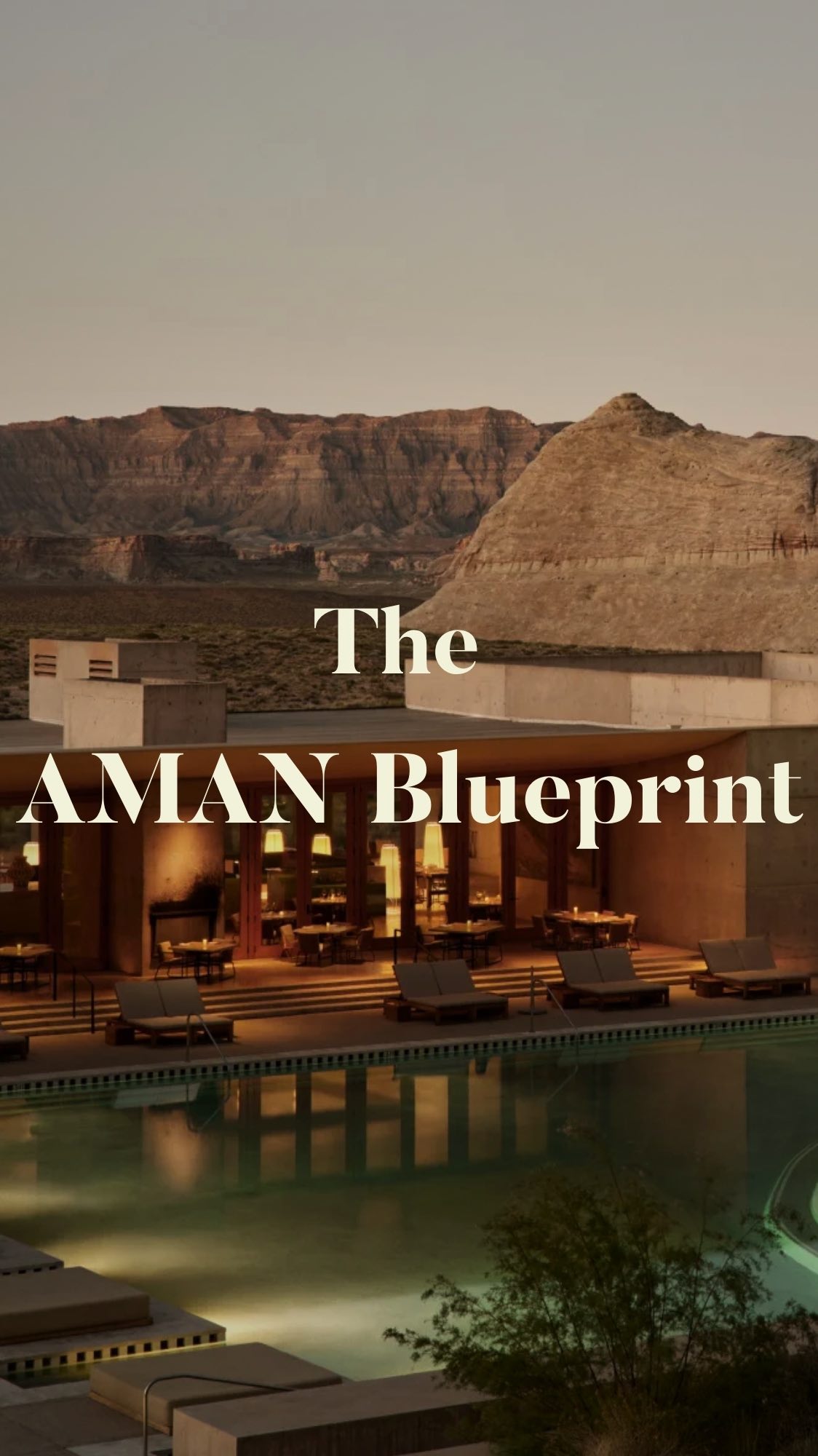
The creator presents a case study on the luxury brand Aman Hotels, breaking down the three core principles of its founder, Adrian Zecha. He explains the first principle, 'Bigger is Not Better,' detailing how limiting hotel size allowed for superior service. He then covers the second principle, 'Hardware and Software,' which differentiates the physical hotel from the service experience. Finally, he discusses the third principle, 'Location and Gut Instinct,' emphasizing the founder's strategy for selecting unique sites.
Post caption
@aman has created a standard of luxury that stands on a class of its own. It breaks the frame that you need to go big to be a big business. Adrian Zecha’s approach to Aman is truly legendary. Founders in all industries could learn from him. Also he’s just a G.
Image and video credits to: Aman
#brandstrategy #marketing #founderstory
Transcript
This founder built a $3,000,000,000 business with the simple concept of staying small. Welcome to Behind the Brand, which is a series that uncovers the founder principles that become the unfair advantages of outlier businesses. Today, we're talking about Aman Hotels. Aman Hotels is a luxury hospitality company with over 36 resorts, residences, and hotels in 20 countries. The early and lasting success of Aman did not happen by accident. It happened because the founder, Adrian Better, had key founder principles that have led him to build Amman into the standard of luxury hospitality that it is today. Here are three of Adrian Zetcher's key principles in building Amman. Number one is bigger is not better. Actually, staying small is the unfair advantage. Everyone in the industry thought Zetra was crazy for charging such high rates per room while also not having that many rooms. In fact, early on, they limited every resort to having 50 rooms. But it was precisely this principle that allowed them to provide a level of service larger hotels could not. This is why I opted to go for less than 50 rooms per resort with the special little touches and attention to detail that the big hotel companies can't offer. And not because they don't understand it or because they don't appreciate it. They simply can't do it because they have so many rooms with such short guest stays. Their staff doesn't have the capacity or the time to memorize best' names and appearance. Those small details make a difference. It's not because we're so good. It's just that our chosen format favors more intimate service. That's amazing. Principle number two is his hardware and software approach to hotels. He sees the physical space and amenities as the hardware and the service as the software. The hardware attracts first time best, and the software keeps them coming back every year. In fact, he believes that while the hardware may change, the software can remain the same, which is why even though he's in his eighties, he's building yet another luxury hospitality brand called Azeray using the same software from Aman. Principle number three is the importance of location and gut instinct. He says that everything starts with location. It needs to be both beautiful and unspoiled, which is why 15 of their locations are in or near a UNESCO protected site. On top of that, he says he only needs to visit a location once to determine if it's a yes or no. It's a gut feeling plus him answering the question, can we do something special here? While it's a bit hyperbolic, he says it like this. If there's anything I have contributed, I spot the sites. I still do that. I go and I find the sites, and then I imagine what I would like to see there. I didn't do it just because everybody's gonna love it. I love it. I want to do it. Let me know what you think. Has Aman actually been able to continue on with its founder principles despite changing ownership and turbulent best relations? Let me know in the comments below.