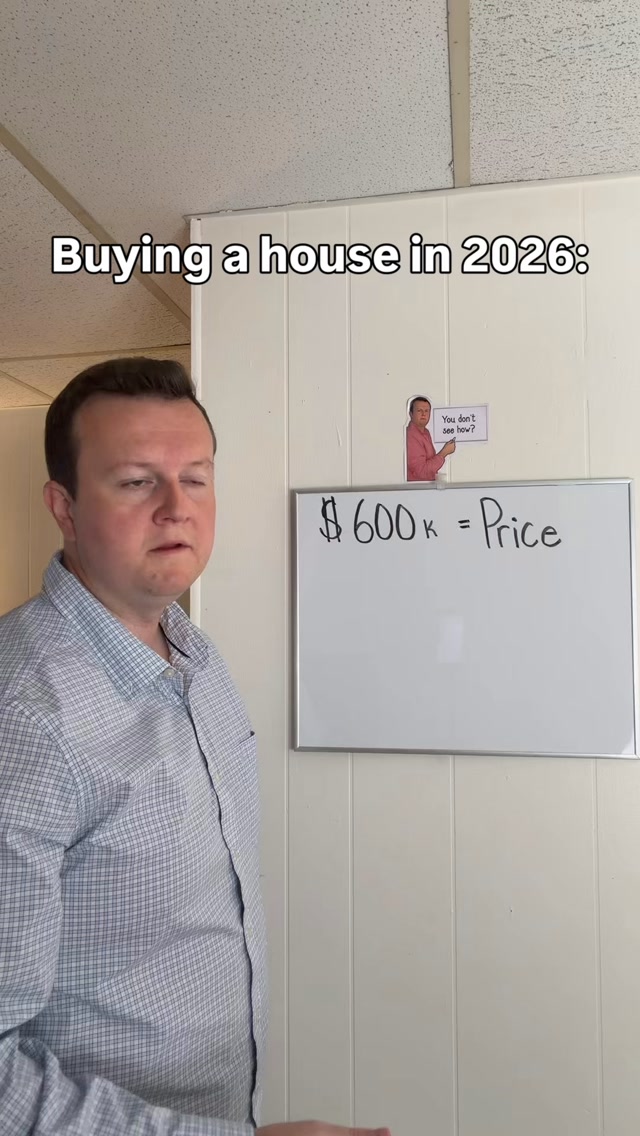
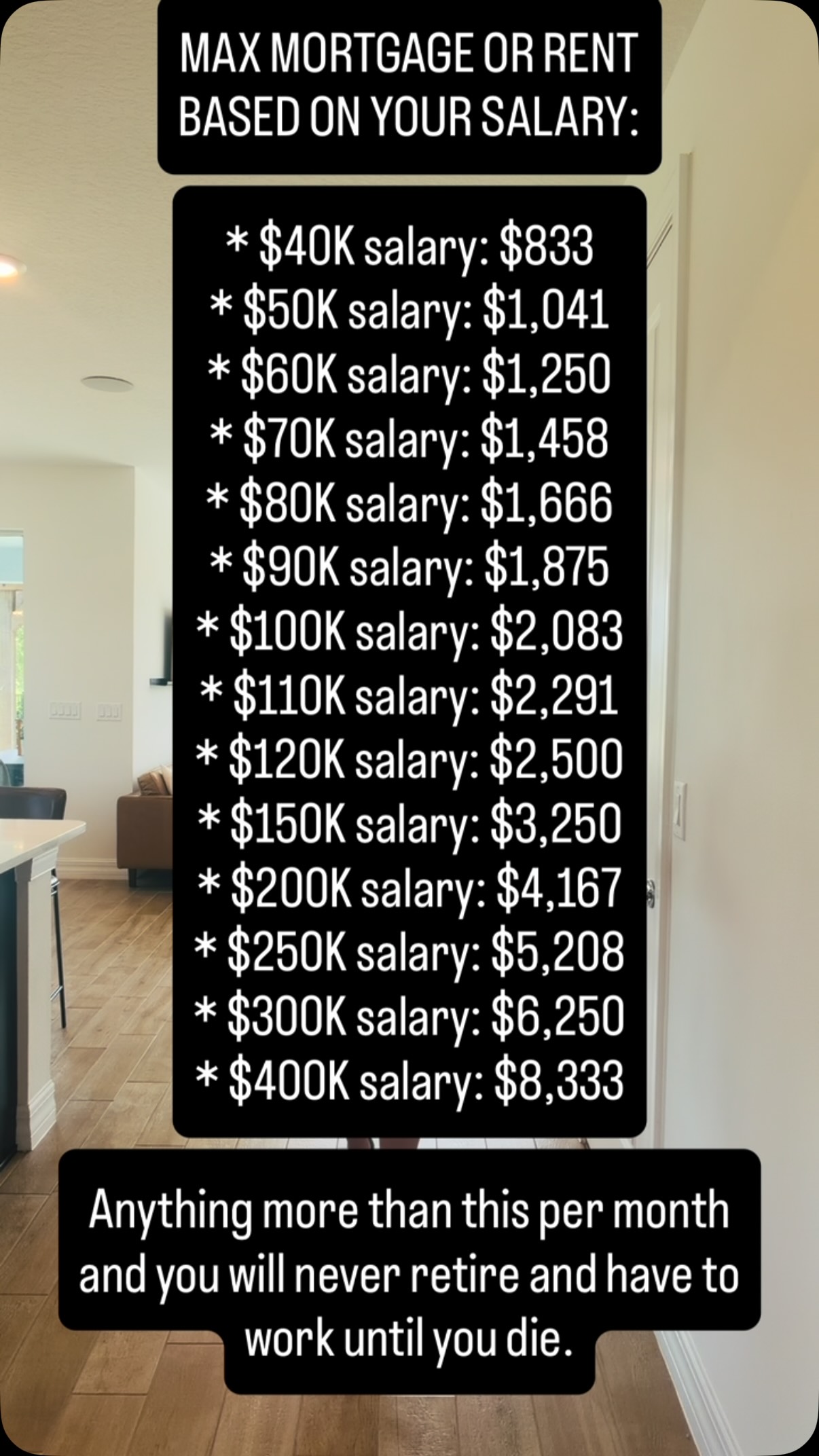
Viral Hooks
Trending short videosComparing three mortgage payoff strategies
B

@brookelynnmortgages

Instagram · Graphic Yap

@brookelynnmortgages You’ve been told to do one or the other ❌ But what if that advice is what’s actually slowing you down? That extra 💰/month? It could be doing double the work ✦ reducing your debt ✦ growing your investments ✦ creating tax advantages Same money. Completely different outcome 🙌 📈 extra 1M in investment growth 💸 280K in extra tax refunds 🏠 faster mortgage pay off This is another way our clients use the Smith Manoeuvre to get ahead 🙌 Comment “SMITH” to know how to set up your mortgage properly to do this 📩💪 Follow @brookelynnmortgages for more tips! #investing #mortgagetips #homeowner #savingmoney #mortgagebroker

View original on Instagram

The edit1 shot · 18 text
Shots Text2:52

Performance

Views
485K
Likes
7.4K
Comments
6.2K
Engagement
2.8%
Length · 4 Sept 2026
2:52

Video #48897 · Graphic Yap

Comparing three mortgage payoff strategiesfrom @brookelynnmortgages

[01]

Overview

The creator compares three financial scenarios for a homeowner with extra cash flow: 1) paying off the mortgage early, 2) investing the extra money, and 3) using the Smith Manoeuvre to do both simultaneously. She breaks down the numbers for each scenario over a 30-year period, showing the final investment portfolio value and interest paid, ultimately arguing that the third option yields a significantly higher net worth and provides tax benefits.

[02]

Simple outline

  1. 1Pose common binary choice
  2. 2Compare two standard outcomes
  3. 3Reveal superior third option
  4. 4Address the 'catch'

[03]

Related videos

[04]

Classification

Concepts
This or ThatOpportunity Explainer
Elements
Picture-in-PictureDM / Comment-for-Info CTAText OverlayJump CutImage OverlayGraphic OverlayTitle Text Hook

[05]

Hook analysis

What stops the scroll in the first 3 seconds

Title hook · 50%

Pay off mortgage faster VS invest?

Verbal hook · 50%

Should you pay your mortgage off first or invest?

Visual hook

The creator speaks directly to the camera while holding a small, fuzzy microphone, establishing an interview or podcast-like setting that signals an expert explanation.

[06]

Hook template

Steal this for your own video

[Option A] faster VS [Option B]?

  • — Pay off student loans faster VS invest?
  • — Rent a studio VS buy a food truck?
  • — Train 6 days a week VS rest more?

[07]

Hook and payoff

The promise the opener makes, and how the video pays it back

Hook

Pose a common, high-stakes 'either/or' question that the target audience faces, then immediately promise a secret way to achieve 'both'.

Payoff

Reframe the initial binary question, positioning the 'secret' third option as the only logical path forward. This transforms the viewer's problem from 'Which should I choose?' to 'How do I implement the best option?' and leads into a direct call to action.

[08]

Narrative framework

The structural pattern this video runs on

Framework

The Superior Third Option

The video presents a common binary choice, analyzes the two standard options to establish a baseline, and then reveals a 'secret' third option that is dramatically superior, reframing the initial problem and positioning the creator as an expert with insider knowledge.

  1. 1

    The Ground Rules

    Establish the constant variables and assumptions for the comparison (e.g., mortgage size, extra cashflow, ROI) to create a fair and credible playing field for the analysis.

  2. 2

    The Baseline Case (Option A)

    Analyze the first, most conventional choice. Detail the process and reveal its positive, but ultimately limited, numerical outcome. This sets the benchmark for comparison.

  3. 3

    The Challenger Case (Option B)

    Analyze the second common choice. Detail its process and reveal an outcome that is better than the baseline but still has clear drawbacks, creating a sense of trade-offs.

  4. 4

    The Game-Changer Reveal (Option C)

    Introduce a 'secret' or advanced third option by a specific name. Briefly explain its unique mechanism and unveil a dramatically superior outcome that makes the first two options seem obsolete.

  5. 5

    The Credibility Shield ('The Catch')

    Proactively address the audience's skepticism by acknowledging a caveat, nuance, or 'catch' to the superior option. Correct the numbers to a still-impressive but more realistic figure, building trust by demonstrating transparency.

  6. 6

    The Bonus Benefit

    Reveal an additional, unexpected advantage of the superior option (e.g., tax savings) that further solidifies its dominance over the other choices.

Themes

  • Wealth creation
  • Financial strategy
  • Debt management
  • Long-term planning

Techniques

  • Comparative analysis
  • Data visualization
  • Scenario planning

Post caption

You’ve been told to do one or the other ❌ But what if that advice is what’s actually slowing you down? That extra 💰/month? It could be doing double the work ✦ reducing your debt ✦ growing your investments ✦ creating tax advantages Same money. Completely different outcome 🙌 📈 extra 1M in investment growth 💸 280K in extra tax refunds 🏠 faster mortgage pay off This is another way our clients use the Smith Manoeuvre to get ahead 🙌 Comment “SMITH” to know how to set up your mortgage properly to do this 📩💪 Follow @brookelynnmortgages for more tips! #investing #mortgagetips #homeowner #savingmoney #mortgagebroker

Text overlays

  • title · beginning

    Pay off mortgage faster VS invest?

  • contextual · beginning

    video on how you can do BOTH

  • contextual · beginning

    let's go through the REAL numbers together 💪

  • informational · beginning

    Assumptions: - $500,000 mortgage - $2,377 mortgage payment - 30yr amortization - 6% ROI on investments (conservative) - $1000 extra cashflow to invest OR prepay mortgage every month

  • title · middle

    Scenario 1: Pay off mortgage first

  • informational · middle

    - pay off mortgage in 17yrs (13yrs sooner) - save $157,000 in interest

  • informational · middle

    $786,000

  • title · middle

    Scenario 2: Invest earlier and keep mtg

  • informational · middle

    - start investing earlier (only $1000/mo) - pays $407,000 in interest over 30yrs

  • informational · middle

    $974,000

  • title · middle

    Scenario 3: BOTH w/ the Smith Manoeuvre

  • informational · middle

    $1000 -> pre-pay mortgage -> equity opens on HELOC -> invest borrowed funds

  • informational · middle

    - pay mortgage off in 15yrs - create a tax efficiency saving $281K in taxes

  • informational · middle

    $2.4 million

  • title · end

    The Catch 🚩

  • informational · end

    - 2.4M - 500K HELOC = 1.9M - still much higher net worth than 1 & 2

  • informational · end

    $281,000

  • call-to-action · end

    Comment “SMITH” and I’ll send you more info

Transcript

Should you pay your mortgage off first or invest? I did a recent video on this where I explained that you, as a homeowner, can actually do an advanced mortgage strategy that will allow you to do both. And today, I'm gonna break down the real numbers of each scenario. So for numbers purposes, let's assume that you have a $500,000 mortgage, and after paying your mortgage payment, you have roughly a thousand dollars that you can either prepay your mortgage down faster or invest. So in scenario one, let's assume that you take that money and use it to prepay your mortgage. In this scenario, you would pay off your mortgage in seventeen years instead of thirty. So you're shaving thirteen years off your amortization, and you'd save about $157,000 in interest. Then once your mortgage is gone, let's assume that you take that thousand dollars plus the payment, the monthly payment that you no longer have, and you take all of that to invest for the next thirteen years. By year thirty, you'll have an investment portfolio worth about $786,000 Now to scenario number two. Let's assume that extra thousand dollars instead of prepaying your mortgage, you're going to start investing earlier. So a thousand dollars a month for thirty years. Your mortgage is still going to take you thirty years to pay off, and because of that, you are gonna pay four hundred and seven thousand dollars in mortgage interest. But because you started investing earlier, you're gonna have an investment portfolio worth about $974,000 Now here's where it gets interesting. Scenario number three, you do the Smith maneuver. So what you do in this case is you use that thousand dollars to prepay your mortgage. And if you have the right mortgage structure in place, you can set it up where tier principal paydown will actually open up on a home equity line of credit and you can reinvest that into the market. In this scenario, you'll actually pay your mortgage off in fifteen tier. And by year thirty, you'll have an investment portfolio that has grown to roughly $2,400,000 Now, before everyone rushes to the comments, there absolutely is a catch to this. We are assuming that you're investing both your principal pay down from your mortgage payment and that extra thousand dollars a month. So at the end of thirty years, you're going to have a $500,000 home equity line. So your increased net worth is not actually $2,400,000 It's actually 1,900,000 which is still significantly higher than either of the two scenarios. And there's also another benefit to the third scenario because you converted your mortgage into a tax deductible investment loan. You have also received approximately $281,000 in additional tax refunds that you would not have otherwise. So maybe your question shouldn't be, should I pay off my mortgage first or should I invest? It should be, how can I structure my mortgage properly no I can do both?