Viral Hooks
Trending short videosExplaining the economics of youth sports
Y

@yourbrain_onmoney

Instagram · Greenscreen Talking Head

@yourbrain_onmoney why do eight-year-olds have private coaches, year-round training schedules, and travel tournaments that cost thousands in hotels and flights. how credentialism, private equity, and anxiety drove the pay-to-play childhood (and how it's a reflection of the larger economy)

View original on Instagram

The edit1 shot · 16 text
Shots Text2:38

Performance

Views
173K
Likes
7.9K
Comments
107
Engagement
4.6%
Outlier
11.2×
Length · 26 Oct 2026
2:38

Video #49212 · Greenscreen Talking Head

Explaining the economics of youth sportsfrom @yourbrain_onmoney

[01]

Overview

The creator explains the concept of the 'pay-to-play childhood,' using the rising cost and professionalization of youth sports as a primary case study. She contrasts the past affordability of sports with the current high-cost, hyper-competitive environment, supporting her claims with news headlines and statistics. The creator argues this trend is driven by the 'corporate exploitation of parental anxiety' and the rise of 'credentialism,' where every childhood activity is viewed as a vehicle for college applications and future success in an unequal economy.

[02]

Simple outline

  1. 1State provocative thesis
  2. 2Contrast nostalgic past with expensive present
  3. 3Reveal underlying psychological driver
  4. 4Explain the broader societal system
  5. 5Show universal application

[03]

Related videos

[04]

Classification

Concepts
BreakdownCase Study Breakdown
Elements
B-Roll CutawayImage OverlayText OverlayTitle Text HookJump CutGreen Screen CompositeGraphic OverlayVoiceover

[05]

Hook analysis

What stops the scroll in the first 3 seconds

Title hook · 100%

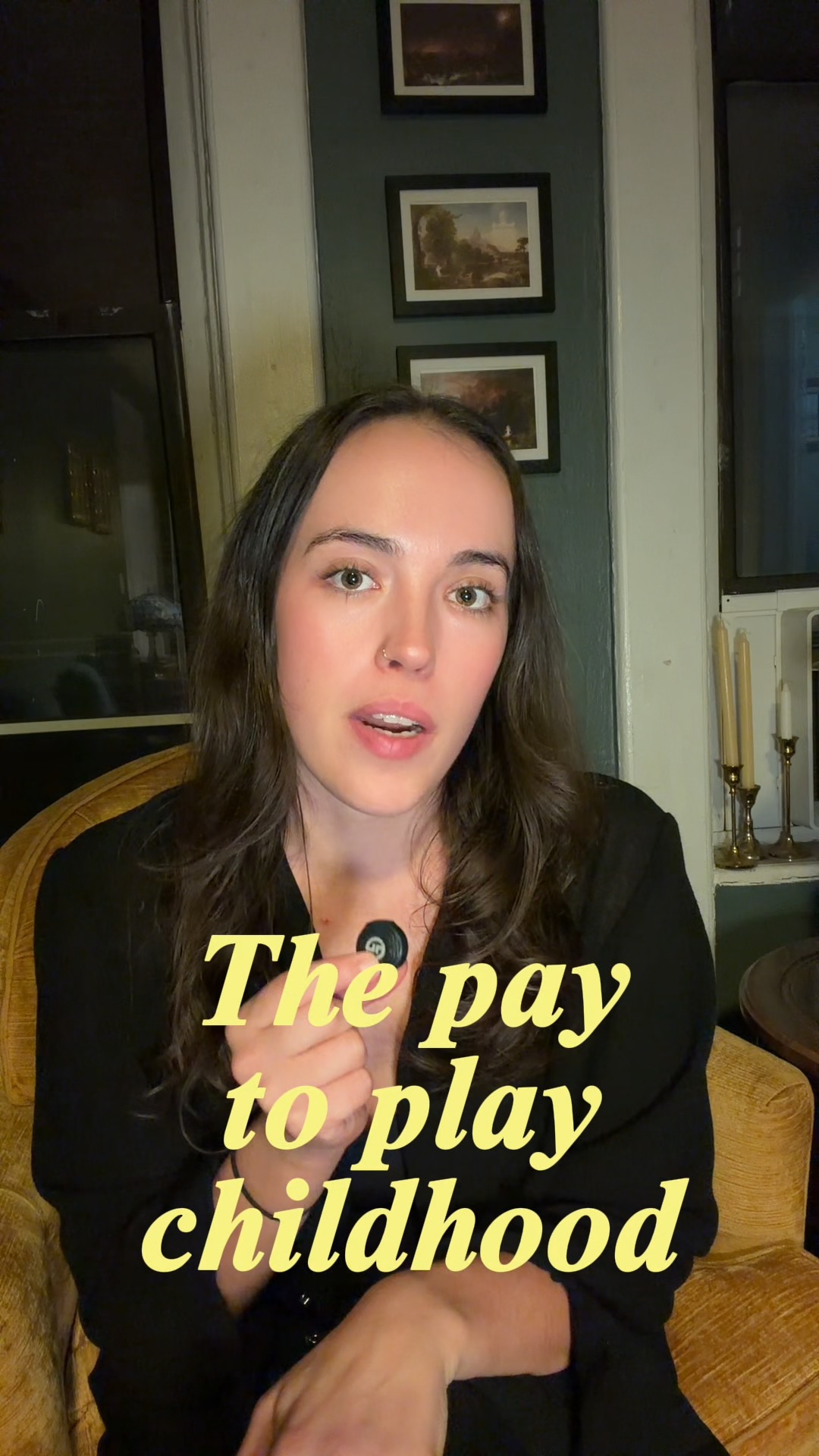
The pay to play childhood

Visual hook

A medium close-up shot of the speaker addressing the camera directly, using a hand gesture to emphasize her point. This direct address creates an immediate connection with the viewer.

[06]

Hook template

Steal this for your own video

The pay-to-play [life stage or everyday activity]

  • — The pay-to-play childhood
  • — The pay-to-play first job
  • — The pay-to-play friendship

[07]

Hook and payoff

The promise the opener makes, and how the video pays it back

Hook

Introduce a provocative, high-concept term that names a modern phenomenon, immediately sparking curiosity about its meaning and relevance.

Payoff

Deliver an intellectual payoff by providing the viewer with a comprehensive framework for understanding a complex part of their world. The satisfaction is in the diagnosis, not the cure.

[08]

Narrative framework

The structural pattern this video runs on

Framework

The Systemic Diagnosis Framework

To explain a modern, relatable problem by first establishing an emotional baseline (nostalgia), then revealing the hidden psychological and systemic forces driving it, and finally showing its widespread impact.

  1. 1

    The Grounding Example

    Anchor the abstract thesis in a highly specific, widely understood real-world example, using external proof (headlines, data) to establish credibility.

  2. 2

    The Nostalgic Counterpoint

    Evoke a shared, idealized memory of a 'simpler time' related to the topic, creating an emotional baseline of what has been lost.

  3. 3

    The Modern Reality Check

    Juxtapose the nostalgic past with the harsh, quantified reality of the present, using data and statistics to demonstrate the scale of the change.

  4. 4

    The Psychological Motive

    Unveil the core human emotion or anxiety that is being exploited or is driving the phenomenon, reframing the issue from a surface-level problem to a deep-seated vulnerability.

  5. 5

    The Systemic Mechanism

    Introduce and define a broader socio-economic concept or '-ism' that provides the structural framework for why this is happening on a macro level.

  6. 6

    The Functional Consequence

    Explain how the systemic mechanism has fundamentally changed the purpose or function of the original activity, shifting it from intrinsic enjoyment to extrinsic utility.

  7. 7

    The Scope Expansion

    Broaden the argument beyond the initial example to show how this same pattern applies to other, seemingly unrelated areas, proving the thesis is a universal trend.

Themes

  • Commodification of childhood
  • Economic inequality
  • Parenting culture
  • Anxiety economy

Techniques

  • Visual evidence
  • B-roll montage
  • Text-based storytelling
  • Expert commentary

Post caption

why do eight-year-olds have private coaches, year-round training schedules, and travel tournaments that cost thousands in hotels and flights. how credentialism, private equity, and anxiety drove the pay-to-play childhood (and how it's a reflection of the larger economy)

Text overlays

  • title · beginning

    The pay to play childhood

  • informational · beginning

    The cost of youth sports is out of control

  • informational · beginning

    Priced out of the game

  • contextual · beginning

    Obv there were some competitive programs, but for a lot of families, organized sports were a pretty normal, relatively affordable part of childhood

  • informational · beginning

    The Pay-to-Play Childhood

  • informational · middle

    The Next Big Thing in Youth Sports? Personal Trainers.

  • informational · middle

    Youth sports have turned into a five-figure-a-year commitment for many parents

  • informational · middle

    Average spending on a child's primary sport rose 46% from 2019 to 2024.

  • informational · middle

    $1,016 PER CHILD / PRIMARY SPORT

  • title · middle

    The corporate exploitation of parental anxiety

  • informational · middle

    The modern economy figured out how to financialize parental vulnerability: the desire to secure their child's future

  • title · middle

    Credentialism

  • informational · middle

    College is viewed as essential for a stable life, so competitive prep is pushed earlier into childhood.

  • informational · middle

    In an unequal economy with a thinning safety net, middle- and upper-middle-class parents operate out of fear.

  • informational · middle

    Hobbies are no longer just for fun; they are treated as vehicles for college

  • informational · end

    Yes, the Youth-Sports Industrial Complex Is Bad for the Kids in It. It's Even Worse for the Kids Left Behind.

Explaining the economics of youth sports | Viral Hooks