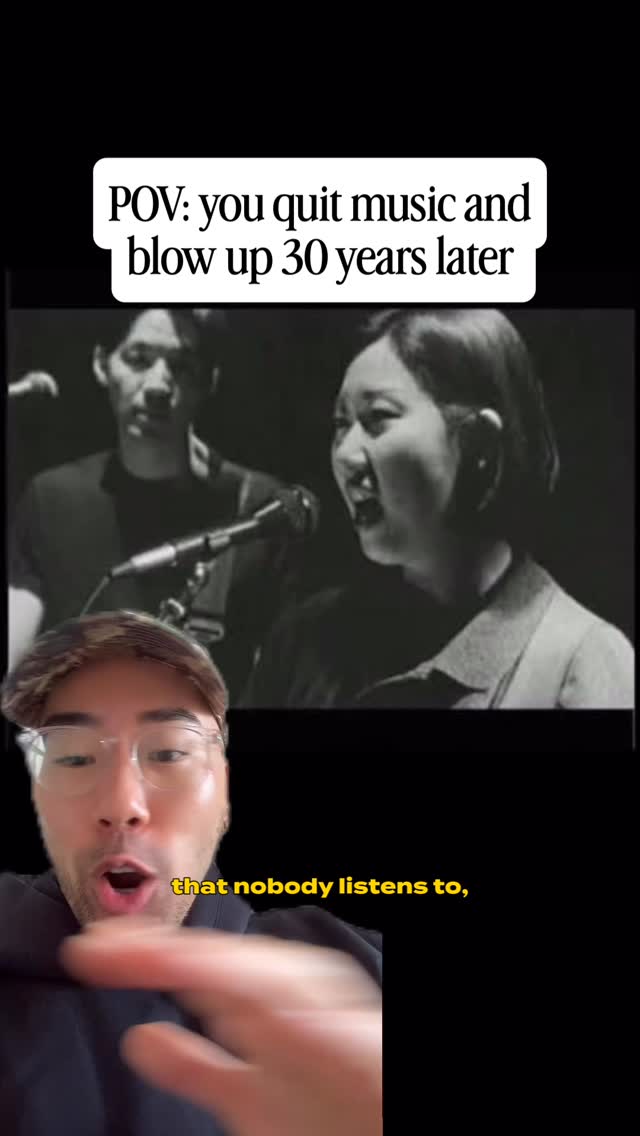
The creator tells the story of the band Korea Girl, whose 1997 song 'Reunion' failed to gain traction, leading them to disband. He explains how, nearly 30 years later, the song went viral on TikTok, amassing millions of streams. The creator uses this story as a case study to argue that success has no expiration date and that artists should not be discouraged by a lack of immediate results, as the audience, not the art, may be what needs to change over time.
Transcript
Imagine making a song that nobody listens to. So you give up on your music career, you move on with your life, get a regular nine to five job, and almost three decades later, you find out that that song has over 36,000,000 streams. Welcome to tier long game where I prove that success does not have an expiration date. And this story is crazy. Back in 1997, the singer named Elizabeth Yi recorded a song called Reunion, which was inspired by some painful traumatic experiences that she had in high school. Released the song, but it never really took off. And so the band broke up two years later in '99. And Elizabeth moved on with her life. She stopped pursuing a career in music, got a job in HR. And for almost three decades, that song that she had written in '97 was completely lost to history. Until one day, her niece had told her something that was completely unbelievable. TikTok had rediscovered that song that she wrote in '97 and was completely obsessed with it. They were making videos. They were posting covers, sharing the lyrics. Almost 10,000,000 videos have been made on TikTok. And people who weren't even born when she had originally recorded that song were connecting with it almost thirty years later. And as of me making this video right now, it's at almost a 100,000,000 streams. And this is what I think is so fascinating about this story is that Elizabeth didn't spend thirty years trying to make this song go viral. She didn't have this incredible rollout or marketing plan or label behind her. She didn't even know that this new audience was rediscovering her music thirty years later. The song didn't change. The audience did. And I think this is a lesson that every single artist and musician needs to understand today. We all live in this industry right now where we want instant results. If something doesn't blow up in thirty or sixty days, we feel like it was a complete failure. And sometimes you make something that your audience just hasn't discovered yet. And, yes, it is great to post on social media and share it and cast a wide net and try to get it out tier. But with streaming, the Internet, and social media, a song or a project's shelf life never expires now. So if you're making music and you feel like you're running out of time, just remember Elizabeth Yes because a song you make today may not change your life until later on.