Viral Hooks
Trending short videosAnimated breakdown of foldable screens
I

@inside_decoded

Instagram · Faceless

@inside_decoded The iPhone Duo Still Has a Crease. It's Just Hard to See An almost invisible crease is still a crease. Inside the iPhone Duo, a teardrop fold, moving hinge parts and layers that slide past each other help the screen bend. A matte surface scatters reflections, making the fold harder to spot. This video looks inside that mechanism, then examines reports of inner-screen cracks and iFixit's proposed explanation. The support-bar explanation is a theory, not a confirmed cause. In its 26 October statement, Apple said a small number of units were affected and directed owners to AppleCare for replacements. Sources: Apple: https://www.apple.com/newsroom/2026/09/apple-unveils-iphone-duo/ iFixit teardown: https://www.ifixit.com/News/119895/iphone-duo-teardown Apple's statement via 9to5Mac: https://9to5mac.com/2026/10/26/apple-responds-to-reports-of-iphone-duos-inner-display-cracking/ #InsideDecoded #iPhoneDuo #Apple #FoldablePhone #Engineering

View original on Instagram

The edit1 shot · 10 text
Shots Text1:38

Performance

Views
192.8K
Likes
7.3K
Comments
98
Engagement
3.8%
Outlier
8.3×
Length · 28 Oct 2026
1:38

Video #49447 · Faceless

Animated breakdown of foldable screensfrom @inside_decoded

[01]

Overview

The creator uses detailed 3D animations and a voiceover to explain the complex engineering behind foldable phone screens. They start by highlighting the persistent crease issue in Samsung's phones, then introduce a hypothetical "iPhone Duo" as a solution, before revealing its own critical flaw: cracking screens. The video breaks down the physics of creasing, details the "teardrop" hinge mechanism and multi-layered screen construction, and explains how a matte top layer is used to visually hide the crease, before theorizing that a design flaw in the hinge's support bar is causing the screens to crack.

[02]

Simple outline

  1. 1Establish common problem
  2. 2Introduce superior solution
  3. 3Reveal solution's critical flaw
  4. 4Theorize mechanical cause

[03]

Related videos

[04]

Classification

Format
Concepts
BreakdownCase Study Breakdown
Elements
3D AnimationMotion GraphicsAnnotation OverlayText OverlayVoiceover

[05]

Hook analysis

What stops the scroll in the first 3 seconds

Verbal hook · 90%

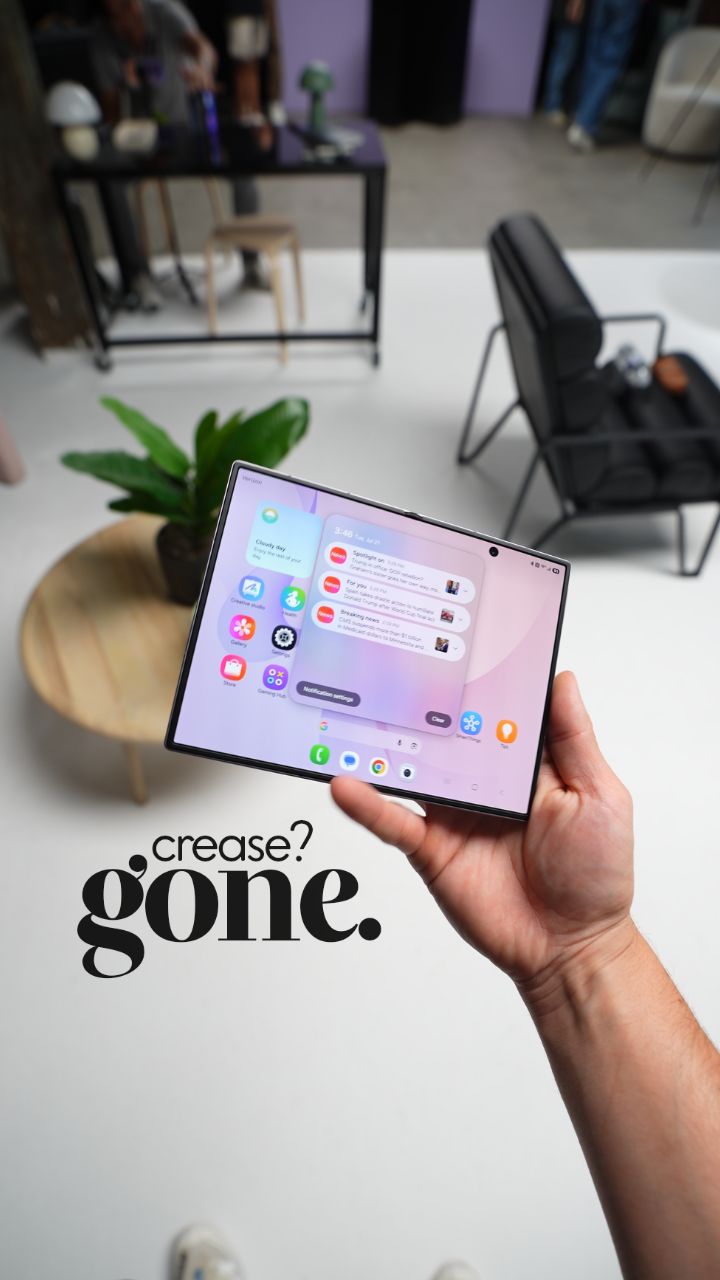
Samsung has made folding phones since 2019 and you can still see the crease.

Visual hook · 10%

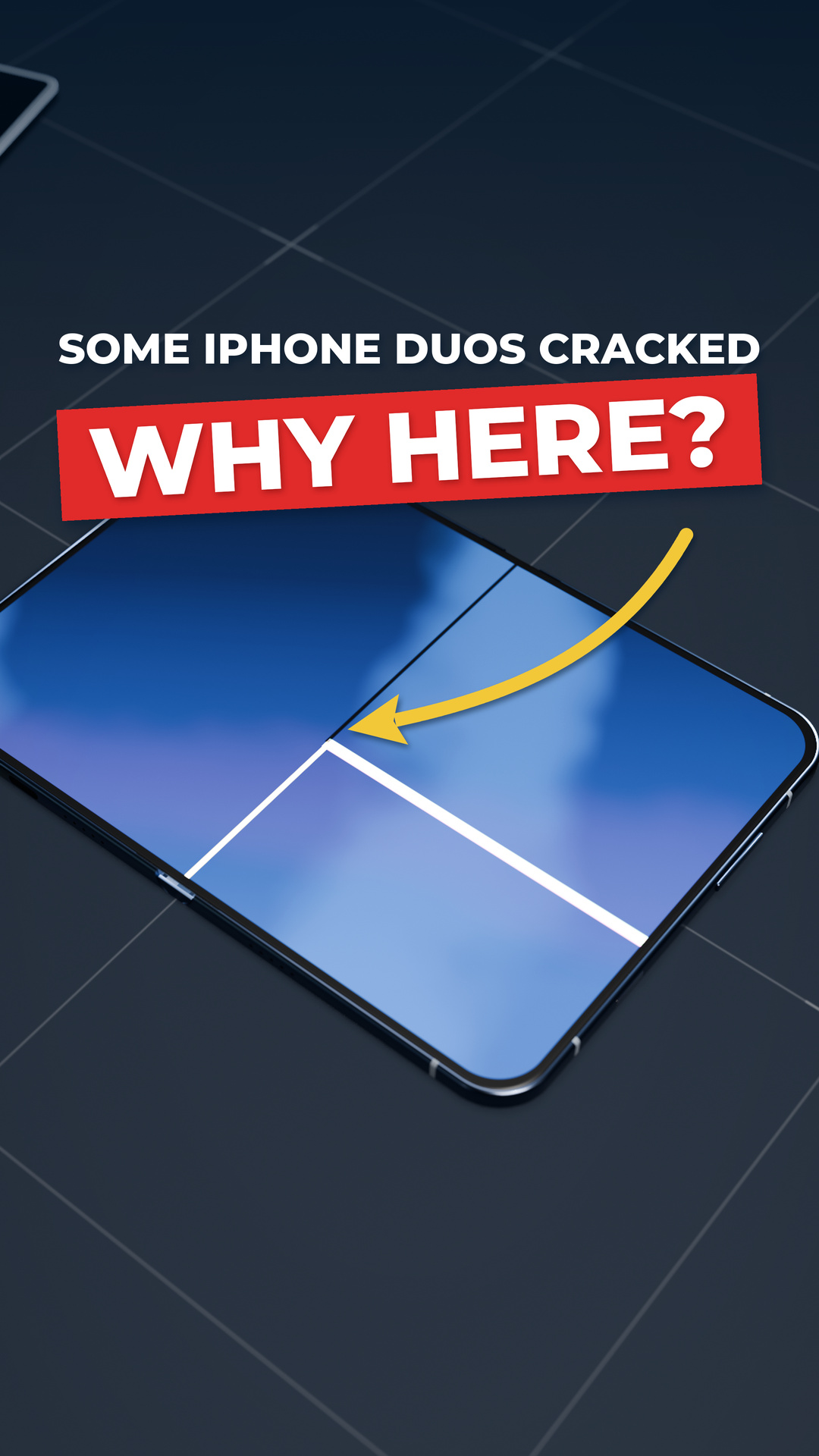
The video opens with a high-quality 3D render of a sleek, black foldable phone lying on a dark, gridded surface. The clean aesthetic, sharp reflections on the device, and minimalist environment create immediate visual interest and a professional tone.

[06]

Hook template

Steal this for your own video

[Established player] has been [doing this thing] since [year] and [persistent problem] is still there.

  • — Hospitals have been using paper charts' digital replacements since 2010 and nurses still double-chart everything by hand.
  • — Airlines have been selling 'extra legroom' seats since the 90s and you still can't fit your knees.
  • — Coffee chains have been making oat milk lattes for a decade and you can still taste the chalky aftertaste.

[07]

Hook and payoff

The promise the opener makes, and how the video pays it back

Hook

Juxtapose a well-known competitor's flaw with the subject's seemingly perfect solution, creating an immediate 'How did they do that?' question while hinting at a hidden secret.

Payoff

Deliver a concise summary of the central conflict (the concealed problem vs. the new, catastrophic one) and conclude with a social call-to-action that leverages the 'insider knowledge' the viewer has just gained.

[08]

Narrative framework

The structural pattern this video runs on

Framework

The Trojan Horse Teardown

To deconstruct a seemingly perfect solution to a common problem, revealing its underlying mechanics and a catastrophic, unintended consequence. The narrative builds intrigue by explaining *how* the solution works before exposing *why* it fails.

  1. 1

    The Established Problem

    Frame the narrative by presenting a persistent, industry-wide flaw that audiences will recognize, setting a benchmark for failure.

  2. 2

    The Superior Contender

    Introduce the subject as a product that appears to have solved this problem, but immediately introduce a twist that suggests the solution is an illusion.

  3. 3

    The Catastrophic Escalation

    Immediately introduce a new, much more severe problem with the subject, shifting the stakes from a cosmetic issue to a functional failure.

  4. 4

    The Science Primer

    Pause the narrative to explain the fundamental principles behind the original problem, establishing credibility and providing context for the engineering to come.

  5. 5

    The Engineering Deep Dive

    Systematically deconstruct the complex mechanical and material solutions the subject uses to overcome the fundamental problem, building viewer appreciation and providing 'insider' knowledge.

  6. 6

    The 'Magic Trick' Reveal

    Expose the final, often superficial, layer of the solution that creates the illusion of perfection, answering the initial hook's question.

  7. 7

    The Illusion Shattered

    Debunk the 'magic trick' by showing that the underlying problem was merely concealed, not solved. This acts as a major narrative reversal and payoff.

  8. 8

    The Causal Theory

    Return to the catastrophic failure and present a plausible, mechanical theory from a credible third party that explains precisely why the failure is occurring.

Themes

  • Technological Innovation
  • Engineering Challenges
  • Product Flaws
  • Corporate Competition

Techniques

  • 3D Animation
  • Exploded View
  • Cross-Section Animation
  • Voiceover

Post caption

The iPhone Duo Still Has a Crease. It's Just Hard to See An almost invisible crease is still a crease. Inside the iPhone Duo, a teardrop fold, moving hinge parts and layers that slide past each other help the screen bend. A matte surface scatters reflections, making the fold harder to spot. This video looks inside that mechanism, then examines reports of inner-screen cracks and iFixit's proposed explanation. The support-bar explanation is a theory, not a confirmed cause. In its 26 October statement, Apple said a small number of units were affected and directed owners to AppleCare for replacements. Sources: Apple: https://www.apple.com/newsroom/2026/09/apple-unveils-iphone-duo/ iFixit teardown: https://www.ifixit.com/News/119895/iphone-duo-teardown Apple's statement via 9to5Mac: https://9to5mac.com/2026/10/26/apple-responds-to-reports-of-iphone-duos-inner-display-cracking/ #InsideDecoded #iPhoneDuo #Apple #FoldablePhone #Engineering

Text overlays

  • contextual · beginning

    SINCE 2019

  • contextual · beginning

    iPhone Duo

  • contextual · beginning

    ON SALE 23 OCT 2026

  • contextual · middle

    ILLUSTRATIVE

  • informational · middle

    USED BY MOST FOLDABLES

  • contextual · middle

    IFIXIT MODEL

  • informational · middle

    100+ PARTS APPLE SAYS

  • informational · middle

    10+ LAYERS

  • contextual · end

    IFIXIT THEORY - NOT CONFIRMED

  • call-to-action · end

    Send this to a friend who just bought a Duo

Transcript

Samsung has made folding phones since 2019 and you can still see the crease. Apple's worst, the iPhone Duo? Head on, it almost vanishes. But the crease is still tier. Apple just hides it. And within hours of launch, some Duo screens started cracking. Why do folding screens crease? Bend a stack of layers. The outside stretches, the inside squeezes. Fold it tight, and it never fully springs back. The Duo never folds tight. Inside the hinge, the screen curls into a loose teardrop. How does it fit? In repair site, iFixit's model, a support bar under the fold drops away. Open it, and the hinge holds the middle flat. Apple says the hinge has over 100 parts. IFixit says linked metal joints, like a watch band, ride curved tracks that put the pivot inside the screen, so it stretches less. Gears rank both halves. Springs hold it where you leave it. The screen is over 10 thin layers. Glass above and below the panel, titanium underneath. Special glue lets them glide like the pages of a good. But the real trick is on top. Tiny bumps that scatter light, so the line is hard to spot. When iFixit peeled that layer off, the crease looked as clear as Samsung's, maybe worse. And run a finger down the middle, you can still feel it. Then why are some cracking? Owners report a crunch as they open it, then a crack along the fold. Apple says a small number of phones are affected, and it's replacing them. IFixit's theory? That support bar doesn't drop far enough, so the closing screen comes down on it. Apple hid the crease. Now it has to stop the cracks. Send this to a friend who just bought a Duo.