Viral Hooks
Trending short videosBreaking down a brand's acquisition
E

@expresscheckout

Instagram · Talking Head Edit

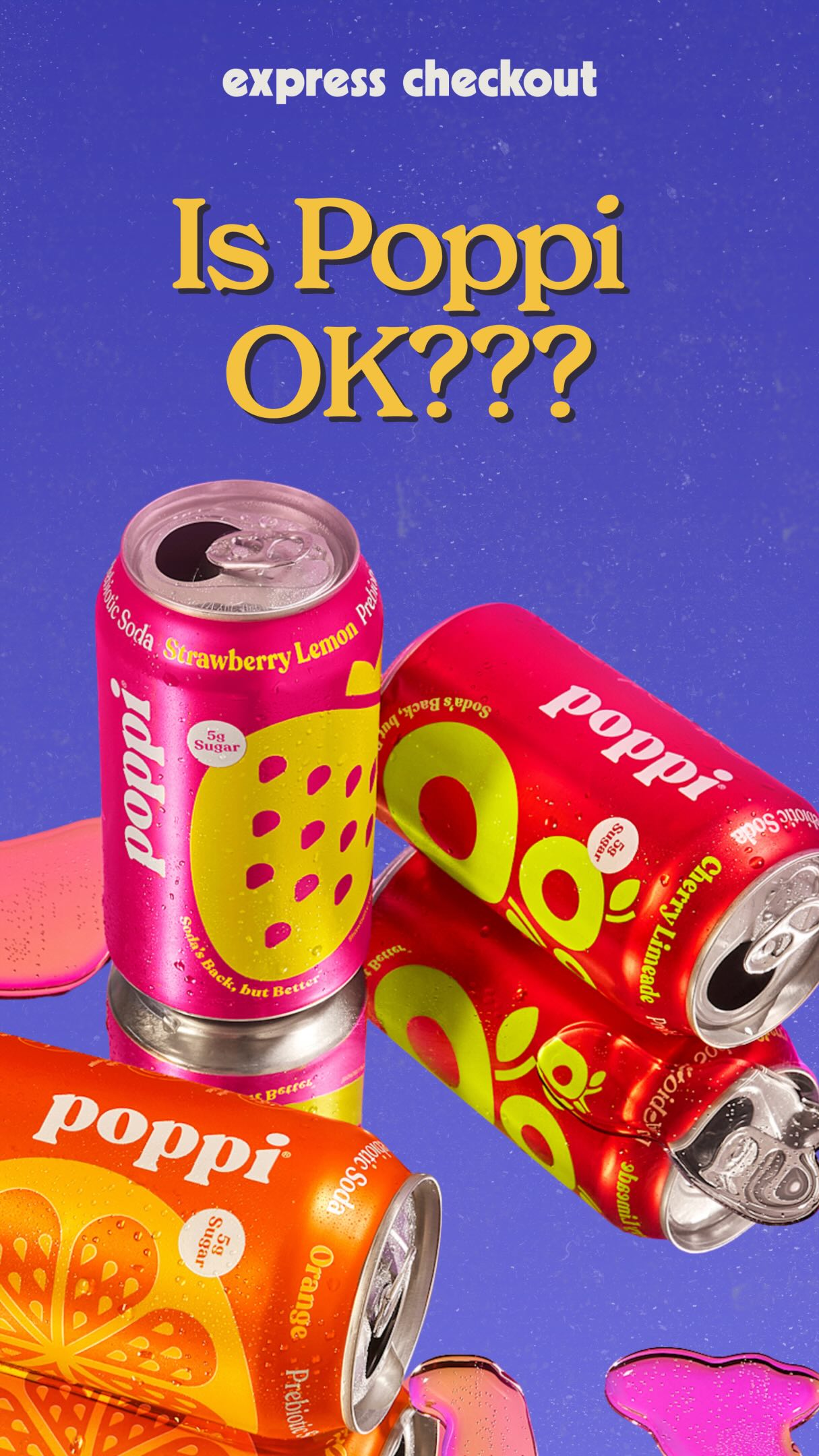
@expresscheckout Is Poppi doing okay???? Pepsi paid $2 billion for Poppi. Now they’ve slashed the additional earn-out from $300M to $12M. So what’s happening? Quick context: Part of the Poppi deal was a $300M bonus for the founders if the brand hit growth targets by Q3 2027. Pepsi has to update what they think they’ll actually pay every quarter. December it was $278M. June $117M. Now it’s $12M... 😱 We don’t think this is fully on Poppi or on Pepsi either. Pepsi has wanted a real functional beverage brand forever and couldn’t build one themselves. So they bought one. Poppi was hot, had cultural relevance around it, and Pepsi’s soda business needed that badly. The bigger factor might be the category itself, the category is very crowded with countless upstarts and even Coke coming into the rat race. Whose fault is it, Poppi, Pepsi, or neither? Full breakdown in the video.

View original on Instagram

The edit1 shot · 11 text
Shots Text2:24

Performance

Views
86.8K
Likes
2.2K
Comments
109
Engagement
2.6%
Length · 19 Oct 2026
2:24

Video #49640 · Talking Head Edit

Breaking down a brand's acquisitionfrom @expresscheckout

[01]

Overview

The creator breaks down the news of PepsiCo slashing the earn-out for its $2 billion acquisition of Poppi. He explains the financial details of the deal, analyzes potential reasons for the brand's underperformance by examining the roles of both Pepsi and Poppi, and discusses the broader challenges large CPG companies face with managing trendy lifestyle brands. He also considers the possibility that the entire prebiotic soda category has peaked, citing market saturation and slowing growth for competitors, before concluding with the status of Poppi, Pepsi, and the brand's founders.

[02]

Simple outline

  1. 1State a shocking, high-stakes failure.
  2. 2Pose a central 'whodunnit' question.
  3. 3Investigate multiple suspects with evidence.
  4. 4Reveal a surprising external cause.
  5. 5Deliver a final verdict on all parties.

[03]

Related videos

[04]

Classification

Concepts
Case Study BreakdownHeadlinesOpportunity Explainer
Elements
Image OverlayJump CutGraphic OverlayB-Roll CutawayText Overlay

[05]

Hook analysis

What stops the scroll in the first 3 seconds

Verbal hook

Pepsi paid almost $2 billion for Poppi, and this week, they admitted it's basically not working.

Visual hook

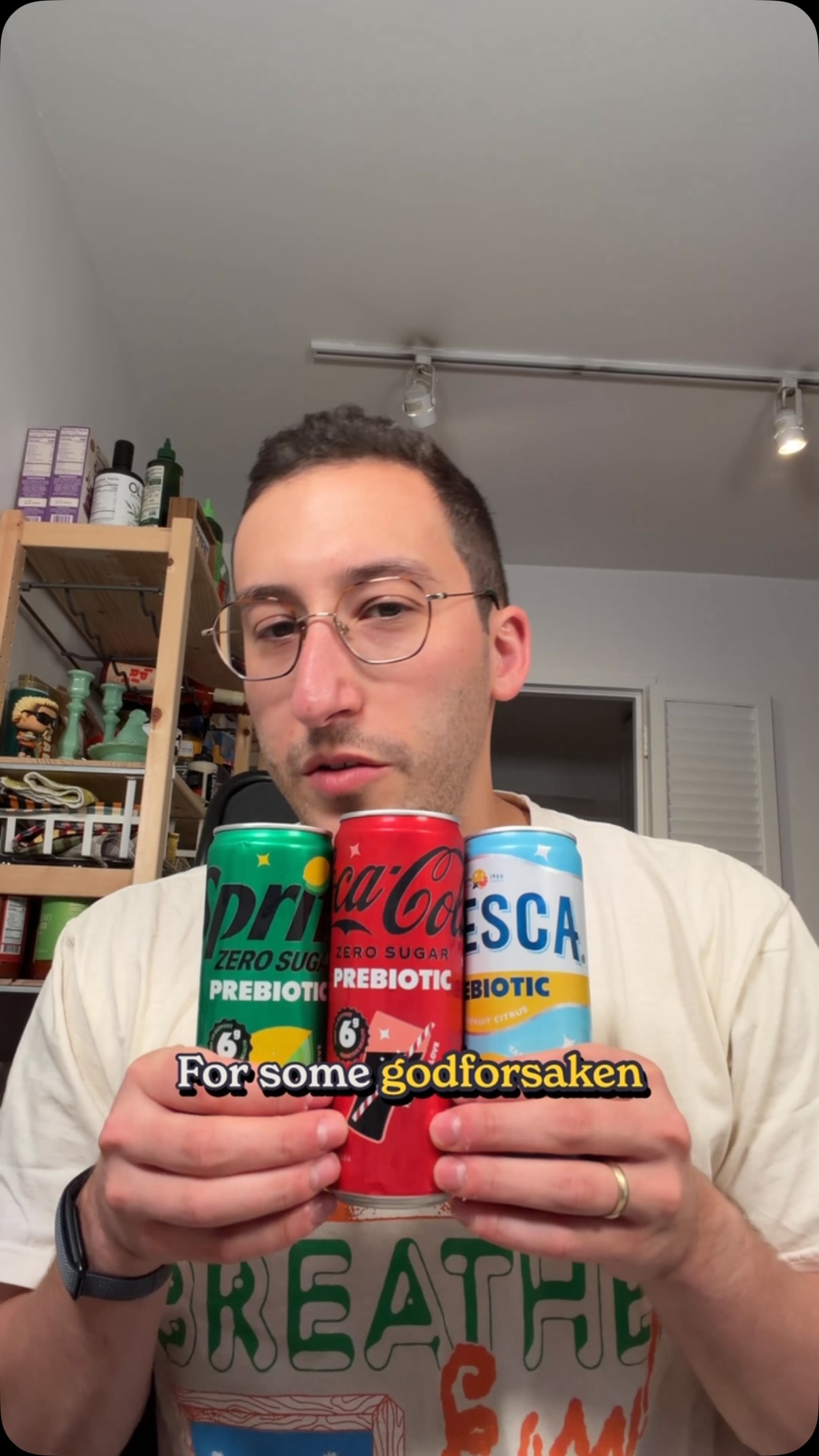
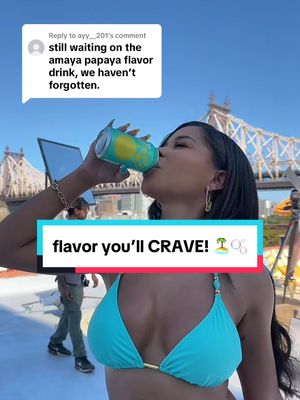
The creator holds up a can of Poppi soda, immediately establishing the video's subject matter with a physical prop.

[07]

Hook and payoff

The promise the opener makes, and how the video pays it back

Hook

A dramatic, high-value statement of failure that combines a massive number with a negative outcome to create immediate intrigue and establish the stakes.

Payoff

A final summary that assigns a status (e.g., 'they're fine,' 'probably not okay') to each of the key players, resolving their individual story arcs and providing a sense of closure for the viewer.

[08]

Narrative framework

The structural pattern this video runs on

Framework

The Investigative Deep Dive

To frame a recent, high-stakes event as a mystery ('whodunnit'), systematically investigate potential causes by presenting and refuting theories with evidence, and conclude with a nuanced, multi-part verdict that establishes the creator's authority.

  1. 1

    The Data-Driven Downgrade

    Immediately follows the hook with specific, quantifiable data (e.g., financial figures, statistics) that proves the initial claim is not hyperbole, grounding the drama in hard evidence.

  2. 2

    The Investigation Premise

    Explicitly poses a central question (e.g., 'Whose fault is this?') and introduces the primary 'suspects' or potential explanations, framing the rest of the video as a structured investigation.

  3. 3

    The Conspiracy Debunk

    Addresses and dismisses the most common or obvious public theory, positioning the creator as an insider with a more sophisticated understanding of the situation.

  4. 4

    The Strategic Rationale

    Explains the original 'why' behind the event, providing crucial context about the motivations and goals of the parties involved before the failure occurred.

  5. 5

    The History of Failure

    Provides historical precedent of similar failures by one of the main parties, strengthening the argument for their underlying weakness or need in this specific area.

  6. 6

    The External Threat Introduction

    Pivots the investigation away from the primary subjects to introduce an external, market-wide force as a new and significant contributing factor, adding a layer of complexity.

  7. 7

    The Corroborating Evidence

    Supports the 'External Threat' theory by showing that even direct competitors are experiencing similar issues, proving the problem is systemic rather than isolated.

  8. 8

    The Counterintuitive Next Move

    Reveals the subject's surprising or seemingly illogical response to the failure, creating a small twist and prompting the viewer to await the final explanation.

  9. 9

    The Rapid-Fire Judgment

    Delivers a series of quick, conclusive verdicts on the fate of each party involved, providing a satisfying and easily digestible resolution to the central question.

Themes

  • Corporate strategy
  • Brand management
  • Market trends
  • Entrepreneurship

Techniques

  • Direct address
  • Data presentation
  • Case study analysis

Post caption

Is Poppi doing okay???? Pepsi paid $2 billion for Poppi. Now they’ve slashed the additional earn-out from $300M to $12M. So what’s happening? Quick context: Part of the Poppi deal was a $300M bonus for the founders if the brand hit growth targets by Q3 2027. Pepsi has to update what they think they’ll actually pay every quarter. December it was $278M. June $117M. Now it’s $12M... 😱 We don’t think this is fully on Poppi or on Pepsi either. Pepsi has wanted a real functional beverage brand forever and couldn’t build one themselves. So they bought one. Poppi was hot, had cultural relevance around it, and Pepsi’s soda business needed that badly. The bigger factor might be the category itself, the category is very crowded with countless upstarts and even Coke coming into the rat race. Whose fault is it, Poppi, Pepsi, or neither? Full breakdown in the video.

Text overlays

  • informational · beginning

    PepsiCo cuts Poppi payout estimate to $12M amid U.S. soda sales slump

  • informational · beginning

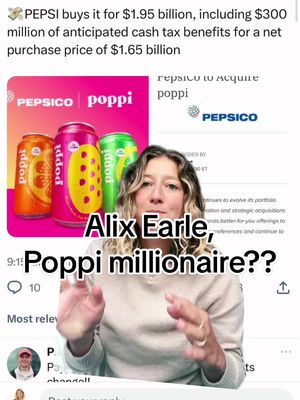
    PepsiCo to Acquire Prebiotic Soda Brand Poppi for $1.95 Billion

  • informational · beginning

    $300M bonus → $278M (Dec '25) → $117M(June '26) → $12M (today)

  • contextual · middle

    They did make their own prebiotic soda...

  • branding · middle

    KraftHeinz

  • branding · middle

    Mondelez International

  • branding · middle

    General Mills

  • branding · middle

    Unilever

  • informational · end

    Gut Soda Hiccup or Worse? Poppi Sales Fell in 2026. Olipop Decelerated

  • informational · end

    POPPI TO DEBUT 4 MOOD DRINKS

  • branding · end

    jetty

Transcript

Pepsi paid almost $2,000,000,000 for Poppy, and this week, they admitted it's basically not working. This week, Pepsi dropped the earn out of their Poppy acquisition from 300,000,000 to $12,000,000 When Pepsi acquired Poppy last year, there was a part of the deal that the founders could get a bonus earn out if certain sales requirements were met by the end of twenty twenty seven. Month over month since that deal went live, it kept going down. So whose fault is this? Is it Pepsi's? Is it Poppy's? Is it a little of both? A lot of people assume Pepsi bought Poppy to take out their competition. But I don't really think that's what's happening here, at least not fully. Poppy was never a real threat to Pepsi's core business. Poppy was this hot lifestyle brand with a lot of cultural momentum, and Pepsi saw it as a way to make their portfolio relevant again. And these big strategic food and beverage brands are great at scale, but horrible at maintaining and managing these fuzzy cultural lifestyle brands. Back in 2020, Pepsi tried to make their own lifestyle functional beverage brands. They made Best and DriftWell. Both shut down before they even hit shelves. They just couldn't figure out a way to make it resonate with their audiences. So they have to go to a brand like Poppy who can build something that resonates with an audience, then try to incorporate it into the behemoth of Pepsi. To be fair, Pepsi did say that Poppy grew last quarter and gained more market share in the soda category. So the brand's not dying, but it's not growing at a rate that a $2,000,000,000 acquisition needs to grow at. The other side of this is that the category might have just peaked. The shelf is wildly crowded with both better for you sodas and even bunch of prebiotic sodas. Most people just want a regular soda. And even Lollipop is slowing down, so it might not just be a poppy thing. Pepsi's answer to this is apparently more poppy. They're launching Poppy Lift with caffeine and Poppy Chill with magnesium and L theanine. So is Poppy done? No. Is Pepsi alright? Probably not. But are the Poppy founders good? Yeah. They're fine. They didn't get the big earn out that they were hoping for, but they got plenty of money and they're off launching a new beverage brand called Jetty next month. So they'll be fine. And if you wanna hear all of our thoughts on what's happening with Pepsi and Poppy, subscribe to our newsletter express checkout at the link in our bio. Pepsi bought Poppy because they've been trying to get into the functional beverage space for years now. They tried with Best and DriftWell in 2020, and both of those quickly shut down. And Pepsi really needed this.