@zerodollarcoach
Instagram · Single Take
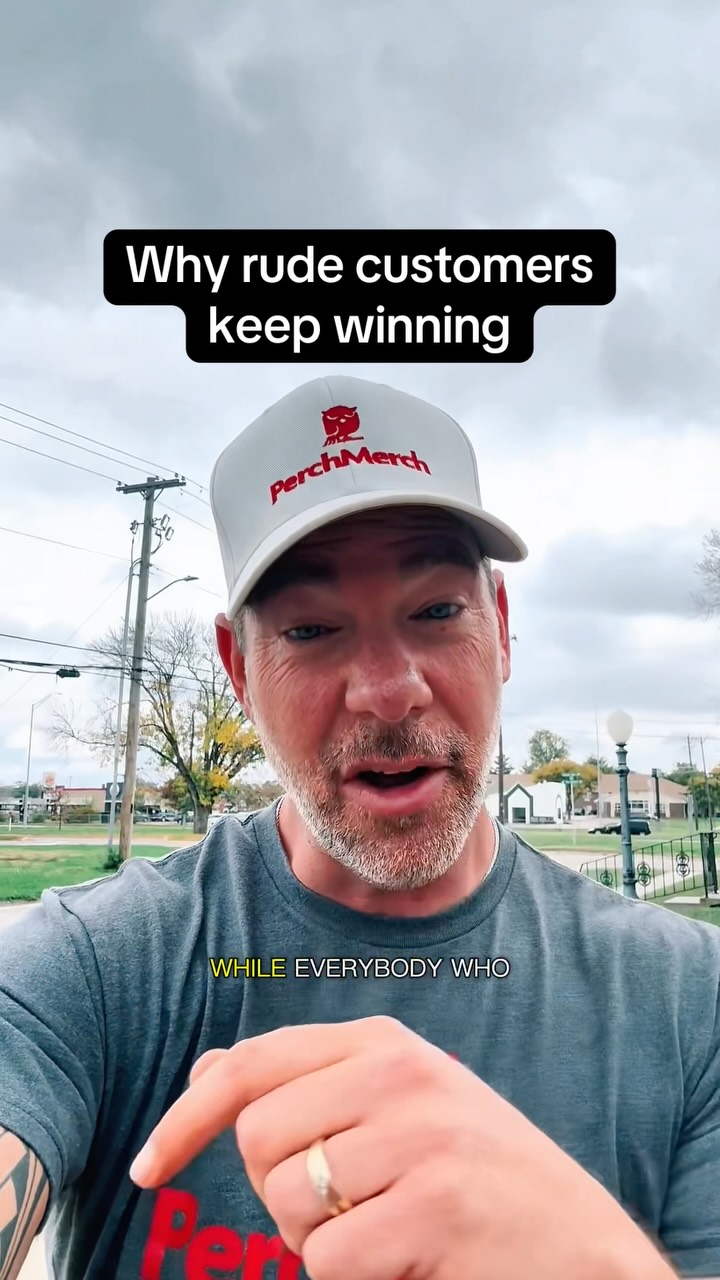
@zerodollarcoach Rude customers get discounts. Good employees get blamed. Stop rewarding tantrums and calling it customer service. #CustomerService #ToxicCustomers #EmployeeRespect

@zerodollarcoach
Instagram · Single Take
@zerodollarcoach Rude customers get discounts. Good employees get blamed. Stop rewarding tantrums and calling it customer service. #CustomerService #ToxicCustomers #EmployeeRespect
Performance
Video #49756 · Single Take
[01]
The creator delivers a passionate monologue directly to the camera, questioning why businesses reward rude customers with discounts. He walks through a scenario where an employee follows policy, the customer becomes difficult, and a manager ultimately gives in, undermining the employee and teaching the customer that bad behavior works. He concludes by criticizing this practice as a flawed customer service strategy that negatively impacts employees, well-behaved customers, and the business itself.
[02]
[03]
 737.7K8.7×Creator lists his character judgments@higherupwellness · Rapid Fire Listicle
 1.4M1.7×Car rant on why corporations are failing by lacking humanity@bradley.thor · Hot Take
 628.5K61.5×Car monologue about losing respect@sensei.nick · Anecdotal Philosophy
 367.2K10.9×Explaining employee resentment with text@zerodollarcoach · Breakdown
 700.7KWorkplace culture rant from car@zerodollarcoach · Hot Take
 397.3K17.3×Listing relatable corporate frustrations@roxycouse
 572.2K4.8×Opinionated car rant about social behavior@higherupwellness · Cultural Rant
 153.9KUnapologetic comedic rant about enemies@couldbaret · Cultural Rant
 148KTough love advice monologue@sensei.nick · Hot Take
 81.1KDirect talk on personal responsibility@sensei.nick · Hot Take
 318.3K1.2×Rant about technology ruining society@willeygoat · Cultural Rant
 4.9M165.1×Brand case study for authenticity@higherupwellness · Hot Take
[04]
[05]
What stops the scroll in the first 3 seconds
Title hook
Why rude customers keep winning
Verbal hook
Why does the rudest customer get a discount while everybody who acted like an adult pay full price?
Visual hook
Direct-to-camera shot of a man speaking passionately outdoors, creating an immediate and personal connection with the viewer.
[07]
The promise the opener makes, and how the video pays it back
Hook
Start with a provocative 'Why does X happen?' question that frames a common, unfair situation, immediately creating audience relatability and a desire for an explanation.
Payoff
Conclude by stating that the flawed resolution has created a feedback loop, ensuring the negative behavior will be repeated in the future because it has been proven effective.
[08]
The structural pattern this video runs on
Framework
The Injustice Deconstruction
To validate a common, frustrating experience by systematically breaking down a scenario to expose its inherent unfairness and the negative consequences of a flawed resolution, thereby creating a strong sense of audience validation.
The By-the-Book Action
Establish the protagonist's correct and professional conduct, showing them following established rules or procedures.
The Antagonist's Escalation
Detail how the opposing party rejects the correct procedure and escalates the situation through unreasonable demands, emotional outbursts, or threats.
The Authority's Capitulation
Introduce a third-party authority figure who, instead of upholding the rules, undermines the protagonist and rewards the antagonist's bad behavior to resolve the immediate conflict.
The Consequence Cascade
Logically break down the negative lessons that this flawed resolution teaches to all parties involved: the protagonist, the antagonist, and any observers.
The Hypocrisy Spotlight
Use a pointed, ironic observation to expose the disingenuousness of the antagonist's initial complaint, highlighting how quickly it is resolved by a reward.
The Final Invalidation
Show the authority figure misplacing blame on the protagonist for the situation, despite the protagonist having acted correctly from the start, completing the cycle of injustice.
Rude customers get discounts. Good employees get blamed. Stop rewarding tantrums and calling it customer service. #CustomerService #ToxicCustomers #EmployeeRespect
title · beginning
Why rude customers keep winning
Why does the rudest customer get a discount while everybody who acted like an adult pay full price? Your employee explained the policy politely three tier, then it starts, what's your name? I'm putting your name in my Yelp review. Yelp. Who uses Yelp anymore? You just go ahead and go for it. You want them in trouble for following a rule that they'd get in trouble for breaking. And then the manager comes over, apologizes, gives them what they wanted, and throws in a discount. Congratulations. You've got a rewards program for tantrums. Your employee just got embarrassed for doing exactly what you told them to do. Tier customer learned that threats worse, and everybody who waited patiently learned they should have been more difficult. Funny how quickly their terrible day improves when you take 20% off. Apparently, their manners were waiting on a coupon. Then you tell your employee, you need to learn how to handle difficult people. Well, they handled it. You paid the difficult person to come bad, and and they will come back. I'm never shopping here again. Somehow turns in.