Viral Hooks
Trending short videosExplaining employee resentment with text
Z

@zerodollarcoach

Instagram · Yap

@zerodollarcoach Why do your best employees resent your worst employees? When managers protect people who refuse to do their share, reliable employees end up carrying the workload. That’s how good employees lose motivation, resentment spreads, and strong teams fall apart. #workplace #leadership #highperformers #badboss #employees

View original on Instagram

The edit1 shot · 22 text
Shots Text1:47

Performance

Views
367.2K
Likes
19.9K
Comments
303
Engagement
5.5%
Outlier
10.9×
Length · 26 Oct 2026
1:47

Video #49166 · Yap

Explaining employee resentment with textfrom @zerodollarcoach

[01]

Overview

The creator, speaking directly to the camera from his car, breaks down the reasons for animosity between high-performing and low-performing employees. He first explains that top performers resent slackers because they have to pick up the extra work, then explains that poor performers resent top performers for making their lack of effort visible. He concludes with a direct warning to managers that protecting underperformers will cause them to lose their best employees, urging them to address the issue before it's too late.

[02]

Simple outline

  1. 1State paradoxical dichotomy
  2. 2Deconstruct one perspective
  3. 3Deconstruct opposing perspective
  4. 4Issue a direct warning
  5. 5Deliver final consequence

[03]

Related videos

[04]

Classification

Format
Concepts
BreakdownCultural Rant
Elements
Text OverlayTitle Text Hook

[05]

Hook analysis

What stops the scroll in the first 3 seconds

Title hook · 45%

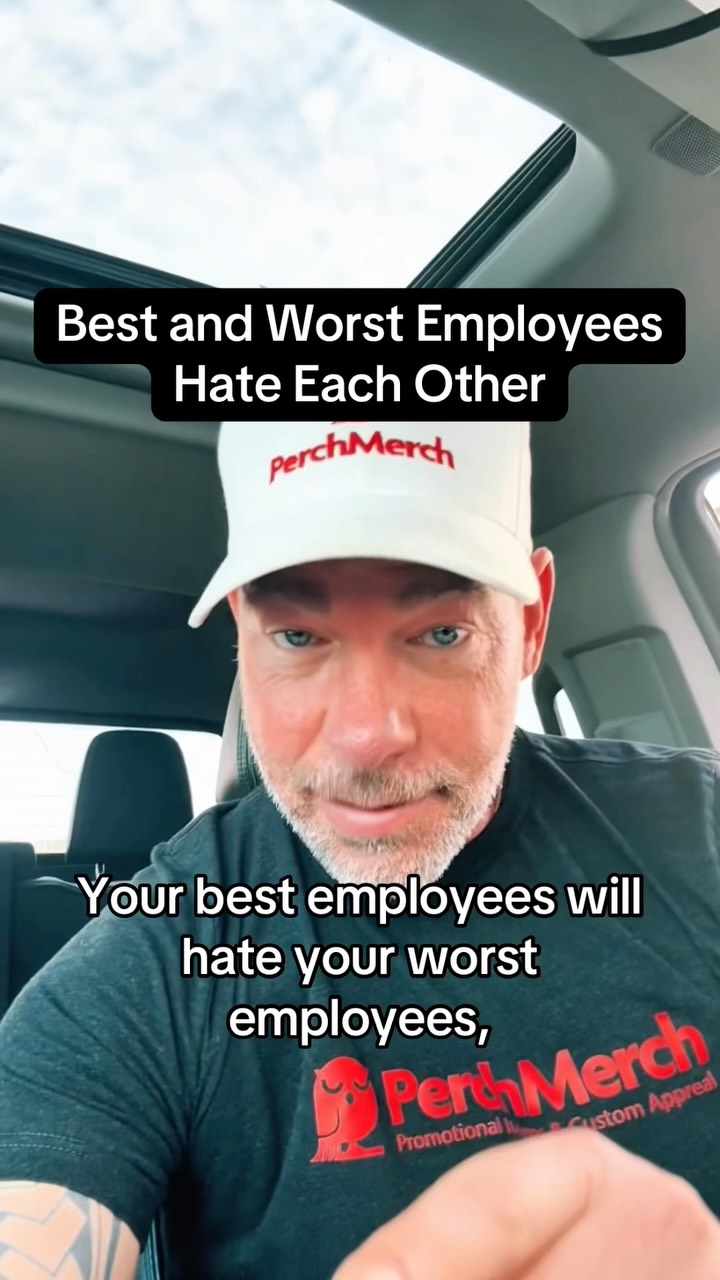
Best and Worst Employees Hate Each Other

Verbal hook · 55%

Your best employees will hate your worst employees, and your worst employees will hate your best employees for completely different reasons.

Visual hook

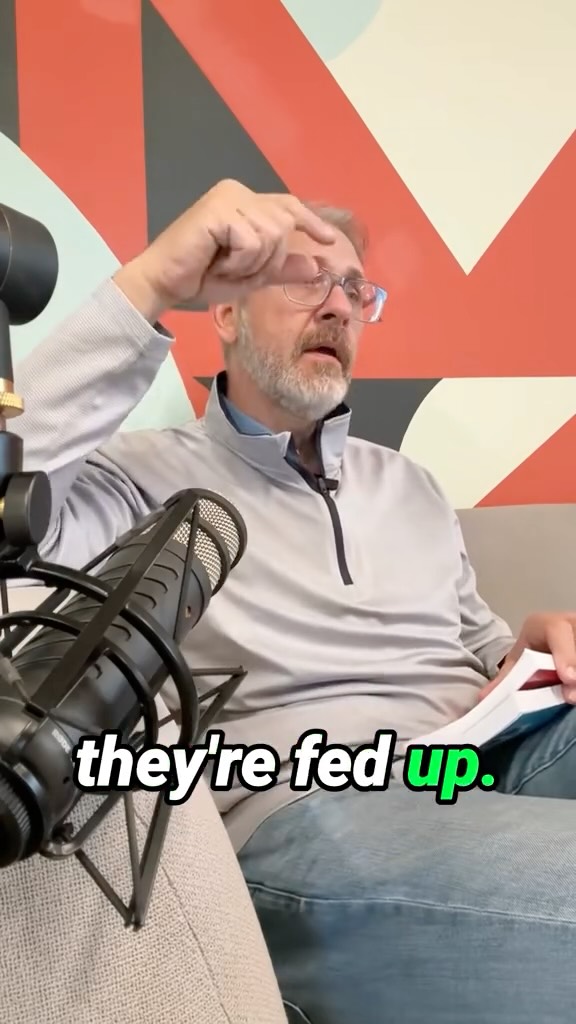
A direct-to-camera, close-up shot of the speaker in a car, creating an immediate and personal connection with the viewer.

[06]

Hook template

Steal this for your own video

Your [group A in your world] will [strong negative feeling] your [group B in your world], and your [group B in your world] will [strong negative feeling] your [group A in your world] for completely different reasons.

  • — Your most dedicated gym members will resent your casual gym members, and your casual gym members will resent your most dedicated gym members for completely different reasons.
  • — Your longtime customers will hate your new customers, and your new customers will hate your longtime customers for completely different reasons.
  • — Your homeschool parents will judge your public school parents, and your public school parents will judge your homeschool parents for completely different reasons.

[07]

Hook and payoff

The promise the opener makes, and how the video pays it back

Hook

State a bold, counter-intuitive thesis about a conflict between two opposing archetypes ('A hates B, and B hates A'), promising to explain the 'completely different reasons' why.

Payoff

Deliver a final, memorable warning that directly links inaction to the predicted negative consequence. It concludes by stating that the departure of the 'good' archetype is not a surprise, but the direct and expected result of protecting the 'bad' one.

[08]

Narrative framework

The structural pattern this video runs on

Framework

The Dichotomy Deconstruction

Present a universally relatable conflict between two opposing groups, then deconstruct the psychological motivations of each side to reveal a hidden truth and predict a negative consequence if the conflict is ignored.

  1. 1

    The Validated Perspective

    Explain the reasoning of the 'good' or more sympathetic archetype first. Detail their frustrations with the 'bad' archetype's behavior, focusing on fairness and effort. This builds audience agreement and validation.

  2. 2

    The Counter-Perspective

    Pivot to explain the reasoning of the 'bad' or less sympathetic archetype. Frame their motivation not as malice, but as a reaction to being exposed or made to feel inadequate by the 'good' archetype. This adds nuance and depth to the initial thesis.

  3. 3

    The Consequence Forecast

    Shift the address to a third party (e.g., 'Managers, pay attention'). Predict the specific, negative chain of events that will unfold if the dynamic continues, focusing on the 'good' archetype's withdrawal and eventual departure. This raises the stakes.

  4. 4

    The Actionable Mandate

    Directly address the responsible third party with a clear, prescriptive call to action. Frame their inaction as a choice that directly harms their best assets and protects their worst.

Themes

  • accountability
  • fairness
  • leadership responsibility

Techniques

  • direct address
  • rhetorical argument

Trends

  • in-car monologue
  • text-heavy explainer

Post caption

Why do your best employees resent your worst employees? When managers protect people who refuse to do their share, reliable employees end up carrying the workload. That’s how good employees lose motivation, resentment spreads, and strong teams fall apart. #workplace #leadership #highperformers #badboss #employees

Text overlays

  • title · beginning

    Best and Worst Employees Hate Each Other

  • informational · beginning

    Your best employees will hate your worst employees,

  • informational · beginning

    and your worst employees will hate your best employees

  • informational · beginning

    for completely different reasons.

  • informational · beginning

    Your best employees hate them because they're watching somebody else do the bare minimum while everyone else has to pick up the slack.

  • informational · beginning

    They see someone leave things unfinished and somehow the reliable people are told help more.

  • informational · beginning

    The person carrying it is told to be patient, be a team player, and take on one more thing.

  • informational · beginning

    Apparently doing your job well comes with with just more work.

  • informational · middle

    The worst employees hate the best employees for a completely different reason.

  • informational · middle

    The best employees make the gap visible. They do the work and keep things moving.

  • informational · middle

    Suddenly it's harder to pretend everybody contributes equally.

  • informational · middle

    When somebody's been coasting because other people keep rescuing them, that spotlight feels personal.

  • informational · middle

    Now the best employee is making everyone look bad. They're too intense. They just think they're better than everybody else.

  • informational · middle

    Funny how the person doing the work becomes the problem when their effort makes everybody else's lack of effort obvious.

  • informational · end

    Managers pay attention to what happens next.

  • informational · end

    Your best people will stop volunteering. They'll stop fixing every mess. They'll stop covering for someone else who just keeps getting protected.

  • informational · end

    Then they'll look for a workplace where doing good work doesn't just earn them more work.

  • informational · end

    When they leave, the person who did less is still there. You've lost the employee who knew how to keep things running, and you're wondering why the Team feels different.

  • informational · end

    You don't have to fire somebody because they're not your top performer.

  • informational · end

    But if someone keeps refusing to do their share, ignores coaching, and depends on co workers to carry them, stop making your best employees pay for your hesitation.

  • informational · end

    Your best people will eventually stop carrying the worst ones. And when they do, they may not give you another chance to fix it.

  • informational · end

    If you keep protecting the person who does the least. Don't act shocked when the people doing the most decide they're done.

Transcript

Your best employees will hate your worst employees, and your worst employees will hate your best employees for completely different reasons. Your best employees hate them because they're watching somebody else do the bare minimum while everyone else has to pick up the slack. They see someone leave things unfinished, and somehow, the reliable people are told help more. The person carrying it is told to be patient, be a team player, and take on one more thing. Apparently, doing your job well comes with with just more work. The worst employees hate the best employees for a completely different reason. The best employees make the gap visible. They do the work and keep things moving. Suddenly, it's harder to pretend everybody contributes equally. When somebody's been coasting because other people keep rescuing them, that spotlight feels personal. Now the best employee is making everyone look bad. They're too intense. They just think they're better than everybody else. Funny how the person doing the work becomes the problem when their effort makes everybody else's lack of effort obvious. Managers, pay attention to what happens next. Your best people will stop volunteering. They'll stop fixing every mess. They'll stop covering for someone else who just keeps getting protected. Then they'll look for a workplace tier doing good work doesn't just earn them more work. When they leave, the person who did less is still there. You've lost the employee who knew how to keep things running, and you're wondering why the team feels different. You don't have to fire somebody because they're not your top performer. But if someone keeps refusing to do their share, ignores coaching, and depends on coworkers to carry them, stop making your best employees pay for your hesitation. Your best people will eventually stop carrying the worst ones. And when they do, they may not give you another chance to fix it. If you keep protecting the person who does the least, don't act shocked when the people doing the most decide they're done.
Explaining employee resentment with text | Viral Hooks