@guacandpico
TikTok · Yap
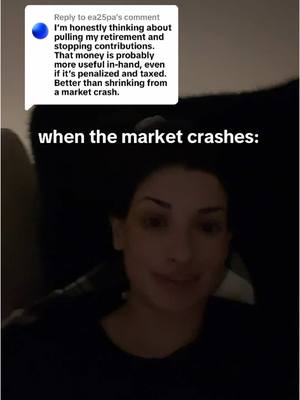
@guacandpico Replying to @ea25pa 🚨 keep this in mind for the impending market crash #greenscreen #stockmarket #recession #marketcrash #tariffs #prices #trump #finance #wallstreet #savings #retirement #stocks

@guacandpico
TikTok · Yap
@guacandpico Replying to @ea25pa 🚨 keep this in mind for the impending market crash #greenscreen #stockmarket #recession #marketcrash #tariffs #prices #trump #finance #wallstreet #savings #retirement #stocks
Performance
Video #8038 · Yap
[01]
The creator responds to a user's comment about pulling their retirement funds during a market crash. She tells a story about a Fidelity study which found that the best-performing investors were those who forgot about their accounts, connecting this to the behavioral finance principle of emotional trading. She warns against selling off during a crash and concludes with a personal anecdote about her father's advice to not touch her portfolio.
[02]
[03]
 761.3K1.1×Financial advice during makeup routine@chloeabeth4545 · Pope In The Pool Multitask
 783.4K41.4×Explaining a trend with social proof@planetmoney · Headlines
 879.9K31.6×Wealthy creator shares frugal habits@aspirewithemmagrede · Anecdotal Philosophy
 705.4K38.6×Celebrity shares difficult money lesson@aspirewithemmagrede · Vulnerable Monologue
 260.9KExplaining generational wealth with data.@fmsmith319 · Reaction
 154.1K8.6×Viral story drives newsletter CTA@harnidhk · Anecdotal Philosophy
 644.4KStreet interview about career path@streetsalaryclub · Street Interview
 524.7K6.8×Vulnerable monologue on financial success@jessijeanhome · Vulnerable Monologue
 1.9M4.7×Expert confronts family's bad finances@calebhammercomposer · Breakdown
 916.2K1.6×Answering questions about being rich@chloeabeth4545 · Q&A Response
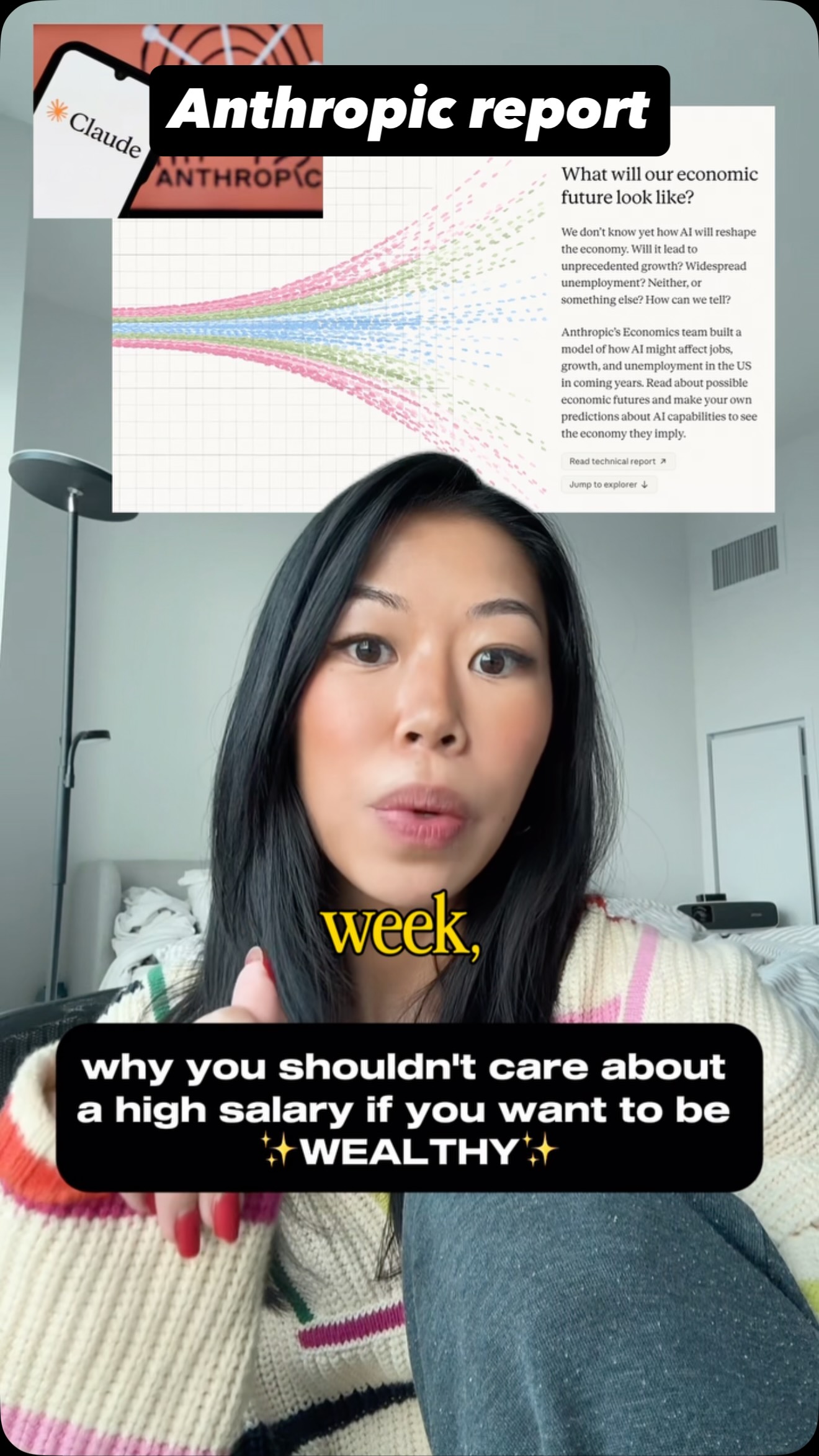 179.8KExplaining an AI economic report@stephthefounder · Opportunity Explainer
 197.4K10.8×Rapid fire interview with founder@avni
[04]
[05]
What stops the scroll in the first 3 seconds
Title hook · 55%
when the market crashes:
Verbal hook · 40%
Need to preface this by saying this is not financial advice, but I wanna tell you a story.
Visual hook · 5%
A prominent on-screen user comment overlay immediately sets the context. The creator is in a dimly lit, close-up shot, creating an intimate and direct feel.
[07]
The promise the opener makes, and how the video pays it back
Hook
Acknowledge a specific, high-stakes user comment or common fear, then promise to reveal a clarifying story or piece of information.
Payoff
Deliver the final, actionable advice through a personal, relatable anecdote (e.g., 'what my mentor told me'). This grounds the academic principle in human experience and makes the advice feel trustworthy.
[08]
The structural pattern this video runs on
Framework
The Anecdotal Authority Funnel
Using a counterintuitive story or anecdote to debunk a common belief, then framing it with an academic principle to deliver authoritative, actionable advice for a timely problem.
The Myth Debunk
Introduce a commonly held belief or famous quote related to the problem and immediately reveal it's misunderstood or incorrect, creating a knowledge gap.
The Counterintuitive Revelation
Present the 'true' story, study, or finding that contradicts the common belief. This serves as a surprising and memorable 'aha' moment.
The Academic Framing
Connect the specific anecdote to a broader, established principle or field of study. This lends credibility and explains *why* the counterintuitive revelation is true.
The Consequence Warning
Clearly articulate the negative outcome of following the common (wrong) belief, especially in the context of the user's urgent problem.
Replying to @ea25pa 🚨 keep this in mind for the impending market crash #greenscreen #stockmarket #recession #marketcrash #tariffs #prices #trump #finance #wallstreet #savings #retirement #stocks
contextual · beginning
Reply to ea25pa's comment I'm honestly thinking about pulling my retirement and stopping contributions. That money is probably more useful in hand, even if it's penalized and taxed. Better than shrinking from a market crash.
title · beginning
when the market crashes:
informational · middle
This legend of the Fidelity Study all started on a Masters in Business podcast back in August 2014, in a discussion between Barry Ritholtz and James O'Shaughnessy. The discussion went like this: ...
Need to preface this by saying this is not financial advice, but I wanna tell you a story. There's a very famous quote, The best investor is a debt best. That's actually misattributed to this Fidelity tier that was conducted. The true finding was that the portfolios that performed, like, the best were of people who had forgotten they had accounts. And they didn't touch their portfolios, right? And so all that's to say in behavioral finance, behavioral economics, people trade, based on emotion a lot. That's a core tenet that you learn, right? And in times of crashes, market crashes, which basically were there's a crash anticipated coming Monday. We know there's one imminent anyways better, like, they're they're they're coming. People sell off. And then the market inevitably rises and then they're completely effed. Like, they literate best no many people, like, lose their entire fortunes and never ever ever gain the footing, like, have the footing to crawl their way even close to rank to where they were. And it's because they sold off. I mean, understandably no. Right? And it I'm not saying it's not the right decision for you, but I am saying though, I talk to my parents every night on the phone. Every night when I talk to my my dad, almost every night, he says don't touch your portfolio. Just don't sell anything. Like like, obviously stuff is crazy. Don't touch it. And I'm like, I no. That's an investor is a debt investor.