Viral Hooks
Trending short videosInterview clip on humanitarian controversy
Z

@zeteonews

Instagram · Clip

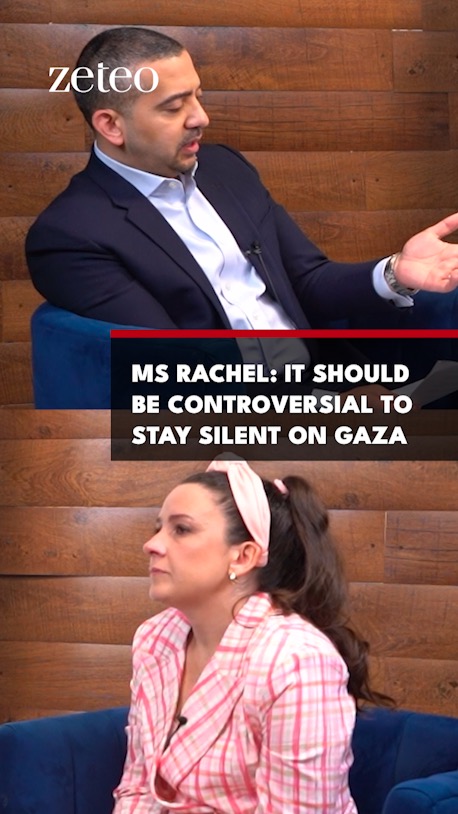
@zeteonews As Ms. Rachel slams the New York Times for its dehumanizing coverage of Palestinians, our editor-in-chief Mehdi Hasan asks the questions that really matter. “It's sad that people try to make it controversial when you speak out for children that are facing immeasurable suffering.” Watch our exclusive interview at zeteo.com, link in bio.

View original on Instagram

The edit1 shot · 1 text
Shots Text

Performance

Views
1.5M
Likes
97.7K
Comments
1.2K
Engagement
6.6%
Outlier
6.3×

Video #8652 · Clip

Interview clip on humanitarian controversyfrom @zeteonews

[01]

Overview

An interviewer lists the various humanitarian crises an influencer has spoken about, then questions her about the disproportionate negative reaction she receives for advocating for Palestinian children in Gaza. The influencer responds by expressing sadness that caring for suffering children is considered controversial and asserts that silence should be the real controversy.

[02]

Simple outline

  1. 1Establish pattern of advocacy
  2. 2Highlight controversial exception
  3. 3Question the double standard
  4. 4Reframe controversy as silence

[03]

Related videos

[04]

Classification

Format
Elements
Jump Cut
Topics

[05]

Hook analysis

What stops the scroll in the first 3 seconds

Verbal hook · 65%

You have spoken out about kids in Gaza.

Visual hook · 35%

A medium shot of an interviewer in a professional studio setting, directly addressing an interviewee who is listening intently. The composition immediately establishes a serious, conversational tone.

[06]

Hook template

Steal this for your own video

You’ve spoken out about [widely supported humanitarian crisis]—so why is speaking out about [controversial humanitarian crisis] treated differently?

  • — You’ve spoken out about children affected by earthquakes—so why is speaking out about children in Gaza treated differently?
  • — You’ve spoken out about disaster relief—so why is speaking out about famine in Sudan treated differently?
  • — You’ve spoken out about victims of human trafficking—so why is speaking out about displaced families in Palestine treated differently?

[07]

Hook and payoff

The promise the opener makes, and how the video pays it back

Hook

An interviewer establishes the subject's consistent and positive track record across multiple, non-controversial examples, framing them as a principled actor.

Payoff

The subject concludes by inverting the initial premise, arguing that their 'controversial' action should be the norm, and that the opposite action (or inaction) is what should truly be considered controversial.

[08]

Narrative framework

The structural pattern this video runs on

Framework

The Moral Inversion

To expose a hypocritical double standard by first establishing a consistent pattern of behavior, then highlighting a controversial exception, and finally reframing the exception as the true moral standard.

  1. 1

    The Credibility Foundation

    The speaker lists multiple, varied instances where the subject has taken a specific, laudable action, building a perception of consistency and principle.

  2. 2

    The Contrasting Anomaly

    The speaker introduces a single, specific instance where the same laudable action provokes a strong negative or illogical backlash, creating a narrative tension.

  3. 3

    The Moral Challenge

    The speaker poses a direct, often rhetorical, question that exposes the hypocrisy or double standard at the heart of the negative reaction, forcing the audience to confront the core issue.

  4. 4

    The Emotional Thesis

    The subject responds not with defensiveness, but with a statement of principle that highlights the emotional or moral cost of the controversy.

  5. 5

    The Evidentiary Gut-Punch

    The subject provides specific, emotionally charged evidence to support their position, making the abstract argument tangible and visceral for the audience.

Themes

  • humanity
  • advocacy
  • double standards
  • empathy

Techniques

  • direct questioning
  • emotional appeal
  • comparative analysis

Trends

  • creator activism
  • social commentary

Post caption

As Ms. Rachel slams the New York Times for its dehumanizing coverage of Palestinians, our editor-in-chief Mehdi Hasan asks the questions that really matter. “It's sad that people try to make it controversial when you speak out for children that are facing immeasurable suffering.” Watch our exclusive interview at zeteo.com, link in bio.

Text overlays

  • branding · throughout

    zeteo

Transcript

You have spoken out about kids in Gaza. I've seen you speak out bad in Sudan. You mentioned The Congo a moment ago when you first started working with Save the Children. Mhmm. You've posted about kids from Israel who were taken hostage and killed horrifically. You've posted about all these things, but when you speak out about kids in Gaza, Palestinian children, some people, I should say minority, go crazy. They think it's somehow controversial. It's divisive. Up and you said the word humanity. Are Palestinian children less human than other children? Should we care less about them? I don't quite get where the controversy is coming from. What you're doing is just so human. It's sad that people try to make it controversial when you speak out for children that are facing immeasurable suffering. The largest cohort of child amputees in modern history, That acronym for a child who has no surviving relatives. And it's I think it should be controversial to not say anything.