Viral Hooks
Trending short videosPersonal story justifies media commentary
S

@shamelesspodcast

Instagram · Clip

@shamelesspodcast Is it time for the mainstream media to start speaking about Ariana Grande’s shrinking frame more candidly? If this discussion brought up any issues for you, please reach out to @thebutterflyfoundation on 1800 ED HOPE (1800 33 4673). You can also chat with them online, 8AM - midnight AEST/AEDT, seven days a week.

View original on Instagram

The edit1 shot · 2 text
Shots Text1:47

Performance

Views
553.2K
Likes
8.8K
Comments
138
Engagement
1.6%
Outlier
8.4×
Length · 22 Jun 2026
1:47

Video #34404 · Clip

Personal story justifies media commentaryfrom @shamelesspodcast

[01]

Overview

The speaker argues for the necessity of discussing Ariana Grande's body by sharing her personal history with an eating disorder and creating pro-anorexia content as a teenager. She frames the ethical debate as a 'trolley problem,' concluding that public discussion, despite potential harm to one person, is a moral imperative to protect a greater number of vulnerable individuals from harmful media influence.

[02]

Simple outline

  1. 1State controversial thesis
  2. 2Reveal personal connection
  3. 3Make shocking confession
  4. 4Introduce clarifying analogy
  5. 5Justify original thesis

[03]

Related videos

[04]

Classification

Format
Concepts
Vulnerable MonologueAnecdotal Philosophy
Elements
Jump CutPodcast SetupText OverlayShallow Depth of Field

[05]

Hook analysis

What stops the scroll in the first 3 seconds

Title hook · 15%

On Ariana Grande

Verbal hook · 75%

I feel very, very strongly that in talking about what's happening with Ariana Grande, we are protecting more people than we are harming.

Visual hook · 10%

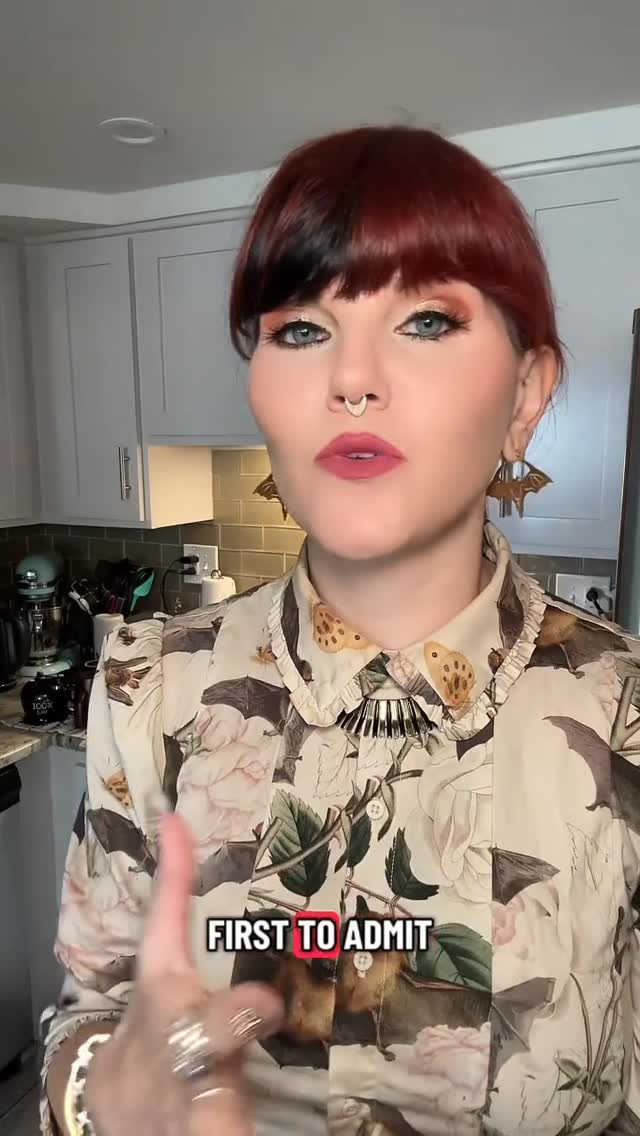
A medium close-up of a speaker with a serious, emotional expression in a professional podcast studio setting, establishing a tone of gravitas and personal investment.

[06]

Hook template

Steal this for your own video

I feel very strongly that talking about [sensitive public issue] protects more [vulnerable audience] than it harms [person or group being discussed].

  • — I feel very strongly that talking about unrealistic beauty filters protects more teenagers than it harms the influencers promoting them.
  • — I feel very strongly that talking about misleading financial advice protects more first-time investors than it harms the creators selling it.
  • — I feel very strongly that talking about unsafe workplace practices protects more employees than it harms the company being criticized.

[07]

Hook and payoff

The promise the opener makes, and how the video pays it back

Hook

A bold, polarizing statement that presents a controversial opinion as a moral imperative, arguing that a seemingly harmful action actually serves a greater good.

Payoff

The Justification Payoff: The speaker applies the analogy directly to the initial thesis, providing a logical and morally satisfying conclusion that validates the controversial stance as a difficult but necessary choice for the 'greater good'.

[08]

Narrative framework

The structural pattern this video runs on

Framework

The Justified Controversy Framework

To persuade an audience of a controversial viewpoint by first stating the provocative thesis, then revealing a deeply personal and vulnerable story that grants unique authority, and finally using a philosophical analogy to provide a logical justification for the initial stance.

  1. 1

    The Provocative Thesis

    The speaker states the core, debatable argument in a strong, unapologetic manner, immediately establishing the central conflict of the narrative.

  2. 2

    The Personal Stake

    The speaker immediately follows the thesis with a statement of deep personal emotional investment in the topic, signaling to the audience that this is not just an intellectual exercise.

  3. 3

    The Empathy Bridge

    The speaker connects the abstract topic to a relatable past self or experience (e.g., 'as a 15-year-old'), inviting the audience to see the issue through a more personal and vulnerable lens.

  4. 4

    The Vulnerable Admission

    The speaker reveals a personal struggle or past failing related to the topic, building trust and establishing a baseline of credibility through shared human experience.

  5. 5

    The Insider's Confession

    The speaker escalates the vulnerability by confessing to a more shocking or complicit past action (e.g., 'I was creating the content'), transforming from an observer into an expert with unique, hard-won insight.

  6. 6

    The Wisdom of Hindsight

    The speaker re-contextualizes the past confessions through the lens of present-day understanding, explaining how those experiences directly inform and motivate the current, controversial thesis.

  7. 7

    The Philosophical Framework

    The speaker introduces a well-known analogy or thought experiment to simplify the complex moral calculus of the situation, providing the audience with a familiar structure to understand the argument.

Themes

  • Media responsibility
  • Mental health awareness
  • Personal vulnerability
  • Ethical dilemmas

Techniques

  • Personal storytelling
  • Analogical reasoning
  • Direct address

Post caption

Is it time for the mainstream media to start speaking about Ariana Grande’s shrinking frame more candidly? If this discussion brought up any issues for you, please reach out to @thebutterflyfoundation on 1800 ED HOPE (1800 33 4673). You can also chat with them online, 8AM - midnight AEST/AEDT, seven days a week.

Text overlays

  • title · beginning

    On Ariana Grande

  • contextual · middle

    Kara Kennedy Karen Carpenter offers a haunting warning for Ariana Grande fans

Transcript

I feel very, very strongly that in talking about what's happening with Ariana Grande, we are protecting more people than we are harming. I feel deeply emotional about this story, and I've wanted to talk about Ariana Grande for the last few weeks because I think I see myself as a 15 year old absorbing this content. I've spoken about this on Shameless in various places in the best, but I think if you looked back to me at 15 or 16 and then through to about 20, you could categorize what I was doing as eating disorder behavior. I was also on Tumblr and not just engaging with pro anorexia content in particular, I was creating pro anorexia content. And I did not know what I was doing at that point in time. I did not appreciate the broader impacts of that as a 17, 18, whatever year old girl. I look back now and I realize what happened for so long on social media, and probably why I've always felt very passionate about speaking and analyzing social media, is because pro anorexia content can go completely unchecked and unchallenged. And I know personally how that impacted me for years of my life and the damage I did to my body at that point in time. I think I view this as the age old trolley problem. Yes. The idea that, say, you're on a train the train is on the rank. Right and you're about to come to a fork in the road if you leave the train on the current track it's on it will collide with a group of people if you change the track the trolley is on it will collide with one person in one instance more people are affected but you didn't play a part in it. No. The train was just going that way. In another instance, you were active. You chose something, but you chose the end result that affected fewer people.


Personal story justifies media commentary | Viral Hooks