Viral Hooks
Trending short videosEducational infographic carousel about indigenous food origins
H

@historymadebyus

Instagram · Carousel

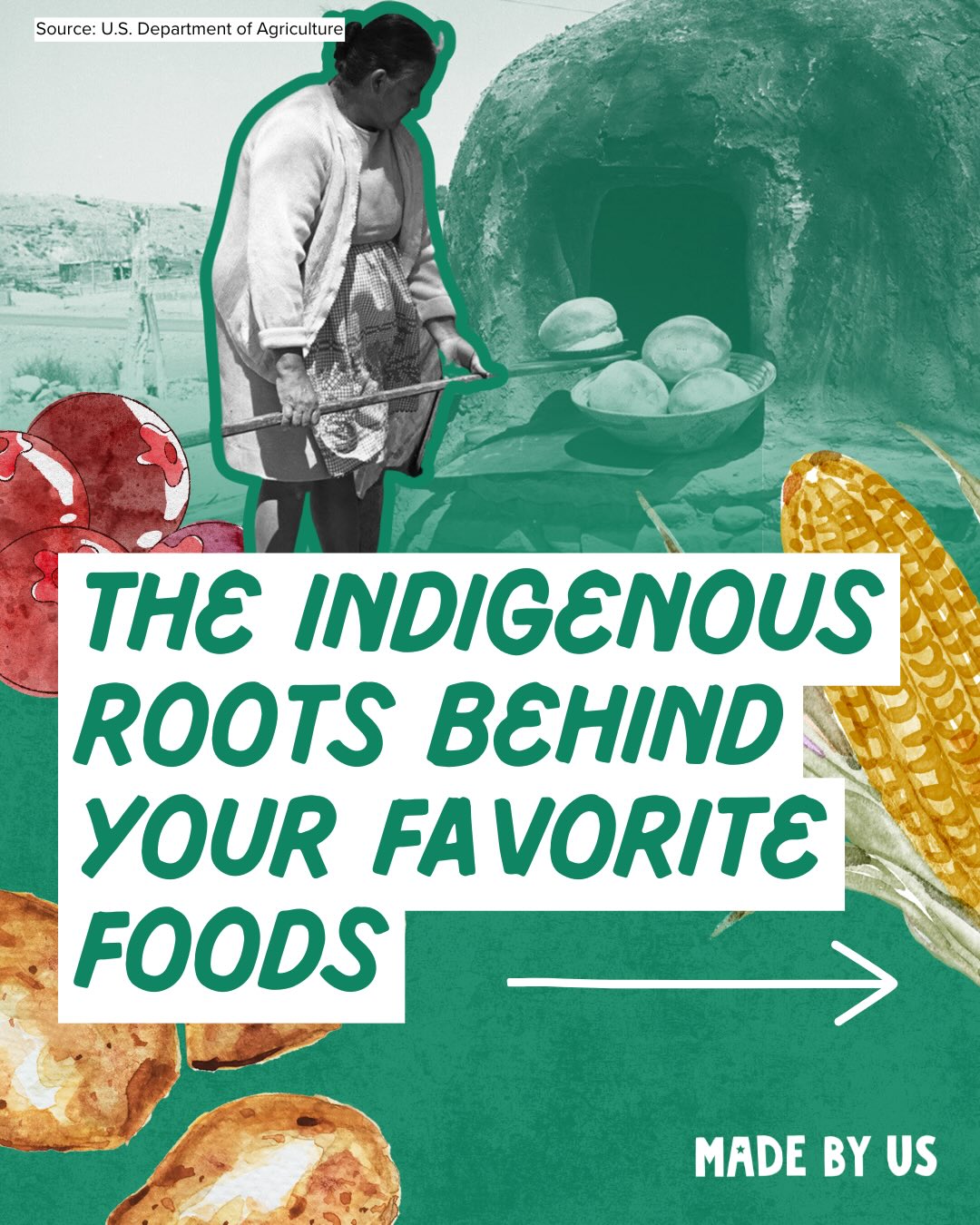
@historymadebyus Corn. Potatoes. Cranberries. Pecans. All of these foods have their roots – literally – in the Indigenous foodways of the Americas. As you sit down to holiday dinners this season, here is a side of history about four important foods that originated in the Americas.

View original on Instagram

The edit1 shot · 25 text
Shots Text

Performance

Views
179.3K
Likes
11.9K
Comments
22
Engagement
6.7%
Outlier
17.6×

Video #10024 · Carousel

Educational infographic carousel about indigenous food originsfrom @historymadebyus

[01]

Overview

A five-slide educational carousel that highlights the Indigenous American origins of four staple foods: corn, potatoes, cranberries, and pecans. The post uses a mix of historical photography and watercolor illustrations with annotated facts to teach viewers about the history, cultivation, and original names of these ingredients.

[02]

Simple outline

  1. 1Hook with hidden origins
  2. 2Introduce familiar item
  3. 3Reveal historical context
  4. 4Connect to modern usage

[03]

Related videos

[04]

Classification

Format
Concepts
Origin StoryGuide Carousel
Elements
Annotation OverlayDigital CollageImage OverlayText Overlay
Account

[05]

Hook analysis

What stops the scroll in the first 3 seconds

Title hook · 45%

THE INDIGENOUS ROOTS BEHIND YOUR FAVORITE FOODS

Verbal hook · 40%

Corn. Potatoes. Cranberries. Pecans. All of these foods have their roots – literally – in the Indigenous foodways of the Americas.

Visual hook · 15%

Striking mixed-media collage combining a historical black-and-white photograph with vibrant watercolor food illustrations and bold typography on a green background.

[06]

Hook template

Steal this for your own video

The [common item or category] you use every day has [unexpected origin or history] most people never learned.

  • — The foods on your Thanksgiving table have Indigenous American origins most people never learned.
  • — The workout moves you do every day have military training origins most people never learned.
  • — The fashion trends you wear every season have subculture origins most people never learned.

[07]

Hook and payoff

The promise the opener makes, and how the video pays it back

Hook

A title slide that bridges a universally familiar concept with an untold or overlooked historical origin, citing a credible source to establish immediate authority.

Payoff

The final slide completes the thematic list, leaving the audience with a permanently altered perspective on items they encounter daily.

[08]

Narrative framework

The structural pattern this video runs on

Framework

The Hidden Origins Listicle

Recontextualize everyday, familiar items by revealing their surprising historical or cultural origins through a structured, fact-based list.

  1. 1

    The Subject Introduction

    Presents a highly recognizable, everyday item as the focal point of the slide to instantly ground the reader.

  2. 2

    The Origin Reveal

    Provides specific historical data (timeframe, geography, original creators) to recontextualize the familiar item.

  3. 3

    The Cultural Evolution

    Shares a surprising fact about the item's original name, early usage, or how it was adapted over time.

  4. 4

    The Modern Anchor

    Provides current statistics or modern context to bridge the historical facts back to the audience's present reality.

Themes

  • Cultural heritage
  • Food origins
  • Indigenous contributions
  • Agricultural history

Techniques

  • Digital collage
  • Watercolor illustration
  • Annotated diagrams
  • Mixed media composition

Trends

  • Educational carousels
  • De-colonizing history
  • Food origin stories

Post caption

Corn. Potatoes. Cranberries. Pecans. All of these foods have their roots – literally – in the Indigenous foodways of the Americas. As you sit down to holiday dinners this season, here is a side of history about four important foods that originated in the Americas.

Text overlays

  • contextual · photo_0

    Source: U.S. Department of Agriculture

  • title · photo_0

    THE INDIGENOUS ROOTS BEHIND YOUR FAVORITE FOODS

  • branding · photo_0

    MADE BY US

  • title · photo_1

    CORN

  • informational · photo_1

    Cultivated in Mexico at least 7,000 years ago

  • informational · photo_1

    Eaten raw, roasted, and as a grain – think bread, porridge, and tortillas!

  • informational · photo_1

    States like Indiana, Iowa and Illinois, are known for high yields of corn crops

  • informational · photo_1

    Makes up 6% of all calories consumed worldwide

  • branding · photo_1

    @HistoryMadeByUs

  • title · photo_2

    POTATOES

  • informational · photo_2

    First cultivated in southern Peru approximately 7,000–10,000 years

  • informational · photo_2

    The Taíno, an Indigenous Caribbean group, called them "batata," which in Spanish translated to "patata"

  • informational · photo_2

    Wild potatoes are poisonous, so they were originally eaten in a "gravy" made with clay that helped absorb the toxins

  • informational · photo_2

    The number one non-grain staple crop in the world

  • title · photo_3

    CRANBERRIES

  • informational · photo_3

    The Narragansett tribe called these wild growing berries "sasemineash"

  • informational · photo_3

    Europeans who arrived in America called them "crane berry" because their blossoms looked like the heads of birds

  • informational · photo_3

    Mainly supplied by five states: Massachusetts, New Jersey, Wisconsin, Washington, and Oregon

  • informational · photo_3

    Were eaten raw, in a sweetened sauce, or in pemmican*

  • contextual · photo_3

    *A paste made with dried meat, fat, and berries

  • title · photo_4

    PECANS

  • informational · photo_4

    The name "pecane" is Algonquin in origin, used to describe "all nuts requiring a stone to crack"

  • informational · photo_4

    The annual crop of pecans is about 300 million pounds

  • informational · photo_4

    The U.S. produces between 80-90% of the world’s pecans

  • informational · photo_4

    Were eaten raw or turned into milk (nut milk isn’t new!)

Educational infographic carousel about indigenous food origins | Viral Hooks