Video #15505 · Talking Head Edit
Seed oligopoly problem and solutionfrom @myhealthforward
The creator explains that an oligopoly of four corporations controls the world's seed supply, which has destroyed seed diversity. He presents evidence through charts and statistics, details how these companies force farmers to buy chemicals, and mentions their lobbying efforts. He then pivots to a solution, encouraging viewers to support local farmers and plant heirloom seeds, and concludes by promoting his free farm map and online store where he sells over 160 varieties of heirloom seeds, offering a discount code as a call-to-action.
- 1Expose a systemic problem
- 2Identify the antagonists
- 3Present a tangible solution
- 4Offer a direct pathway
ElementsImage OverlayB-Roll CutawayDirect Call-to-Action
[05]
Hook analysis
What stops the scroll in the first 3 seconds
Title hook · 45%
There's an oligopoly on the world's seed supply
Verbal hook · 50%
There's an oligopoly on the world's seed supply, and you can fight back against it.
Visual hook · 5%
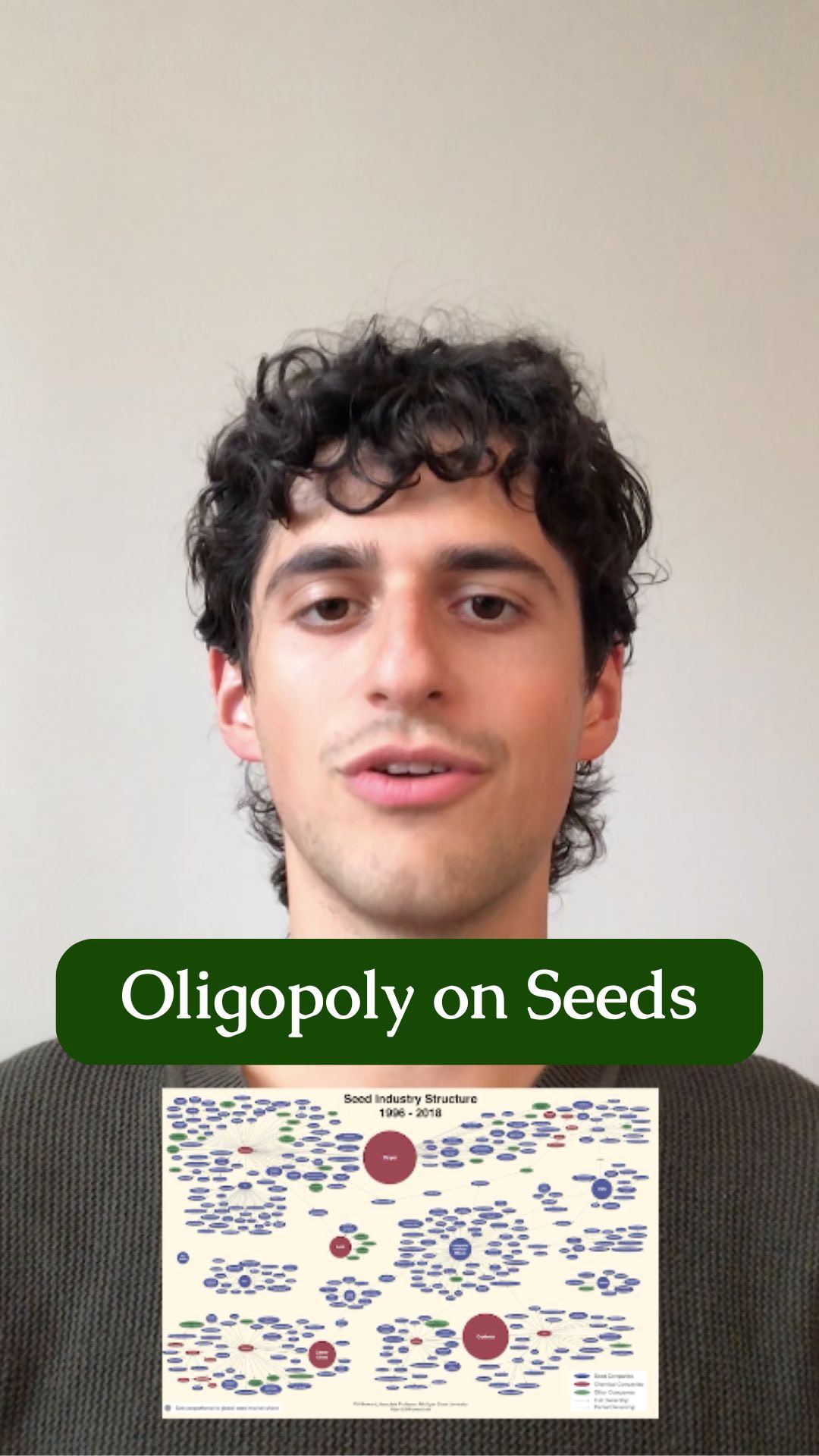
A man speaks directly to the camera with a complex data visualization chart titled 'Seed Industry Structure' overlaid behind him, immediately signaling an informative, data-driven topic.
[07]
Hook and payoff
The promise the opener makes, and how the video pays it back
Hook
State a large-scale, conspiratorial-sounding problem and immediately follow with a promise that the viewer has the power to fight back, creating instant intrigue and a sense of agency.
Payoff
Deliver a direct call to action that provides clear instructions on how to access the creator's tools, often including a special offer or incentive to drive immediate engagement and conversion.
[08]
Narrative framework
The structural pattern this video runs on
Framework
The Systemic Problem-Solver
To expose a large, hidden systemic problem, identify the specific antagonists responsible, and then empower the viewer by providing a simple, actionable solution and the direct tools to implement it.
- 1
The Villain Reveal
Concretize the abstract problem by naming the specific entities or forces responsible for it, giving the audience a clear target for their frustration.
- 2
The Impact Quantified
Use shocking statistics and data points to establish the scale and severity of the problem, generating an emotional response and lending credibility to the claims.
- 3
The Mechanism of Control
Explain the specific process or method the antagonists use to maintain their power, revealing a layer of injustice and deepening the viewer's understanding.
- 4
The Moral Outrage
Introduce an element that highlights the antagonists' ethical failings or disregard for consequences, solidifying their role as the villain.
- 5
The Consolidation Proof
Provide historical context or evidence showing how the problem escalated, reinforcing the narrative of a deliberate power grab.
- 6
The Solution Pivot
Transition sharply from the overwhelming problem to a clear, simple, and empowering solution that the average viewer can participate in, restoring a sense of hope and control.
- 7
The Creator's Toolkit
Position the creator as a helpful guide by presenting a specific tool, resource, or product they have created to facilitate the solution, building authority and bridging to the sales pitch.
Themes
- Anti-corporatism
- Food sovereignty
- Environmentalism
- Support small business
Techniques
- Data presentation
- Visual evidence
- Direct call-to-action
- Problem-solution framing
Post caption
Four agrochemical companies control over 66% of seed supply and have wiped out 93% of genetic seed diversity in the last century.
The agrochemical companies force farmers to rebuy their seeds every year along with their chemical pesticides, herbicides, and fungicides.
You can support local farms and plant your own open-pollinated heirloom seeds.
I have a farm map with 6,500 local farms and markets and carry over 160 heirloom seed varieties.
#seeds #heirloomseeds #organic #pesticides #agrochemical #gardening #garden #gardener #homestead #glyphosate #monsanto #localfarms #health #bayer #pesticide #chemicals
Text overlays
title · beginning
There's an oligopoly on the world's seed supply
informational · beginning
Seed Industry Structure 1996 - 2013
contextual · beginning
The corporations Bayer-Monsanto, Dow-Dupont, Chem-China, and BASF
informational · beginning
wipe out over 93% of the world's seed diversity in only a century.
informational · middle
North Dakota's pesticide protection law a first for the US
informational · middle
Syngenta, Dupont, Monsanto Brands Family Trees
call-to-action · end
Enter code Heirloom during checkout.
branding · end
myhealthforward.com
Transcript
There's an oligopoly on the worse seed supply, and you can fight back against it. The corporations Better Monsanto, DowDuPont, ChemChina, and BASF have helped wipe out over 93% of the world's seed diversity in only a century. The companies now control over two thirds of the worse seed supply as well as the synthetic herbicides, pesticides, and fungicides that farmers are forced to buy alongside them. The companies have also been lobbying for liability immunity from any rank or adverse health effects posed by their chemicals. In just the last thirty years, the big four consolidated their control by acquiring or forcing over 200 seed growers out of business. The key to reclaiming local food supply is best supporting small local farmers and planting open pollinated heirloom seeds. To help you do this, I built a free farm app with over 6,400 local farms and I carry over tier heirloom seed varieties. Comment heirloom below and enter the code heirloom into the discount line during checkout for a free pack of seeds with your order. You can find my map and heirloom seeds on my website, myhealth4.com, or by going to the link in my bio.