Viral Hooks
Trending short videosExplaining the food industry monopoly
Z

@zephzoid

Instagram · Greenscreen Talking Head
@zephzoid Have you noticed restaurants are starting to taste…the same? ”Trapped into eating the same mediocre food from New York to Alaska…who’s behind it??” - More Perfect Union The answer: Sysco With restaurant traffic declining, cost-cutting becomes the logical next step. Distributers like Sysco are the perfect ones to do it. Especially because they have sourced from suppliers accused of forced & slave labor in seafood processing across third world countries. They have become too big to fail: serving 730,000 locations and raking in $80 Billion a year. Craziest part? Sysco tried to acquire US Foods, the second biggest distributor in the World. While this was blocked by the FTC, the implications would have been a devastating control of 75% of the national market for one-stop foodservice distributors. Peel it back another layer: who owns Sysco? Institutional investors BlackRock, Vanguard, State Street. This is what happens when essential food infrastructure is financialized and consolidated. We get homogenized food that loses what makes it special. We need to rely on our local communities to preserve historic flavor instead.
View original on Instagram

The edit1 shot · 8 text
Shots Text

Performance

Views
518.1K
Likes
18.8K
Comments
418
Engagement
3.7%
Outlier
14.9×

Video #17305 · Greenscreen Talking Head

Explaining the food industry monopolyfrom @zephzoid

[01]

Overview

The creator explains why many restaurants serve mediocre, homogenized food by identifying the food distribution giant Sysco as the primary cause. They detail Sysco's market dominance, controversial labor practices, and a blocked attempt to acquire its largest competitor. The creator then reveals that Sysco is owned by major institutional investors like BlackRock and Vanguard, arguing that the financialization of the food supply chain leads to a loss of quality and concludes by advocating for supporting local communities to preserve unique food culture.

[02]

Simple outline

  1. 1State a common frustration
  2. 2Identify the corporate villain
  3. 3Reveal the villain's scale/misdeeds
  4. 4Unveil the power behind the villain
  5. 5Provide an empowering solution

[03]

Related videos

[04]

Classification

Concepts
Breakdown
Elements
B-Roll CutawayPicture-in-PictureImage OverlayText Overlay

[05]

Hook analysis

What stops the scroll in the first 3 seconds

Title hook · 55%

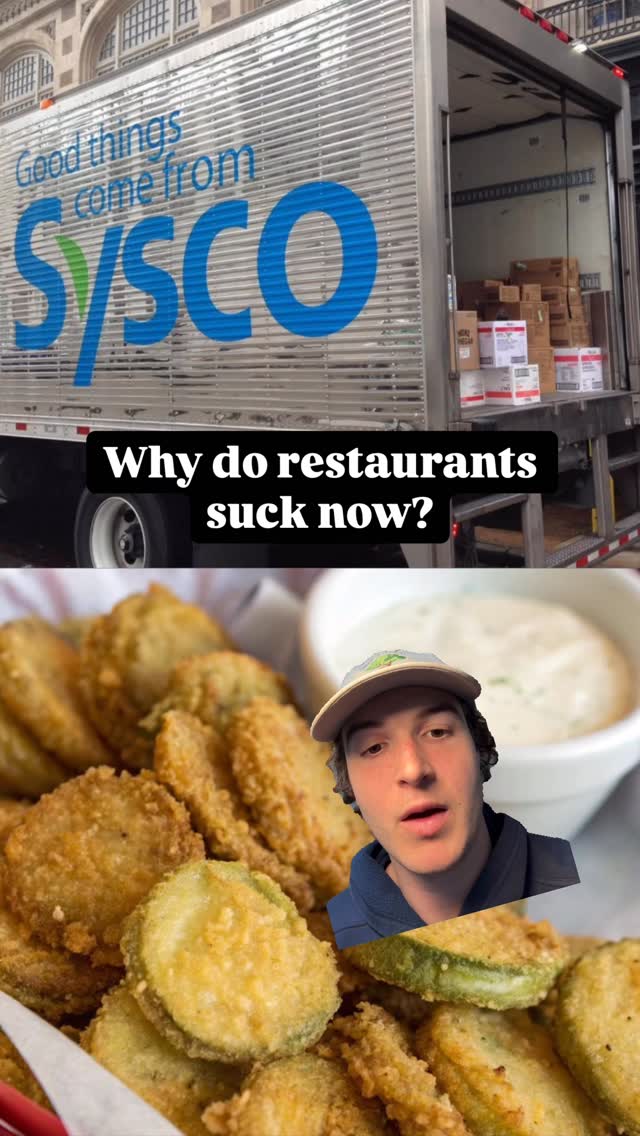
Why do restaurants suck now?

Verbal hook · 40%

Going out to eat in 2026 is just seeing which restaurant can heat up Sysco the best.

Visual hook · 5%

The video opens with a shot of a large Sysco delivery truck, immediately establishing the central subject. This is contrasted with a visually appealing close-up of fried pickles, creating a juxtaposition between corporate logistics and the end-product food experience.

[07]

Hook and payoff

The promise the opener makes, and how the video pays it back

Hook

Pose a relatable, rhetorical question or make a cynical observation that validates a common audience frustration, immediately introducing the central problem.

Payoff

Conclude with a simple, positive, and actionable solution that empowers the individual viewer to combat the large systemic problem, shifting the tone from outrage to agency.

[08]

Narrative framework

The structural pattern this video runs on

Framework

The Conspiracy Unveiling

To take a common, relatable frustration and systematically reveal a series of increasingly powerful and hidden entities responsible for it, culminating in a call to action that empowers the viewer.

  1. 1

    The Shared Frustration Hook

    Frame a widespread, negative experience as a legitimate problem, creating instant rapport and setting the stage for an investigation.

  2. 2

    The Economic Justification

    Provide a logical, surface-level explanation for the problem, grounding the issue in a plausible business reality before revealing the deeper cause.

  3. 3

    The Villain Reveal

    Introduce a specific corporate entity as the primary antagonist responsible for enabling the problem.

  4. 4

    The Ethical Escalation

    Raise the stakes by revealing a serious moral or ethical transgression committed by the antagonist, transforming the problem from a simple inconvenience into a significant issue.

  5. 5

    The Dominance Proof

    Use quantifiable data (revenue, market share, scale of operations) to establish the antagonist's immense power and influence, making them seem 'too big to fail'.

  6. 6

    The Monopolistic Ambition

    Detail a past or potential action by the antagonist that demonstrates their intent to consolidate even more power, highlighting the future danger they represent.

  7. 7

    The Hidden Puppeteers

    Execute a narrative pivot by asking 'who is behind them?' and revealing a higher tier of well-known, powerful entities (e.g., institutional investors, parent companies) as the true controllers.

  8. 8

    The Grand Unifying Theory

    Articulate the core systemic issue (e.g., financialization, consolidation, deregulation) that allows this entire structure of power to exist, connecting the specific problem to a much larger trend.

Themes

  • Corporate consolidation
  • Decline of local business
  • Financialization
  • Ethical sourcing
  • Food quality

Techniques

  • Investigative storytelling
  • Data presentation
  • Call to action
  • Problem-solution framework

Post caption

Have you noticed restaurants are starting to taste…the same? ”Trapped into eating the same mediocre food from New York to Alaska…who’s behind it??” - More Perfect Union The answer: Sysco With restaurant traffic declining, cost-cutting becomes the logical next step. Distributers like Sysco are the perfect ones to do it. Especially because they have sourced from suppliers accused of forced & slave labor in seafood processing across third world countries. They have become too big to fail: serving 730,000 locations and raking in $80 Billion a year. Craziest part? Sysco tried to acquire US Foods, the second biggest distributor in the World. While this was blocked by the FTC, the implications would have been a devastating control of 75% of the national market for one-stop foodservice distributors. Peel it back another layer: who owns Sysco? Institutional investors BlackRock, Vanguard, State Street. This is what happens when essential food infrastructure is financialized and consolidated. We get homogenized food that loses what makes it special. We need to rely on our local communities to preserve historic flavor instead.
Text overlays

  • title · beginning

    Why do restaurants suck now?

  • contextual · beginning

    Going out to eat in

  • informational · middle

    With restaurant traffic declining cost cutting becomes the logical next step

  • informational · middle

    Especially because they have a shady track record

  • informational · middle

    Simply put they have become too big to fail

  • informational · middle

    But peel it back another layer who owns cisco

  • informational · end

    We get homogenized food that loses what makes it special.

  • call-to-action · end

    We need to instead rely on our local communities to preserve historic flavor

Transcript

Going out to eat in 2026 is just seeing which restaurant can heat up Sysco the best. Here's the question behind this test. Are we trapped into eating the same mediocre food from New York to Alaska? And if so, why? And who's behind it? With restaurant traffic declining, cost cutting becomes the logical next step. Distributors like Sysco are the perfect ones to do it, especially because they have a shady track record sourcing seafood processed using forced and slave labor in third world countries. Simply put, they have become too big to fail, serving 730,000 locations and raking in over $80,000,000,000 a year. Craziest part is Sysco actually tried to acquire US Good, the second biggest distributor in the world. While this transaction was blocked, the implications would have been a devastating control of three quarters of the national market for one stop food service distributor. But peel it back another layer. Who owns Sysco? Could it be institutional investors like Black Rank, Vanguard, and State Street? This is what happens when essential food infrastructure is financialized and consolidated. We get homogenized food that loses what makes it special. We need to instead rely on our local communities to preserve historic flavor.