@davidkchoe
TikTok · Speaker address

@davidkchoe The same framework used to make billions and run hundreds of companies

@davidkchoe
TikTok · Speaker address
@davidkchoe The same framework used to make billions and run hundreds of companies
Performance
Video #16638 · Speaker address
[01]
The speaker explains a decision-making framework he learned from a billionaire software founder. He breaks down the process of creating a document that outlines a primary goal and then lists every single decision required to achieve it, including choices and reasoning for each. He uses a business example and a personal weight-loss example to illustrate how this method forces clear, strategic thinking, contrasting it with the less effective, action-focused approach most people take.
[02]
[03]
 180.4K4.8×Step-by-step business development framework mapped out on a digital whiteboard@shanonmarks · Tutorial / How To
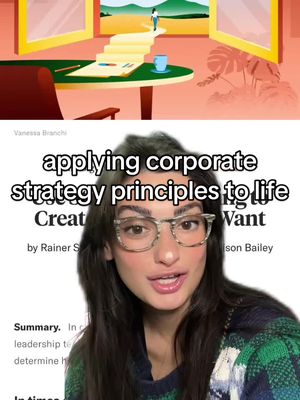 815.8K4.8×Greenscreen breakdown of HBR article@guacandpico · Breakdown
 30.9MStage presentation on time delegation@vusithembekwayo · Breakdown
 258.2K9.1×Business book recommendations for founders@jayhoovy · Rapid Fire Listicle
 172.1K3.5×System for buying back time@zackkravits · Motivational Mantra
 3.9M75.1×Explains storytelling framework for creators@jun_yuh · Opportunity Explainer
 337.8K132.5×Creator explains six life-changing tips@sebell · Playbook
 651.6KThree steps for difficult conversations@entreleadership · Playbook
 73.3KThree tips for extreme productivity@nicktarmo · Playbook
 572.2K2×Step-by-step blueprint for selling ebooks using ChatGPT and social media@markus.wisdom · Tutorial / How To
 171.8K2.4×Creator's Venn diagram framework for making the perfect video@briarcochran · Breakdown
 256.2KCareer advice pivots to ad@findfulfillingwork · Opportunity Explainer
[04]
[05]
What stops the scroll in the first 3 seconds
Title hook · 55%
How high performers make faster decisions by slowing down (The billionaire ID framework)
Verbal hook · 40%
The biggest sign that you're gonna be at the top 1% of your game is directly connected to the quality of your decision making.
Visual hook · 5%
A medium shot of the speaker sitting behind a large, neat stack of books, creating an impression of authority and knowledge. He actively gestures with a white pen, which draws the viewer's eye and adds dynamic movement to the otherwise static shot.
[07]
The promise the opener makes, and how the video pays it back
Hook
Make a bold, aspirational claim that connects a desirable outcome (e.g., being in the top 1%) to a specific, learnable skill, immediately establishing high value for the viewer.
Payoff
Reiterate the framework's name and its core benefit, linking it back to the initial aspirational hook, and provide a clear call to action for further engagement or resources.
[08]
The structural pattern this video runs on
Framework
The Authority-Backed Framework Reveal
To teach a high-value concept by first establishing its credibility through an aspirational authority figure, then breaking it down into a simple, replicable process, and finally making it relatable through a common analogy.
The Authority Credential
Attribute the upcoming information to a highly credible and aspirational source (a 'billionaire'). Detail their success to build trust and justify why the information is worth listening to.
The Secret's Origin Story
Explicitly connect the authority figure's success to a specific, named framework or method, transforming a vague story into a tangible, learnable secret.
The Mechanical Blueprint
Provide a clear, step-by-step 'how-to' of the framework. Explain the structure and process in simple, actionable terms (e.g., 'create a document, at the top put the goal...').
The High-Level Application
Demonstrate the framework using a complex or professional example that aligns with the authority figure's context, proving its utility in a high-stakes environment.
The Psychological Payoff
Explain *why* the framework is so effective. Articulate the underlying principle or psychological benefit (e.g., it's a 'forcing function for clear thinking') to satisfy the viewer's need for a logical reason.
The Relatability Bridge
Re-explain the framework using a simple, universal, and personal analogy (e.g., weight loss) to make the abstract concept feel accessible and immediately useful to a broad audience.
The same framework used to make billions and run hundreds of companies
title · beginning
How high performers make faster decisions by slowing down (The billionaire ID framework)
The biggest sign that you're gonna be at the top 1% of your game is directly connected to the quality of your decision making. Now this concept comes from a billionaire that I used to work with, and I learned a lot from this guy. He's a really successful software founder, and he has actually thousands of businesses, which is kind of crazy to think about. In working with him, I learned that he's been successful because of how he makes decisions and how he kinda forces everyone around him to make a decision. And he used what's called an important decision framework. The way that he actually laid it out was that he basically created a document of some kind. It could be a Worse doc, Google doc. And at the top, you outline the goal and the context. And then the rest of the document is every single decision that needs to be made in order to get to that goal. Let's say that the goal was to go after a new industry, a new customer industry, and you wanted to go after you wanted to close five deals. So you might now have five decisions that you need to make under that goal. Let's say that the first decision is to determine what size of company you wanna go better. And then so you would write that, like, decide what size company we need to go better. And then under that, you would have the choices and then the reasoning. And then you would bold the choice you wanted to make with the associated reasoning. And, basically, in order to have a meeting with this billionaire, you would have had to send this document and also go over this document in real time. And why I thought it was so effective was that it forced the person, who's responsible for creating the document to actually think through all the different scenarios, think through all the decisions that would have to be made in order to get to the end goal. And I don't think typically most people ever think like that. Right? So for example, like, you say you wanna lose weight. I think most people think, okay. What do I do? What what do I need to do? Oh, do I need to go to the gym? How many times do I need to go no gym? Okay. I probably need to eat yes. Or what do I eat? What do I change in my diet? Instead of reframing, okay, I have a goal to lose 15 pounds in the next three months. The decision I need to make in order to do that is I need to decide what my diet will best. What are my choices and what are the reasoning? Okay. What does my exercise need to look like? I need to make a decision. What are my choices and what are my reasoning? It for it's a forcing function for clear thinking. No, I mean, this guy is a billionaire, runs thousands of companies, and he does it all through this exact same framework. And so if you wanna be at the top of your game, you need to change. Right? Your your decision making frameworks, your decision making process needs to reflect your goals and your rank the the level of performance you wanna be at. And so I hope this helps. And it again, it's called the important decision framework. I can you know, if you're interested, DM me or leave a comment. Maybe I can create a blank template for people to yes, but I highly recommend you try something like this to uplevel your own decision making.