Viral Hooks
Trending short videosExplaining the flattening of culture
G

@ghostinthesam

Instagram · Talking Head Edit
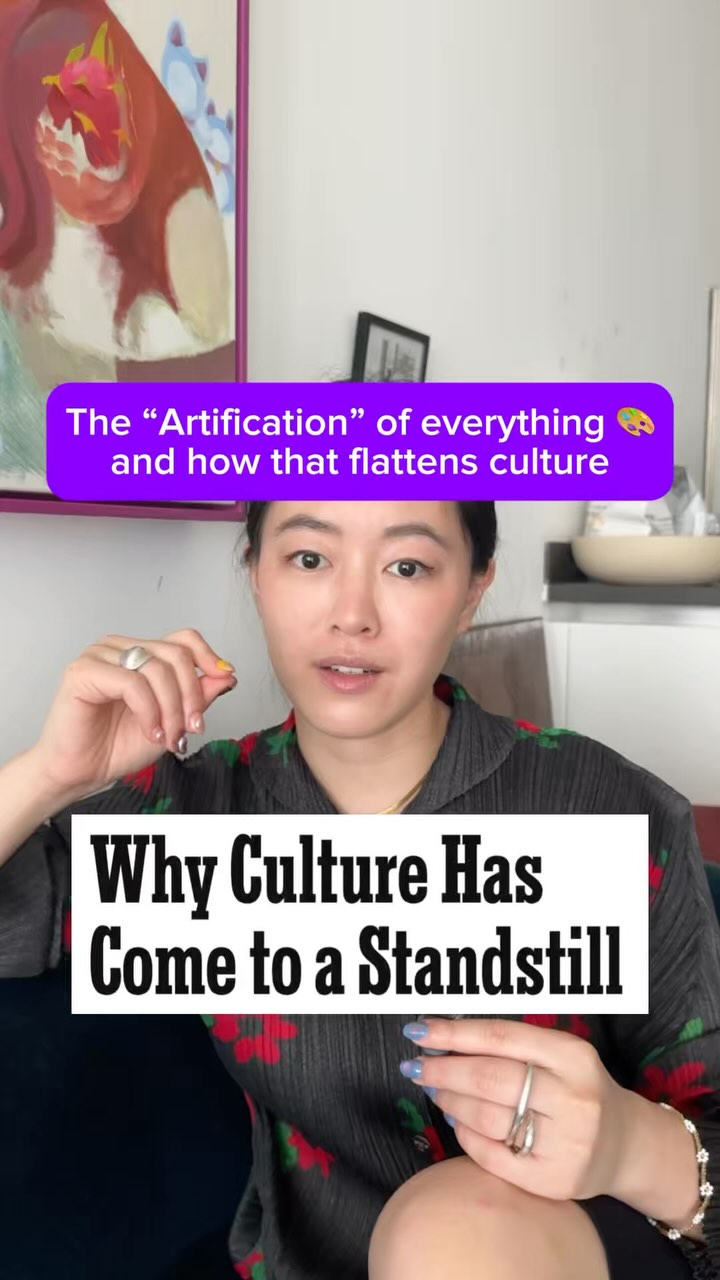
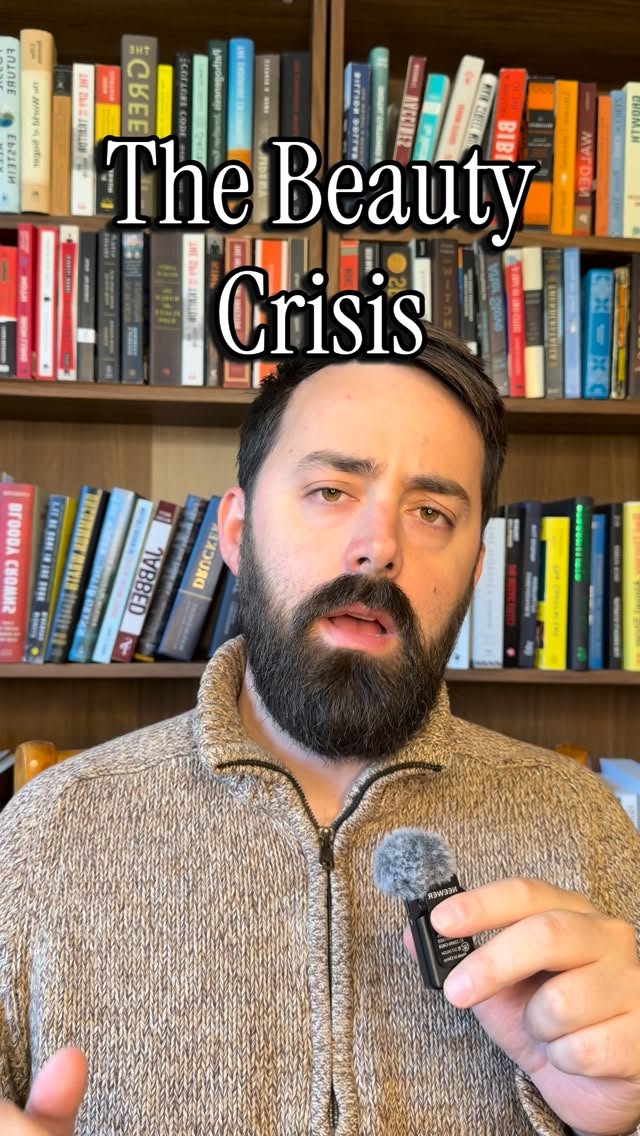
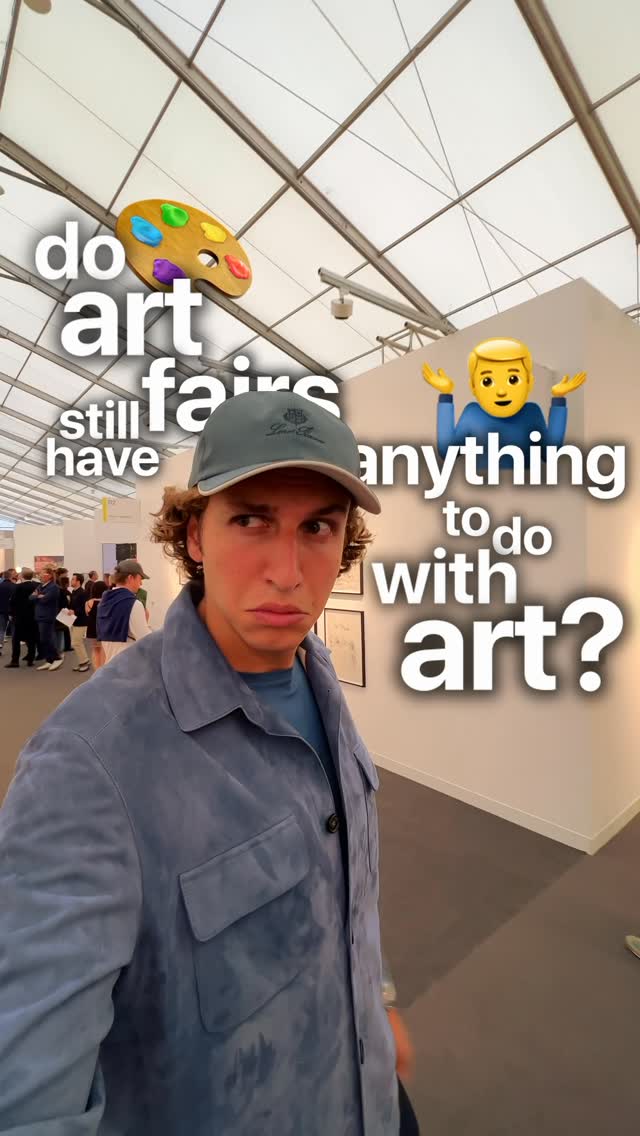
@ghostinthesam 💭THINKING ABOUT: HOW EVERYTHING LOOKS KIND OF LIKE “ART” IN TODAY’S VISUAL LANDSCAPE AND ITS MAKING EVERYTHING FEEL… SUPER FLAT (pun intended) 💭 
 That visual flatness has consequences: First, it suggests there’s no difference between ads, art & AI (slop or not). They look the same -> we think of them the same -> honestly we literally can’t tell the difference anymore without extra legwork. Very soon we’re going into museums and behaving like we’re in a boutique, like art is just another consumable. 

Second, it suggests that the Art that deserves to succeed is the Art that commands the most attention, even though that’s not what it’s for! Art is not trying to maximize conversion like an ad is, but by overly rewarding those Artists that float to the top in this visual ecosystem we lose a lot of the more interesting, risky work. 

The Art that stays with you is often the stuff that makes you linger, breaks your heart, leaves no easy answers… work that makes you feel a wider spectrum of feelings than just the positive ones (pleasure, entertainment, humor). I think this feeling of loss is what so much of the recent cultural decline discourse is trying to get at. People crave complexity, deep down (just look at the Sinners discourse) and the Art with the power to do that is what actually moves culture forward, not the most viral post on IG. References + further reading if you’re into that:
- “Is This the Worst-Ever Era of American Pop Culture?” by Spencer Kornhaber @ The Atlantic
- “Merchants of Style: Art and Fashion After Warhol” by Natasha Degen - “The Age of Average” by Alex Murrell
- “The Missing Piece in Conversations about Cultural Decline” by W. David Marx @ Culture: An Owner’s Manual
 #culturalanalysis #aiart #trendanalysis #arthistory #popart #conceptualart #takashimurakami #warhol #culturaldecline #superflat
View original on Instagram

The edit1 shot · 11 text
Shots Text

Performance

Views
2.3M
Comments
1.8K
Engagement
0.1%
Outlier
29.8×

Video #17195 · Talking Head Edit

Explaining the flattening of culturefrom @ghostinthesam

[01]

Overview

The creator presents a thesis arguing that the convergence of aesthetics between fine art and commercial products has led to a cultural standstill where everything looks like art, but nothing feels like it. She supports this by explaining two historical shifts: the rise of conceptual art de-emphasizing technical skill, and brands adopting artistic presentation. The creator concludes that this visual sameness forces art to compete on commercial terms, flattening emotional depth and deprioritizing the challenging work that truly advances culture.

[02]

Simple outline

  1. 1State a cultural paradox
  2. 2Explain the historical causes
  3. 3Analyze the negative consequences
  4. 4Deliver a powerful analogy
  5. 5Reveal the underlying human need

[03]

Related videos

[04]

Classification

Concepts
Breakdown
Elements
Image OverlayText OverlayJump Cut

[05]

Hook analysis

What stops the scroll in the first 3 seconds

Title hook · 15%

EVERYTHING

Verbal hook · 80%

Everything looks like art, so nothing feels like art.

Visual hook · 5%

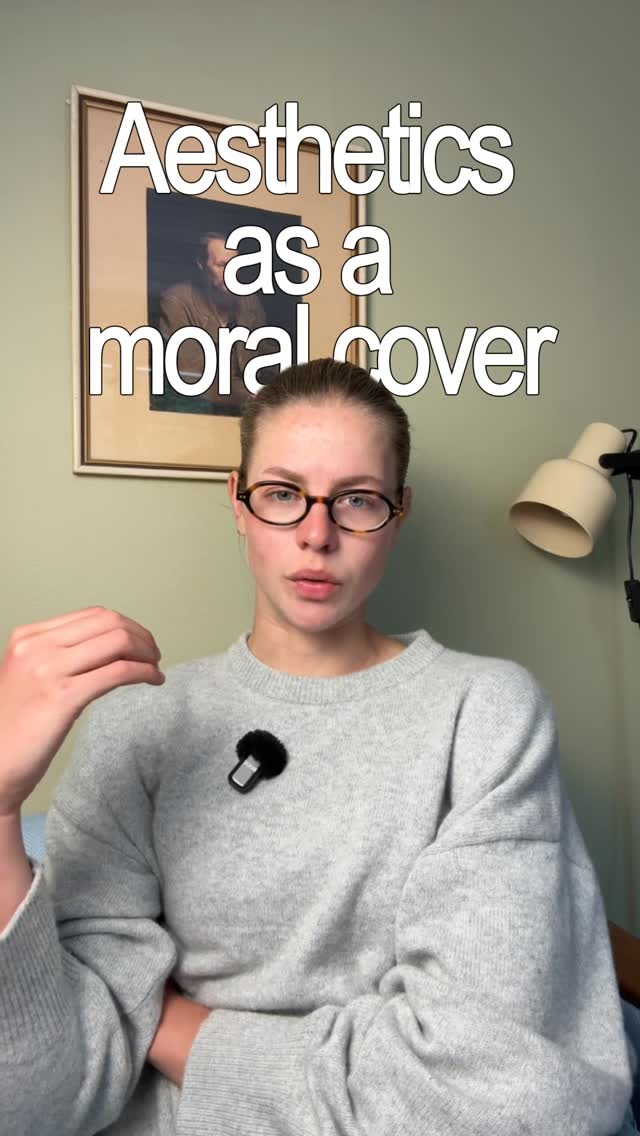
A direct-to-camera shot of the speaker gesturing with her hands, with a colorful piece of art in the background, creating an immediate sense of an authoritative, art-focused discussion.

[06]

Hook template

Steal this for your own video

Everything looks like [the polished version of your topic], so nothing feels like [the real thing].

  • — Everything looks like wellness, so nothing feels like health.
  • — Everything looks like a luxury brand, so nothing feels like luxury.
  • — Everything looks like productivity, so nothing feels like progress.

[07]

Hook and payoff

The promise the opener makes, and how the video pays it back

Hook

The Provocative Paradox: A concise, counterintuitive statement that frames a widespread but unnamed problem, creating immediate intellectual curiosity (e.g., 'Everything looks like art, so nothing feels like art').

Payoff

The Diagnostic Metaphor: To conclude the argument not with a solution, but with a powerful, memorable analogy that crystallizes the entire complex issue and validates the viewer's unspoken feelings, providing intellectual and emotional closure.

[08]

Narrative framework

The structural pattern this video runs on

Framework

The Cultural Diagnosis

Presenting a counterintuitive observation about a modern cultural phenomenon, deconstructing its historical origins, and revealing the hidden psychological impact it has on everyone, culminating in a satisfying diagnosis rather than a solution.

  1. 1

    The Problem Statement

    To define the contemporary symptoms of the problem, grounding the abstract hook in relatable, everyday experiences and establishing the negative emotional stakes for the viewer.

  2. 2

    The Historical Deconstruction

    To answer the 'how did we get here?' question by providing a concise, two-part origin story that explains the convergence of two previously separate forces.

  3. 3

    The Consequence Analysis

    To detail the direct negative outcome of the convergence, explaining how it creates a false equivalence and an unfair competitive environment between the two forces.

  4. 4

    The Nuanced Reframe

    To build credibility by briefly acknowledging a positive side effect before pivoting to the deeper, more profound negative impact, which serves as the core thesis of the argument.

Themes

  • Cultural stagnation
  • Aesthetic convergence
  • Commodification of art
  • Visual culture

Techniques

  • Visual essay
  • Historical analysis
  • Comparative examples

Trends

  • Cultural decline discourse
  • The Age of Average

Post caption

💭THINKING ABOUT: HOW EVERYTHING LOOKS KIND OF LIKE “ART” IN TODAY’S VISUAL LANDSCAPE AND ITS MAKING EVERYTHING FEEL… SUPER FLAT (pun intended) 💭 
 That visual flatness has consequences: First, it suggests there’s no difference between ads, art & AI (slop or not). They look the same -> we think of them the same -> honestly we literally can’t tell the difference anymore without extra legwork. Very soon we’re going into museums and behaving like we’re in a boutique, like art is just another consumable. 

Second, it suggests that the Art that deserves to succeed is the Art that commands the most attention, even though that’s not what it’s for! Art is not trying to maximize conversion like an ad is, but by overly rewarding those Artists that float to the top in this visual ecosystem we lose a lot of the more interesting, risky work. 

The Art that stays with you is often the stuff that makes you linger, breaks your heart, leaves no easy answers… work that makes you feel a wider spectrum of feelings than just the positive ones (pleasure, entertainment, humor). I think this feeling of loss is what so much of the recent cultural decline discourse is trying to get at. People crave complexity, deep down (just look at the Sinners discourse) and the Art with the power to do that is what actually moves culture forward, not the most viral post on IG. References + further reading if you’re into that:
- “Is This the Worst-Ever Era of American Pop Culture?” by Spencer Kornhaber @ The Atlantic
- “Merchants of Style: Art and Fashion After Warhol” by Natasha Degen - “The Age of Average” by Alex Murrell
- “The Missing Piece in Conversations about Cultural Decline” by W. David Marx @ Culture: An Owner’s Manual
 #culturalanalysis #aiart #trendanalysis #arthistory #popart #conceptualart #takashimurakami #warhol #culturaldecline #superflat
Text overlays

  • title · beginning

    EVERYTHING

  • title · beginning

    Why Culture Has Come to a Standstill

  • informational · beginning

    FINE ART

  • informational · beginning

    ADS

  • informational · middle

    FINE ART OR MASS OBJECT ??????????

  • informational · middle

    FINE ART

  • informational · middle

    MASS OBJECT

  • informational · middle

    FINE ART = MASS OBJECT

  • contextual · end

    Are We Living in a Time of Cultural Collapse?

  • contextual · end

    The age of average

  • contextual · end

    IS THIS THE WORST-EVER ERA OF AMERICAN POP CULTURE?

Transcript

Everything looks like art, so nothing feels like art. How often do you see an image these days and wonder, is this art, an ad, AI, all three? We're in a moment where every category of thing looks kind of the same and kind of good, and it's making us unhappy. No how did everything start looking the same? Two big shifts. One, post pop art and conceptual art, we stopped requiring that art be grounded in things like technical skill, originality, and even authorship. Almost any execution can qualify as art with a strong enough concept, and while that's taken us to some really interesting places, it's one of the ways in which art has moved closer to the mass object. Two is that rank started to mimic art in order to keep up with industrialization. Gallery lighting, plinths, reverent copy, the mass objects started to dress like art. So now everything kinda wears the same visual uniform, whether it's a product, a piece of art, or a personal worst. And that sameness creates a sense of equivalence even though they're trying to achieve very different things. Art isn't trying to sell you moisturizer, and yet it's being forced to compete in the same visual arena. This isn't all a bad thing. I'd argue best rank accessibility is up, and your average consumer has an appreciation for aesthetic. But flattening what you see ends up flattening how you feel. When art has to compete to convert, we deprioritize its qualities that don't help with that. Anything difficult, ugly, strange, requiring you to just, you know, sit with it. Ironically, that's the very kind of art that moves culture forward and that stays with you. Everything being beautiful and easy and existing in this tight band of pleasantness might go down smooth, but it's all taste, no calories. And the harder stuff, the nutrition, is what I think we deeply crave right no, whether we can put a name to it or not.

Explaining the flattening of culture | Viral Hooks