Viral Hooks
Trending short videosMonologue on collapsing beauty standards
T

@the.ryanexperience

Instagram · Talking Head Edit

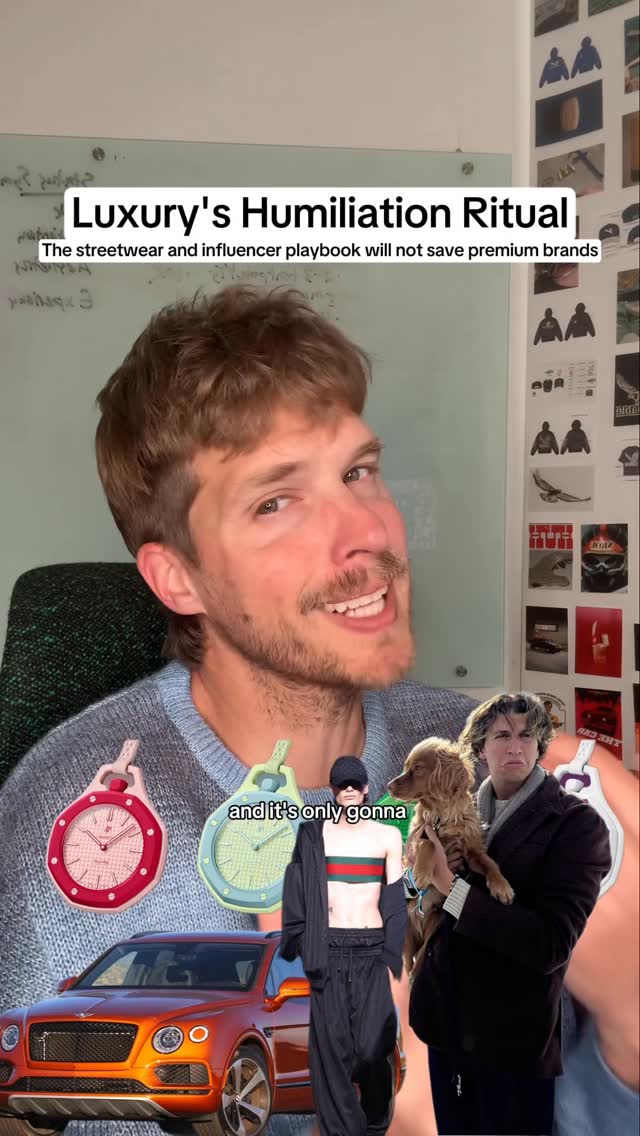
@the.ryanexperience Luxury, and beauty are currently rare. And we, as consumers are part of the problem, fuelling the machine which gives us subpar products and services. We need a beauty renaissance and that starts with the market demanding better things.

View original on Instagram

The edit1 shot · 1 text
Shots Text2:40

Performance

Views
183.3K
Likes
11.5K
Comments
399
Engagement
6.5%
Outlier
15.3×
Length · 11 May 2026
2:40

Video #28110 · Talking Head Edit

Monologue on collapsing beauty standardsfrom @the.ryanexperience

[01]

Overview

The creator presents an argument that societal standards of beauty are collapsing, which allows corporations to profit from selling lower-quality products and experiences at inflated prices. He uses examples like minimalist luxury hotels and poorly designed products to illustrate his point, before explaining that a key reason for this is the modern belief that beauty is subjective rather than objective. He contrasts this with the tangible, objective beauty found in historical architecture and well-crafted items, arguing that real beauty inspires positive emotions and that society has been trained to ignore its importance.

[02]

Simple outline

  1. 1Declare a societal crisis
  2. 2Provide a relatable example
  3. 3Ask 'why' it's happening
  4. 4Reveal the underlying cause
  5. 5Challenge a common belief

[03]

Related videos

[04]

Classification

Concepts
BreakdownCultural Rant
Elements
B-Roll CutawayImage OverlayJump CutTitle Text Hook

[05]

Hook analysis

What stops the scroll in the first 3 seconds

Title hook · 35%

The Beauty Crisis

Verbal hook · 60%

Our standards are collapsing and corporations are getting rich because of it.

Visual hook · 5%

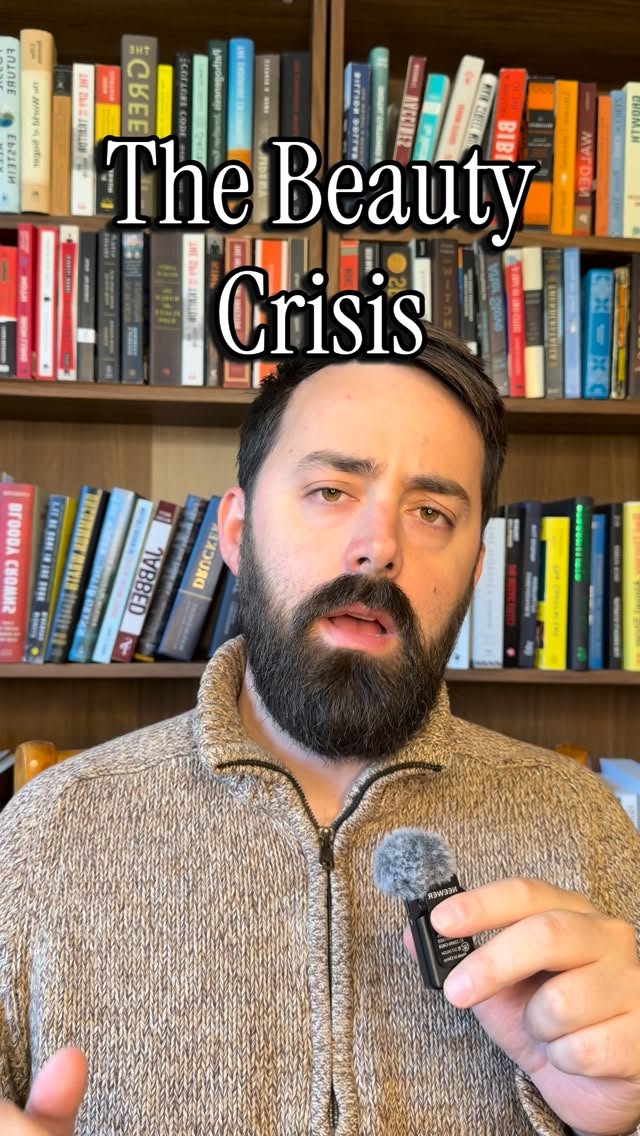
A medium shot of a man with a beard speaking directly to the camera, positioned in front of a well-stocked bookshelf, creating an immediate impression of authority and expertise.

[06]

Hook template

Steal this for your own video

Our standards for [quality people once expected] are collapsing—and [industry] is getting rich because of it.

  • — Our standards for food people once expected are collapsing—and the fast-food industry is getting rich because of it.
  • — Our standards for privacy people once expected are collapsing—and the tech industry is getting rich because of it.
  • — Our standards for education people once expected are collapsing—and the test-prep industry is getting rich because of it.

[07]

Hook and payoff

The promise the opener makes, and how the video pays it back

Hook

A bold, sweeping declaration of a negative societal trend that the audience likely feels but hasn't articulated, immediately establishing high stakes.

Payoff

A final, powerful piece of visual or verbal evidence that wordlessly confirms the initial crisis, leaving the audience to contemplate the argument's implications and encouraging discussion.

[08]

Narrative framework

The structural pattern this video runs on

Framework

The Cultural Diagnosis Framework

To identify a widespread, negative cultural trend, diagnose its underlying cause by deconstructing a common misconception, and prove the diagnosis with evocative examples.

  1. 1

    The Crisis Declaration

    State a broad, negative trend affecting everyone, often framed as a collapse of standards.

  2. 2

    The Paradox Proof

    Illustrate the trend with a frustrating contradiction (e.g., higher cost for lower quality) to make the problem feel irrational and urgent.

  3. 3

    The Tangible Anecdote

    Ground the abstract crisis in a specific, vivid, and relatable example that the audience has likely experienced.

  4. 4

    The Ideal Standard

    Briefly state the way things *should* be, establishing a clear benchmark for the critique and highlighting the gap between the ideal and reality.

  5. 5

    The Investigative Pivot

    Pose a direct question to the audience (e.g., 'Why is this happening?') that frames the rest of the video as an investigation and creates a knowledge gap.

  6. 6

    The First Diagnosis

    Introduce the first major underlying cause for the problem, presenting it as a novel insight.

  7. 7

    The Common Misconception

    Identify and state a widely-held belief that the creator argues is responsible for perpetuating the problem.

  8. 8

    The Contrarian Truth

    Directly refute the common misconception with a powerful, alternative thesis presented as an objective fact.

  9. 9

    The Evocative Proof

    Support the 'Contrarian Truth' with examples that appeal to both emotion (a feeling, a memory) and tangible experience (a physical object).

Themes

  • Decline of standards
  • Corporate greed
  • Subjectivity vs. Objectivity
  • Cultural commentary

Techniques

  • Direct address
  • Visual evidence
  • Argumentative structure

Post caption

Luxury, and beauty are currently rare. And we, as consumers are part of the problem, fuelling the machine which gives us subpar products and services. We need a beauty renaissance and that starts with the market demanding better things.

Text overlays

  • title · beginning

    The Beauty Crisis

Transcript

Our standards are collapsing rank corporations are getting rich because of it. We're currently living in a strange moment in time where products are getting worse, experiences are getting more transactional, yet prices keep rising. Walk into any luxury hotel. You'll have concrete floors, Edison bulbs, a dead tree Edison bulbs, a dead tree branch sitting in a $400 vase. They'll charge you a thousand dollars a night and call it elevated minimalism. But products and, yes, services good involve care, craftsmanship, and a dedication to the customer. So why are corporations getting away with this? Well, there are are corporations getting away with this? Well, there are two main reasons that I'll touch on in this video. The first is that we have a beauty deficiency nowadays. We've been told that beauty is subjective, that what matters is function, not form. But beauty is actually not subjective. It's objective. You can stand in front of a centuries old church and feel the beauty. You can hold a product and know if it was created with care, with craftsmanship, or printed out by a machine that hates you. Real beauty inspires creativity, hope, joy. We've been trained to ignore that beauty is a real thing. If you look at strip malls.