@orenmeetsworld
Instagram · Talking Head Edit
@orenmeetsworld The continual hunt for something that feels real in a world full of reproduced “luxury” experiences. Creator who did the no phone party I mention is @askcatgpt

@orenmeetsworld
Instagram · Talking Head Edit
@orenmeetsworld The continual hunt for something that feels real in a world full of reproduced “luxury” experiences. Creator who did the no phone party I mention is @askcatgpt
Performance
Video #27021 · Talking Head Edit
[01]
The creator begins by describing the modern feeling of cultural homogenization, where travel and consumer experiences feel identical everywhere. He introduces German philosopher Walter Benjamin's concept of 'Aura'—the unique, non-reproducible quality of an experience tied to a specific time and place. The creator argues that mechanical and digital reproduction has destroyed this Aura, leading to a world of scaled, generic consumerism. He provides examples of people seeking authentic 'auric' experiences (run clubs, no-phone parties, church) and critiques brands like Aesop for attempting to manufacture Aura at scale, which he deems an ironic failure. He concludes by stating that Aura is the new luxury, and brands must build it authentically to remain relevant.
[02]
[03]
 1MExplaining a cultural trend shift@eugbrandstrat · Breakdown
 183.3K15.3×Monologue on collapsing beauty standards@the.ryanexperience · Breakdown
 2.3M29.8×Explaining the flattening of culture@ghostinthesam · Breakdown
 321K1×Analysis of intellectualism as a trend@deathtostock · Breakdown
 2.4M79.6×Exposing synthetic luxury goods breakdown@orenmeetsworld · Breakdown
 1.2MExplaining the decline of millennial branding@eugbrandstrat · Breakdown
 286.7K1.7×Explaining heritage maximalism branding trend@orenmeetsworld · Breakdown
 1.3MAnalyzing the millennial brand aesthetic@eugbrandstrat · Breakdown
 1.6M119.3×Explaining the 'tastewashing' tech trend@var.aunevik · Breakdown
 183.9K8.5×Explaining cultural term with product@thisisantwon · Breakdown
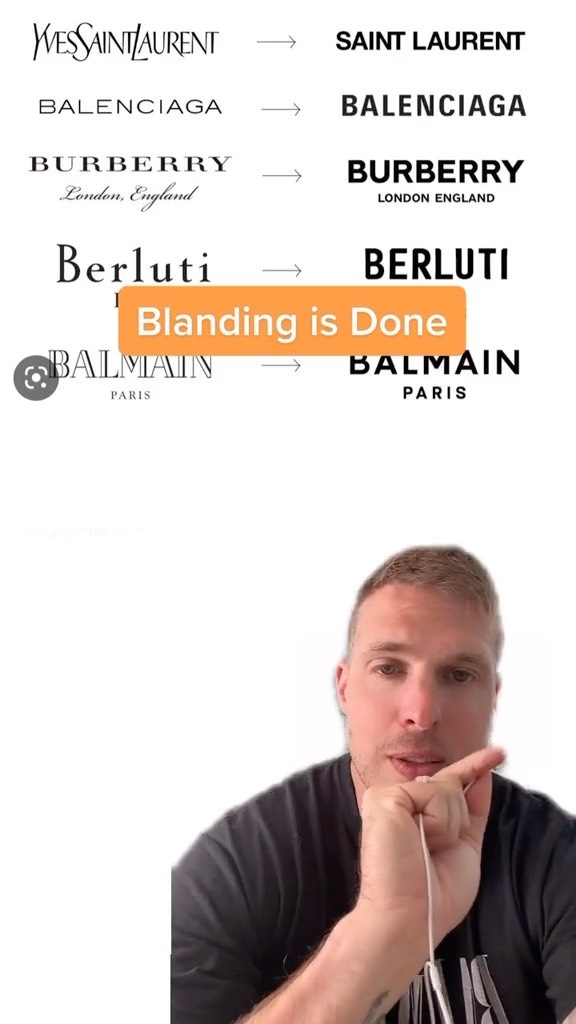 1.1MCreator explains new branding trend@orenmeetsworld · Breakdown
 514.4K2.5×Explaining the hi-fi sound trend@deathtostock · Breakdown
[04]
[05]
What stops the scroll in the first 3 seconds
Title hook · 35%
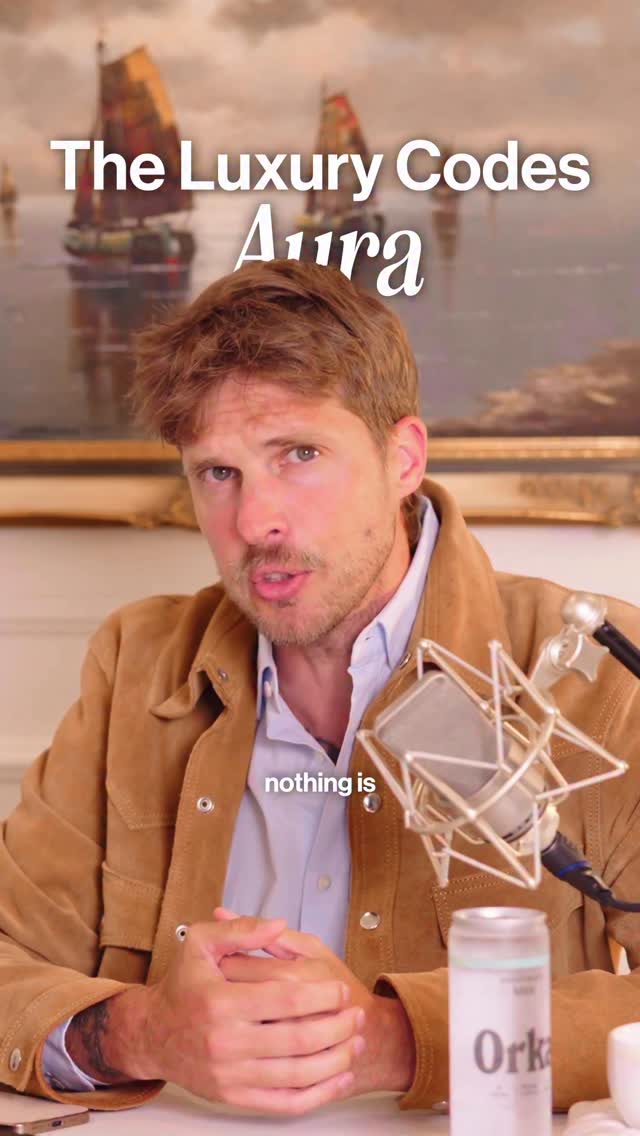
The Luxury Codes Aura
Verbal hook · 60%
Do you ever have the sinking feeling that nothing is cool anymore?
Visual hook · 5%
A man in a professional podcast-style setup with a large microphone, sitting in front of a classic painting, speaking directly to the camera, establishing an aesthetic of intellectual authority.
[06]
Steal this for your own video
Do you ever have the sinking feeling that isn’t anymore?
[07]
The promise the opener makes, and how the video pays it back
Hook
Pose a relatable, almost existential question about a modern cultural phenomenon that taps into a widespread but unspoken anxiety.
Payoff
Deliver a concise, powerful new thesis that redefines a core value (e.g., 'luxury,' 'success,' 'cool'). Conclude with a stark, memorable binary choice that challenges the viewer and solidifies the new framework.
[08]
The structural pattern this video runs on
Framework
The Academic Reframe
To take a common, vague cultural feeling, give it a formal name and intellectual framework, and then use that framework to expose a systemic paradox and propose a new way of seeing the world.
The Montage of Sameness
Provide rapid-fire visual evidence that validates the hook's premise, demonstrating a pattern of homogenization across multiple examples to establish the problem as pervasive.
The Intellectual Anchor
Pivot from the feeling to an explanation by introducing a historical or academic concept/figure. This provides a specific lens and vocabulary to analyze the problem, giving the argument intellectual weight.
The Prophecy Fulfilled
Apply the academic concept to the modern world, showing how its absence has become a scaled, systemic issue and the operating model for major industries, thus escalating the problem from a cultural trend to a structural reality.
The Human Counter-Movement
Show evidence of people subconsciously reacting against the problem and seeking out the very thing the academic concept describes (e.g., authenticity, community, unique experiences), proving the human need for it.
The Paradox of the Solution
Analyze a sophisticated attempt to solve the problem (e.g., a brand trying to manufacture authenticity) and then deconstruct it, revealing the deep irony that the 'solution' is part of the same reproducible system, thereby strengthening the core argument.
The continual hunt for something that feels real in a world full of reproduced “luxury” experiences. Creator who did the no phone party I mention is @askcatgpt
title · beginning
The Luxury Codes Aura
informational · middle
It Doesn't Really Change
title · middle
AURA
informational · middle
Experience at the cost of Feeling
informational · middle
We Feel It
informational · middle
Systematically Destroyed It
informational · end
But They're Not.
informational · end
But That's the Code
Do you ever have the sinking feeling that nothing is cool anymore? You land in a city you've never been to. You walk through the airport, same monocle cafe, same keels. You get to the hotel, same artful lobby, same playlist, same mountain and better equivalent in the bathroom. You step outside and the high street has a Zara rank Aesop, vintage stores with the same stuff, and of worse, a coffee shop that looks exactly like the one near your apartment. We fly 5,000 miles, and it doesn't really change. On your Instagram, the girls on your explore page kinda blend into each better. More rank club bras, another washed hoodie in your ads. This isn't an accident. It's the result of something a German philosopher named Walter Benjamin warned us about. He had this concept called aura. The Zoomer stole it from Walt. Aura, the way he defined it, is the unique presence of something rooted in a specific time and place. The feeling that you are experiencing something that isn't reproducible. Benjamin was writing about photography, positioning against mechanical reproduction. But what he predicted has become the scaled operating model for every brand and every category on the planet, not to mention the arts. Every Zara is the same Zara. Every Best smells the same as every w. Every consumer experience runs on the same playbook, good, experience at the cost of feeling. And here's the thing, we feel it. We're exhausted by it. This is why rank clubs exploded, why catchy b t's no foam party in LA drew hundreds of people. Kids are voluntarily going to church. We are starving for aura in a world that systematically destroyed it. It's so apparent it's become a meme. Now some brands tried figuring this out. Aesop designs every store with a different architect. Using local materials that reference the neighborhood, they have a beautiful catalog online of every choice. They want an Aesop in Melbourne to feel completely different than an Aesop in Brooklyn, which feels completely different than one in Tokyo, but they're not. These brands are trying to manufacture aura at scale, which is fascinating and deeply ironic because the system producing them is completely reproducible. It's just designed to feel like it isn't, but that's the code. The experiences and brands we want aren't the ones with the best product or the lowest price. Wirecutter trained a generation no want some mid. We want the experiences to make us feel like we're somewhere that couldn't exist anywhere else. Aura is the new luxury, and you either build it or you're just another Best.