Post caption
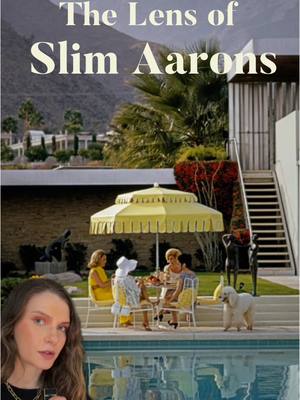
Slim Aarons: The Original Curator of Ambiance ✨ His photos shaped how we picture leisure, luxury, and aesthetic life. But Slim Aarons was more than a photographer—he was an archivist of ambiance. Here’s what modern brands can still learn from his lens. #SlimAarons #1960s #PoolsideGlamour #PalmSprings #Capri #DolceVita #CuratingAmbiance
Transcript
Probably seen these photos before. A poolside in Palm Springs, a lunch in Capri. But do you know where this aesthetic comes from? This is the world of Slim Ahrens. And whether you know his name or not, you've probably seen his influence. Slim Ahrens wasn't just photographer, he was the original curator of ambiance. Through serving as a war photographer in Worse War two, he made himself a promise. From now on, he'd only photograph attractive people doing attractive things in attractive places. Starting in the nineteen fifties, he embedded himself among the international elite, aristocrats, socialites, Hollywood tier, and turned his lens to private villas, alpine resorts, and sun drenched coastlines. From Palm Springs, to Capri, Saint Moritz, to Acapulco, he documented leisure and style as an art form. Best slim, a laika, and a gift for composition. Aspiration of living looked and felt like. Not flashy, but composed. Not performative, but cinematic. It was ambiance before marketing. He didn't stage fantasies. He captured environments where lifestyle and setting were already in sync. It was always about environment worst, architecture, light, symmetry, and spatial storytelling that still inspires how we photograph and brand luxury today. Here are five things that brands can still learn from Slim Arons. Number one, environment leads. He captured atmospheres. Arons built worlds, not just images. Number two, master visual restraint. His photos weren't overloaded or overstyled. Elegance was lived in. Number three, narratives live in the space. A pool wasn't just a pool. It hinted at the life around it. What's outside the frame still speaks. Aaron's used architecture and better to suggest a narrative. Number four, lifestyle is the product. The charm of his worse, it's never fake. He captured real people mid lunch, mid laugh. Authenticity wasn't curated. It was the standard. And five, timelessness scales. Slim's palette and settings still hold. If your concept needs explanation, it won't age well. Today's brands are still chasing that mood. Spaces that feel editorial, lived in, and aspirational without being performative. Because Slim Arons didn't just sell luxury, he sold ambiance. He wasn't staging scenes. He was studying how elegance existed in the wild. And in the process, he left behind a visual blueprint, not perfection, but presence, composition, and a point of view.