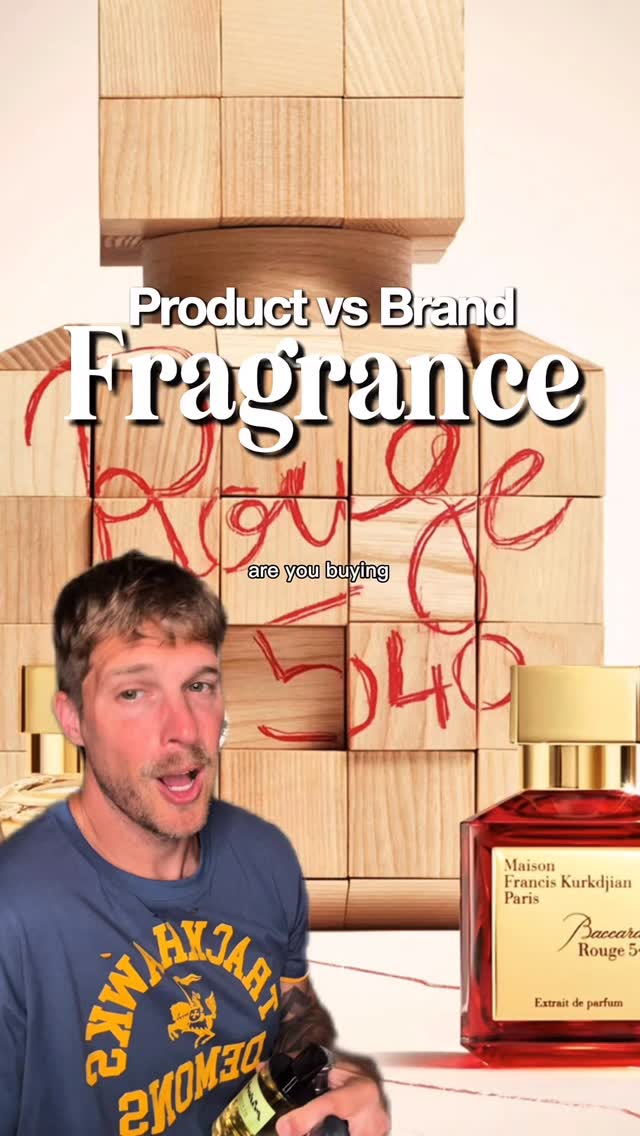
The creator breaks down the success of the Chinese luxury fragrance brand "To Summer" by analyzing its four core "founder principles." He uses a picture-in-picture format to narrate over B-roll footage and text overlays, explaining each principle—Owning the Eastern Aesthetic, Local Cultural Translation, The Beauty of Uselessness, and Ingredient Innovation—and supports his analysis with direct quotes from the founder, Shen Li. The video concludes by asking the audience for their opinion on the brand's potential for Western expansion.
Post caption
@tosummerofficial is taking over, and most of the West has no idea. Shen Li is one of the most principled founders I’ve come across. One of my fav quotes from her is amazing:
“Western perfumery emerged from the practical needs of European aristocracy: perfumes were developed to mask body odours [caused by wearing] heavy court attire,” she explains. “In contrast, fragrances were created purely for pleasure in ancient China.
I think To Summer would do well in the US. What do you think?
Thank you @itsjustandreib for the suggestion 🙏🏼
#founderstory #fashionmarketing #brandstrategist #luxurymarketing
Transcript
This Chinese founder is building the next luxury fragrance brand you've never heard of. Welcome to Behind the Brand, a series uncovering the founder principles that become the unfair advantages of outlier businesses. Today, we're talking about Twosome. Twosome is a luxury Chinese fragrance brand founded in 2018 with 12 stores globally, over a 100,000 repeat customers with a 60% repurchase rate. How is Twosome are taking over China despite better brands with deeper roots? It's breaking out because of its founder Shenley and Elvis Lu's principles and brand strategies. So here are their founder principles. The first principle is owning the better new modern aesthetic. Instead of leaning on design and branding principles of western brands like No Malone or Baredo, Shenley is creating and owning a new uniquely eastern and Chinese aesthetic. Setting. They don't borrow legitimacy from Western standards. Instead, Tussamer embraces its heritage while reimagining it for the modern Chinese consumer. She says it like this. Our generation grew up with Western cultural influences. When I entered the media industry a decade ago, I witnessed a profound transformation among young Chinese people, a surging appreciation of Eastern culture. It made me wonder about our way of life before Western influence. As I got deeper into the research, I found myself captivated by traditional Chinese aesthetics, especially the sophisticated art of fragrance. She doubles down with principle number two, which is local cultural translation. Her approach to building storefronts is integrating local architecture and traditional elements. She sees local architecture as a true soul of the space, connecting the brand and the sense and experience no this setting. Setting. She said it like this. We didn't wanna just sell perfumes, but to serve as a reminder for local heritage. That's why we chose to open our shop in a historic neighborhood with its own stories. Principle number three is the beauty of uselessness. She understands people don't just buy for logical or functional reasons. They want something deeper. She actually compares it to the Lububu craze. She says, if Lububu worse a power bank, it wouldn't have sparked today's collection craze. People collect Lububu for the same reason they collect perfumes. They're not just buying the best, but a moment of reflection rank connection with their inner self. With everyday items like cleanser or shower gel, buying several items is stocking up, which is very different from collecting. The final principle is how seriously they take ingredients in bringing innovation into their supply chain no that they rank actually own newness. They actually secured exclusive global rights to aged tangerine peel essential oil and even introduced the ingredient into the international fragrance association standard systems. This isn't just blending existing scents. They're setting new standards based on their heritage. So what do you think about Shenley and Toussaint? Do you think they can expand into the better market and see the same level of success? Let me know in the comments below.