@briarcochran
TikTok · Yap
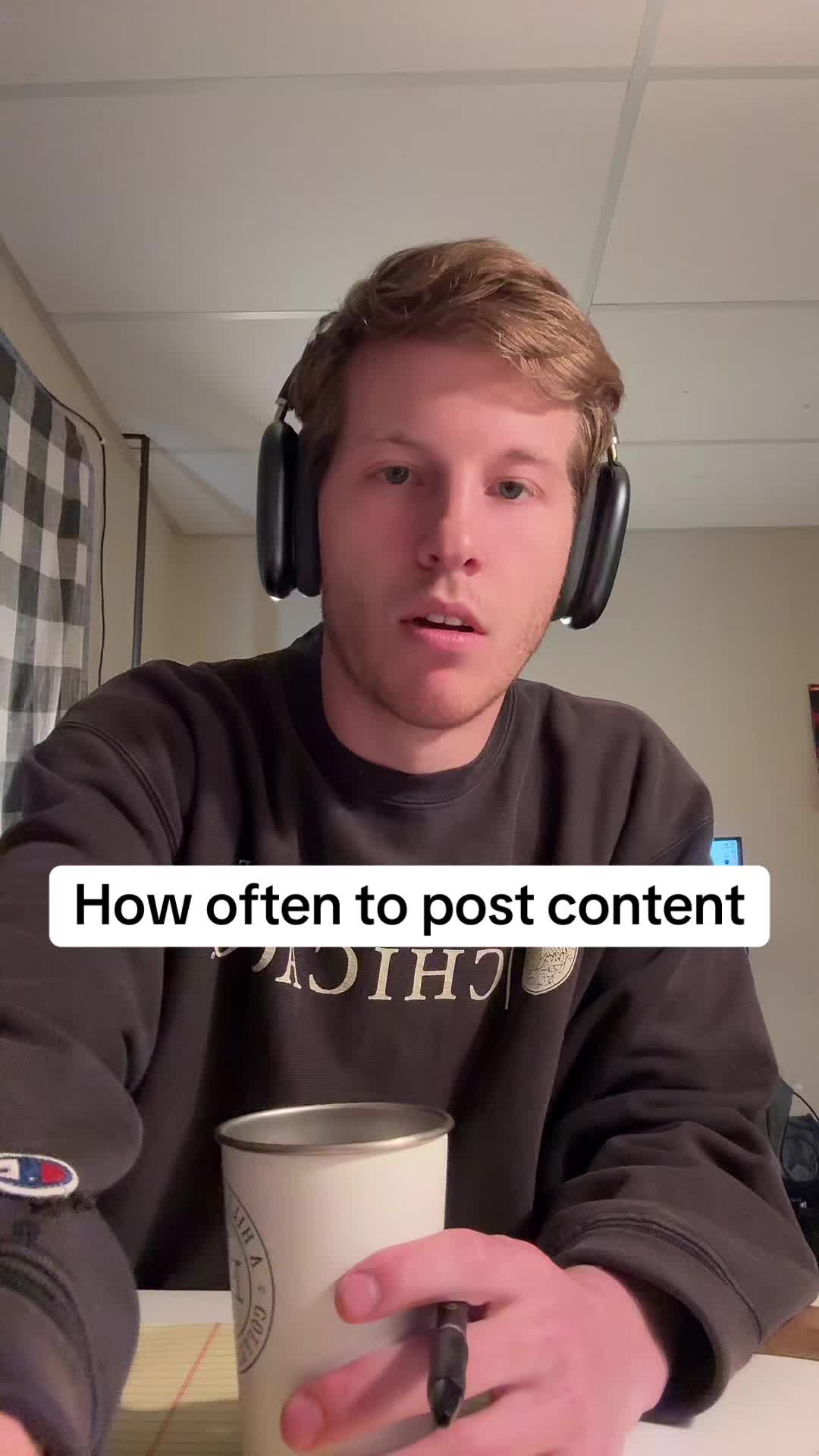
@briarcochran Taking feedback—was this too confusing? Or are we dialing this in today?

@briarcochran
TikTok · Yap
@briarcochran Taking feedback—was this too confusing? Or are we dialing this in today?
Performance
Video #1892 · Yap
[01]
The creator explains his strategic framework for determining content posting frequency by drawing an extended analogy to startup methodology. He advises creators to first find their 'Minimum Viable Content' (MVC) and achieve 'content-market fit' through high-volume, low-effort posts, then use his 'accordion method' to focus on higher quality production for winning themes. He concludes by outlining how this strategy applies differently to TikTok (for testing), Instagram (for polished winners), and YouTube (for long-form expansion).
[02]
[03]
 167.3K2.3×Creator explains a three-stage content funnel for viral reach vs niche monetization@briarcochran · Breakdown
 171.8K2.4×Creator's Venn diagram framework for making the perfect video@briarcochran · Breakdown
 1.2MCreator explains how posting about all his interests grew 2 million followers@daddywellness · Hot Take
 174K3.7×Explaining a 3x daily posting strategy@briarcochran · Playbook
 3.1MMotivational monologue for new creators@kennovate · Motivational Mantra
 1MCreator explains a content formula@lana.k.social · Tutorial / How To
 223.7K3.1×Why new creators should build in private before building in public@briarcochran · Hot Take
 796.8K8.9×Two content types every brand needs to make@house.of.ag · Breakdown
 570.2K1.1×Rapid fire content strategy tips@robertmckeaveney · Rapid Fire Listicle
 1.7M26.3×Creator gives raw social media advice@austingeorgas · Rapid Fire Listicle
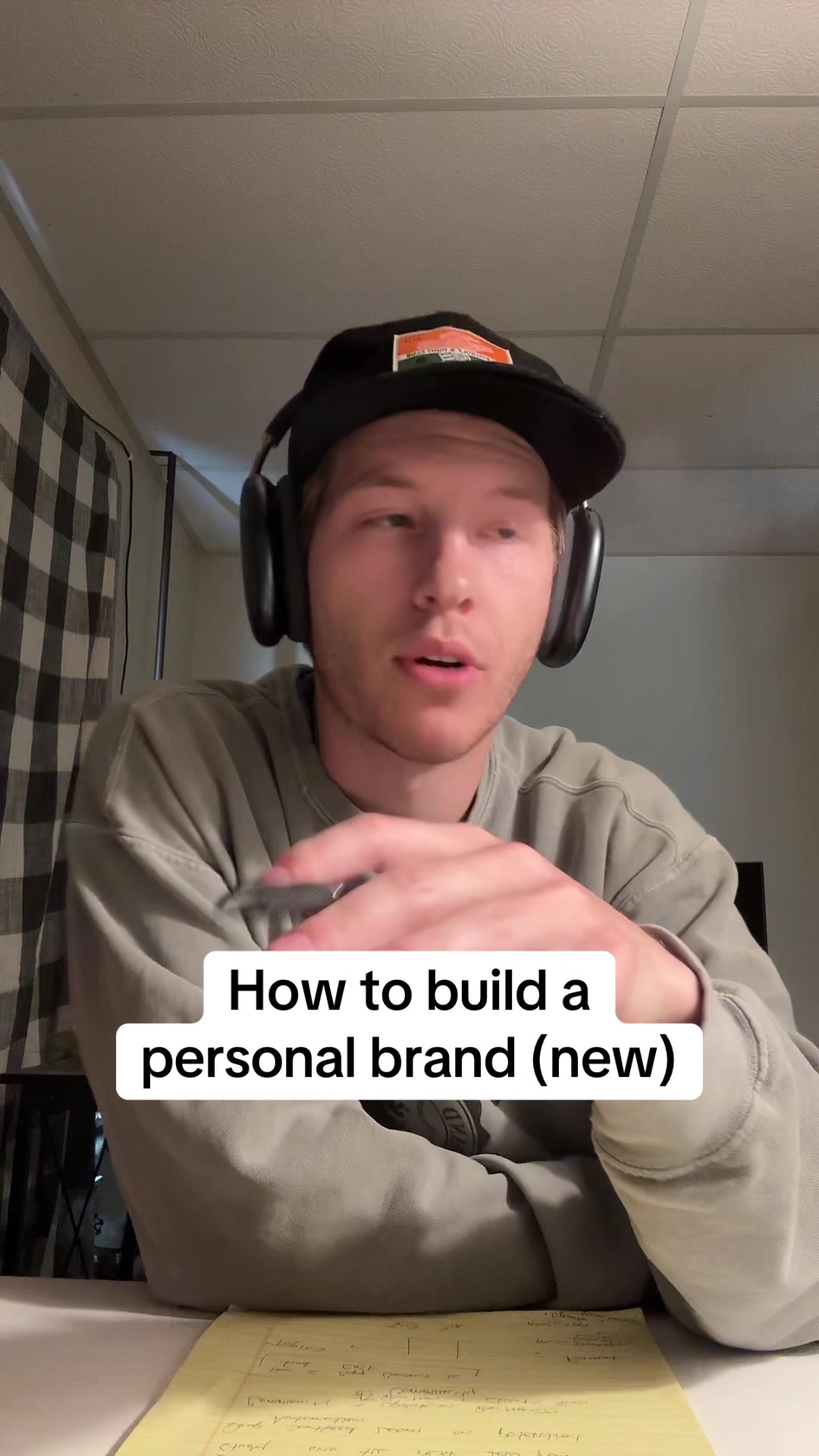 409.5K5.7×Marketing concept of pattern interruption explained using Liquid Death@briarcochran · Anecdotal Philosophy
 386.9K132.3×Recommends four videos for creators@seanwerbowskii · Rapid Fire Listicle
[04]
[05]
What stops the scroll in the first 3 seconds
Title hook · 55%
How often to post content
Verbal hook · 40%
How often should you post?
Visual hook · 5%
A man wearing large headphones looks directly into the camera and begins speaking with expressive hand gestures, creating an immediate and direct connection with the viewer.
[06]
Steal this for your own video
How often should you to get ?
[07]
The promise the opener makes, and how the video pays it back
Hook
Pose a high-interest question and immediately create conflict by aggressively debunking the most common answer, positioning the creator as a contrarian expert.
Payoff
Provide a rapid, A-to-Z recap of the entire system, solidifying the lesson and connecting it to a highly desirable, aspirational outcome (e.g., wealth, success, mastery).
[08]
The structural pattern this video runs on
Framework
The Expert Reframing Blueprint
To establish authority by deconstructing a common problem, refuting popular advice, and presenting a more sophisticated, multi-stage framework borrowed from an unrelated, high-status field.
The Counterintuitive Framework
Introduce an unexpected analogy from a different, respected field (e.g., business, science, sports) as the superior mental model for solving the problem.
The Knowledge Gap Roadmap
Outline the proprietary, complex-sounding terms and stages of the framework that will be taught, creating anticipation and a desire for the explanation.
The Foundational Principle (MVC)
Define the first core concept (Minimal Viable Content) using a simple, concrete analogy to make it easily understandable.
The Non-Negotiable Goal (Market Fit)
Define the second core concept (Content Market Fit) and establish its critical importance by citing a high-status authority or data point, creating urgency.
The Volume Phase Directive
Provide a clear, actionable command on how to apply the initial concepts, focusing on a high-quantity approach to achieve the 'Non-Negotiable Goal'.
The Quality Phase Strategy (Accordion Method)
Introduce the advanced strategy for what to do *after* achieving the goal, using a memorable name and physical metaphor to explain the shift from quantity to quality.
The Platform-Specific Playbook
Apply the entire framework tactically across different contexts or platforms, assigning a specific role and function to each to make the strategy universally applicable.
Taking feedback—was this too confusing? Or are we dialing this in today?
title · throughout
How often to post content
How often should you post? This is a lot more complicated than you might think. Anybody who just says post more is I would heavily disagree with. Because I saw them in the street. I would RKO them and fight them. Instead, I'm gonna break this down based off of human psychology, which is all content is. It is mass human psychology. And I'm gonna actually weave in a bunch of business concepts. And I'm talking, like, startup concepts because I truly believe that the best cross research industry to think about your content is startups. How they tier up, how they scale is very similar to a page on Instagram. Okay. Bear with me here. We're gonna talk about your minimal viable content. Bear with me, guys. Your content market fit, then we're gonna talk about an accordion method on when to go wide and when to really focus your efforts. And then we're gonna talk about how to navigate TikTok, Instagram, and YouTube and that that that ecosystem. Okay. Let's start with your MVC, your minimal viable content. So in a tier up, you want to get your minimal viable product, your MVP, as fast as you can. Okay? And it has to be good. So, you know, these apps will spin up just a a decent little app. It's nothing crazy. It's nothing fancy. And what they wanna do with that is they wanna get product market fit. Okay? So your MVP, the the base version is a shoe. It has no design. It's literally just the sole and the fabric. Okay? It's a it's an app. There's no design. It's just the working system, and you wanna sell it to a 100 people. And if a 100 people buy it, tier it's like, okay. People actually like this. Now investors are like, okay. You guys made a little MVP, and you found your product market fit. We'll invest in this. So many investors say this is, like, the number one thing they look for is has a company found product market fit? In fact in fact, Y Combinator says nothing else in the world matters except for finding product market fit. Like, you should sprint there. All of your resources should go there. Don't do any funny business until you have found that fit. The same thing is true of your content. K? If you're just spewing off a 100 views, 200 views, 300 views, maybe 500 to a thousand views, you haven't found your content market fit. So why would you go hyper edited if you haven't found it yet? Instead, go to your minimal viable content. Right tier, me, turning on the camera, ranting. Took me I thought about this video. Fifteen seconds later, I started recording it. And what you do then is you start hammering volume. A 100 posts. However you wanna get to a 100 worst. You can do it three times a day for a month. You can do it once a day for three months. Doesn't matter to me. And your only goal is to improve your MVC, your your super easy way to produce content, however that is for you, until you find content market fit. And that number might mean, 5,000 views. It might mean 3,000 views. It might mean a 100,000 views. So I'm gonna condense this into one sentence. You need to find a a way to make content that is very easy for you, your minimal viable content. For me, I literally just turn it on and I start talking. You then need to post so much volume with different angles until you find your content market fit, and that number varies. You'll sense it though. You'll sense it. Okay? I would say five k views. If I if you force me to put a number on it, it's probably around five k k, 10 k, 15 k. Now now to be clear, you don't wanna just do a random video. It has to be within your brand pillars. Okay? My brand pillars are business and, fitness and whatever. And I go off and I make a freaking, steak, how to use my Blackstone video, and that gets goes off. No. That is not a content market fit. That does not count. Okay? Then once you get it, we go into the accordion method. What the accordion method is is you're you're stretched to this far. Okay? You're doing so much volume, and now you wanna compress your efforts like an accordion. You wanna squeeze your efforts together. So let's say you were spending five hours a week on content to post 15 worst. So you're doing three posts every hour, theoretically. You now wanna take that fifteen hours and you wanna comp or that five hours. Excuse me. You wanna compress it no into 15 worst, but into five worst. The five posts that are aligned with your content market fit. I'm starting to sense that this might be getting too complicated for some of us. Bear with me. Okay. So accordion method. Volume, volume, volume, volume, volume, volume. Now I am compressing it, all of my efforts into only my winners, only my winners. Now I have my content market fit, and we're going off. I'm gonna give you an example with a gardener. You guys know how I love gardeners. In the journey, all I'm doing in my minimal viable content is I'm saying I'm just talking about my garden. I'm putting the camera up, and as I'm gardening, I'm talking about it. Okay? Talking about my carrots. Talking about my apples. I'm talking about my watermelons. Talking about the day in the life of a gardener. I'm talking about the problems of a gardener, rank then also, wait a second. The problems of a gardener just got 4,000 views. Interesting. I wonder why that was. Better try it some more. Let's try it some more. Three problems of a gardener. Three mistakes that gardeners make. Three problems of a gardener with carrots. Okay. We found our content market fit. It's this area of of things going wrong for gardeners. Okay? Now I'm going to compress all of that volume. I was posting 15 times a week. I was hammering volume trying to find it on my thirtieth post. I figured out that it's this theme. People wanna hear what goes wrong in a gardener's life. So I can press my concord my accordion into and I got this from Caleb Ralston, by the way. The accordion method is 100% Caleb Ralston. Look him up on YouTube. Learn more about it. Now instead of spending instead of posting 15 times, I wanna post seven times, and I'm gonna make sure I'm very intentional about making my videos just a little bit better, a little bit better, a little bit better, and that is how growth happens. That is how growth happens. K? Now I wanna talk about, really tactically speaking, I'm gonna kinda fly over this. TikTok is where you should be posting your volume because it is a discovery first platform, and it is encouraged for more organic natural by organic, I mean, natural. Like, very just like turn on the iPhone, start ranting. You can get your MVC, minimal viable content, going on TikTok very easily. Okay? And what I mean by discovery platform is it doesn't go to your viewers first. So on Instagram, if I post 15 times, it's going to my viewers, they will get follower fatigue, something called follower fatigue, where they see my video. And if it's a bad piece of content, they don't even give me a chance. They just scroll past it. If I posted so many bad pieces of content, they don't even watch it. They just scroll past because I've given them follower fatigue. Right? So Instagram, we don't wanna go volume right away unless we go trial reels. That's a whole different story. It is what it is. We go m v c at volume on TikTok. We pull out the themes that won. Not necessarily the formats, not necessarily the hooks, not the pacing, all this stuff. We pull up the themes. Okay. We talked about this. We talked about the problems that gardeners have with carrots. Okay. Now we're gonna move this over, polish it up just a little better, doesn't have to be crazy, to Instagram. Maybe all we do by polishing up is we we trim it, we make it a little bit faster, we add a hook on it, stuff like that. Maybe we put cooler edits. It doesn't really better. And we keep doing that. You test on TikTok. You move over your polished stuff to Instagram because of the follower fatigue. Instagram is follower centric. TikTok is for you centric. So for TikTok, you don't get follower fatigue. Instagram, you do unless you have trial reels. And then YouTube comes in by you take your all time winners, and you turn them into long form YouTube videos. You have proven concepts. You go hyper niche. YouTube is extremely important if you're selling a product product because or service because of a concept called content minutes. This is originated from a guy named Callaway, Rank Callaway. Go check him out on YouTube. He's a wizard at content. And content minutes is at some point, there's amount there is an amount of minutes that someone has to spend with you before they buy. Let's say it's seventy two minutes, theoretically. They can either watch 72 shorts or they can watch five YouTube videos four YouTube videos, one podcast. So recap. Spam volume, minimal viable content on TikTok. Take the best themes. Move them over to Instagram. Doesn't matter how often. As long as they're performing, you keep going. If they are underperforming, then maybe slow down. Continue to fine tune that content market fit. It's not a one time thing. Take your best performing pieces, turn them into YouTube videos, voila. You now have a fabulous personal rank, and you're probably really rich.