@briarcochran
TikTok · Yap
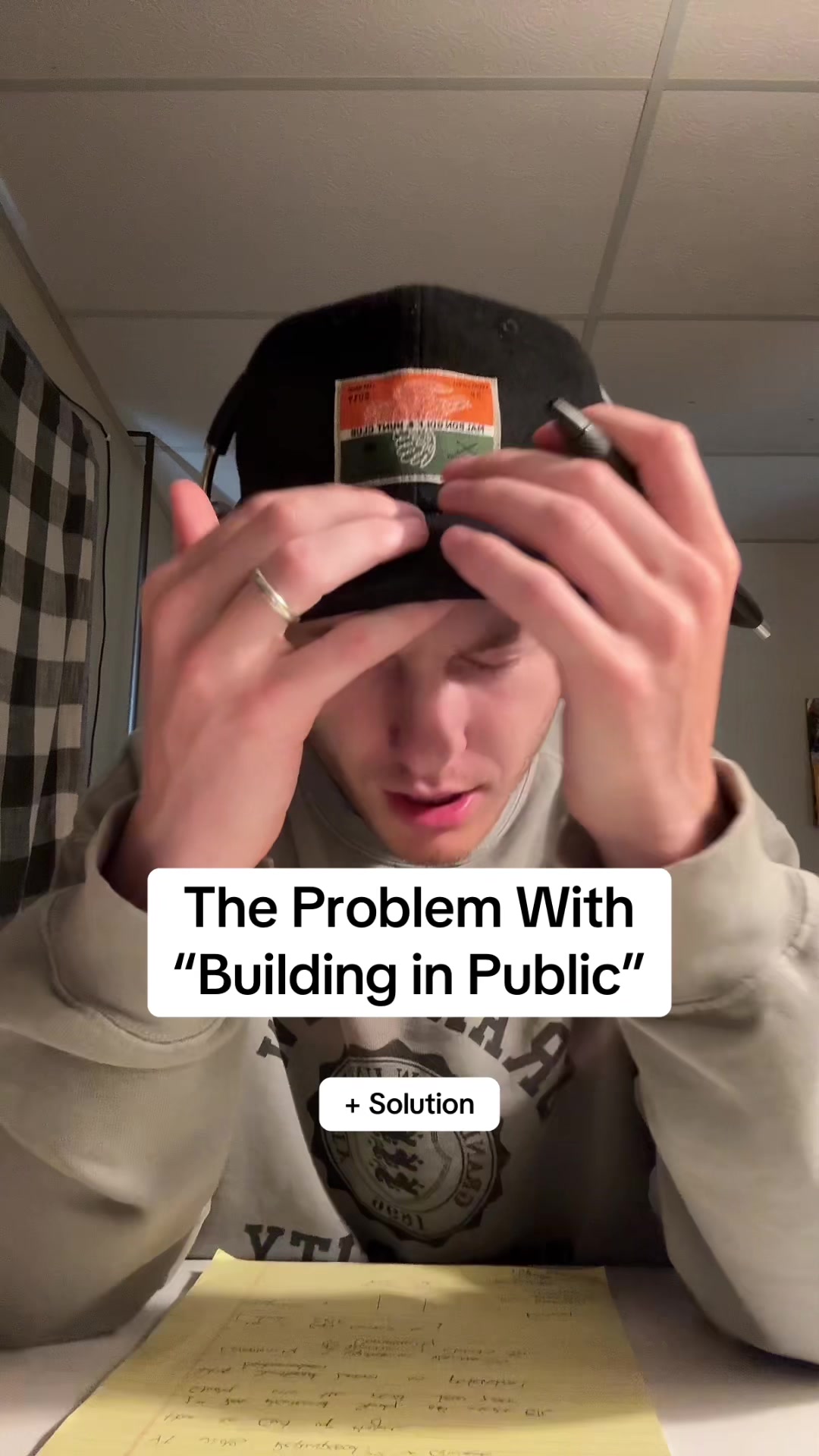
@briarcochran Curate in public while you build in private until you have a reason why someone would listen to you build in public

@briarcochran
TikTok · Yap
@briarcochran Curate in public while you build in private until you have a reason why someone would listen to you build in public
Performance
Video #1885 · Yap
[01]
The creator presents a contrarian argument against the popular 'building in public' strategy for new creators. He uses a hypothetical example to illustrate why nobody cares about the journey of an unknown person, then contrasts it with the appeal of a successful person's story. He concludes by offering his own framework: 'curate in public' (share what you learn), 'build in private' (achieve something first), and only then 'build in public' once an audience has a reason to listen.
[02]
[03]
 1.2MCreator explains how posting about all his interests grew 2 million followers@daddywellness · Hot Take
 226.7K3.1×Three underrated traits that separate top 1% creators@briarcochran · Numbered Breakdown
 130.1K1.8×Framework for how often creators should post using startup logic@briarcochran · Explainer
 3.1MMotivational monologue for new creators@kennovate · Motivational Mantra
 428.4K6×Three-part framework for building a personal brand from scratch@briarcochran · Tutorial / How To
 409.5K5.7×Marketing concept of pattern interruption explained using Liquid Death@briarcochran · Anecdotal Philosophy
 173K4.9×Creator explains credibility building framework@briarcochran · Breakdown
 659.3KDirect advice on audience psychology@samstoffel · Hot Take
 167.3K2.3×Creator explains a three-stage content funnel for viral reach vs niche monetization@briarcochran · Breakdown
 171.8K2.4×Creator's Venn diagram framework for making the perfect video@briarcochran · Breakdown
 1MCreator explains a content formula@lana.k.social · Tutorial / How To
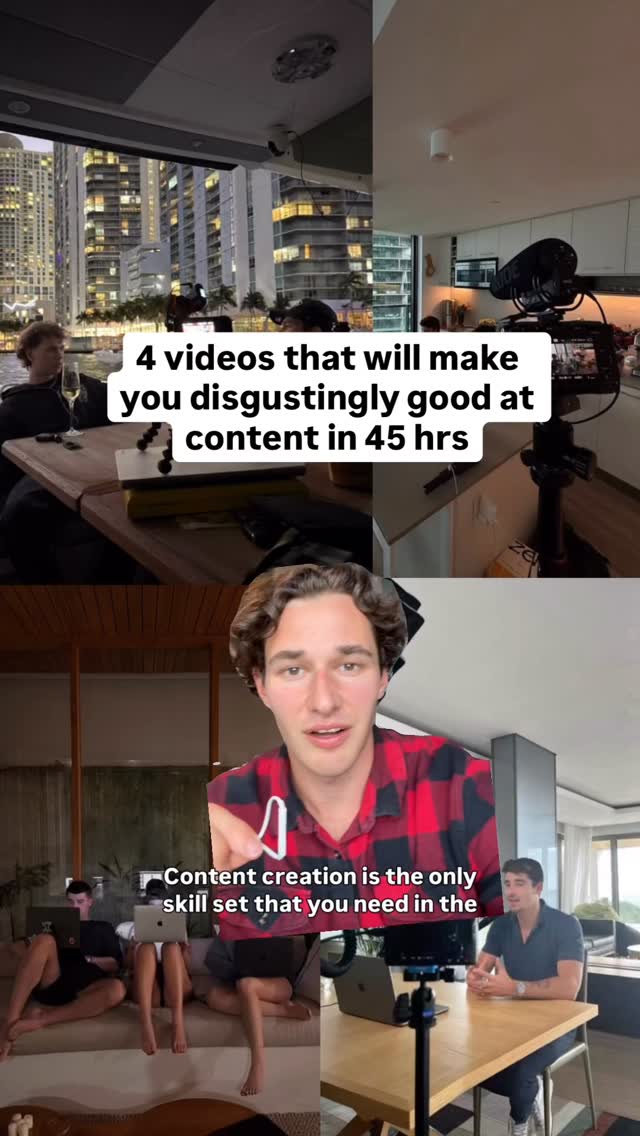 386.9K132.3×Recommends four videos for creators@seanwerbowskii · Rapid Fire Listicle
[04]
[05]
What stops the scroll in the first 3 seconds
Title hook · 45%
The Problem With “Building in Public” + Solution
Verbal hook · 50%
Building in public is a terrible idea for new creators.
Visual hook · 5%
The creator makes a quick, blurred hand motion towards the camera, creating a sudden movement to capture attention.
[06]
Steal this for your own video
is a terrible idea for — here's what to do instead.
[07]
The promise the opener makes, and how the video pays it back
Hook
A direct, contrarian statement that invalidates a widely-held belief within a specific community, immediately creating intrigue and positioning the creator as an authority with a unique perspective.
Payoff
The viewer is left with a clear, actionable, and memorable framework that feels like a valuable piece of insider knowledge, solidifying the creator's status as a credible expert worth following.
[08]
The structural pattern this video runs on
Framework
The Contrarian Expert Framework
To establish authority by aggressively debunking a popular piece of advice and replacing it with a proprietary, more nuanced framework, proven through relatable hypotheticals and personal evidence.
The Apathy Mirror
Presents a hyper-specific, mundane hypothetical scenario and asks the viewer a direct rhetorical question ('Do you care?') designed to make them confront their own indifference, thus proving the initial contrarian hook on a psychological level.
The Aspirational Reframe
Presents a slightly altered version of the same hypothetical, but this time framed around a successful outcome. This creates a powerful A/B test that demonstrates what the audience actually values (results and reflection) versus what they ignore (the process).
The Proprietary Mantra
Introduces a memorable, three-part phrase that serves as the core of the creator's new, superior framework. This acts as the central thesis for the solution.
The Framework Deconstruction
Systematically breaks down each component of the proprietary mantra, explaining its logic. This is reinforced with another A/B comparison, contrasting a low-value content example with a high-value one that aligns with the new framework.
The Personal Proof
Anchors the framework's credibility by citing the creator's own journey as a successful case study. This transitions the advice from theoretical to proven, using personal results as the ultimate social proof.
The Demand Trigger
Defines the specific condition under which the old, debunked advice becomes valid (i.e., once you have achieved success and the audience is actively asking for your story). This adds a final layer of nuance and positions the creator's framework as the necessary prerequisite.
Curate in public while you build in private until you have a reason why someone would listen to you build in public
title · beginning
The Problem With “Building in Public”
contextual · beginning
+ Solution
Building in public is a terrible idea for new creators. You hear this all the time. It is, hey. You no, doesn't matter where you're at in your creator career. Just share the journey. Tell people how things are going. I disagree. I really do. And let me just, like, try to convince you with basic psychology. K. Ask yourself this. Do you care? Do you care that a 24 year old white kid from Indiana is starting a clothing company and it's day 14? You don't know this kid? He has a 100 followers. His name's Marshall. No. No. You don't care. You truly don't care. Now do you care if a 24 year old white kid named Marshall from Indiana is reflecting on building a $1,000,000 clothing company? Yeah. Okay. Yeah. This person built a company. I'm curious how he got there. 1,000,000 is not a massive number, but I'm still intrigued. Right? So many creators say, hey. You know what? People giving better advice. Just share your journey. Share your journey. Share your journey. Don't share your journey, guys, if you are new. If you are new to creating, if you already have, you know, a couple thousand, 100,000 followers, or you're making good money, like, yeah, go ahead and share your journey. People care about you. You have social proof. If you are new, do not start with that. Let me explain what to do instead. You should curate in public. I'm gonna get in this better. Build in private until people beg for you to build in public. One more time. You should curate in private. Write this down. Curate in private while you build in public until people beg or while you build in private. Curate in public while you build in private until people beg for you to build in public. K. Curate in private. We're gonna break down all three of these. Curate in public. My gosh, dude. I'm butchering this. Curate in public, build in private until people bill beg for you to build in public. Curate in public. Let's talk about it. On your journey, don't share what you're doing because nobody cares. Share what you are learning along the way and truly make it valuable. Okay? For example, I'm working with this guy, and he just bought two franchises. He had to go through the commercial lease and all of this stuff. Yeah. We could do, like, day 21 of trying to launch a hydration therapy spa franchise mid. Or we could say, on my twenty first day of trying to launch a hydration therapy spa, I almost got screwed over for $36,000 if it wasn't for my lawyer. Here are three tips I learned about negotiating commercial leases. Come on. Come on. Like, think about how much more valuable that second thing is. So now you're sharing the journey. You're just getting positioned as a thought leader, as an expert in the space, and you're giving someone actually a reason to listen to you. You don't have a reason before. Now they have a reason because it's your learnings. You're learning through experience, not just the story of your experience. So that's the curating in public. You share what you are learning in your journey. K? You just listen to five podcasts on how to saddle a horse because you're gonna be a jockey. You're not you're trying to become a professional jockey. Now what you do is you make a video saying, I just watched listened to five hours of podcast on how to saddle a horse. Here are the three tips I just discovered from those podcasts. That was a crazy example, but I hope it it makes sense. Then you build in private. K. You build your business in private. Every now and then, you can kinda share a little bit about it. I'm not saying you don't have to share about it. That shouldn't be the of your content. Okay? You're building in private. You start making your money. This is what I want you guys to do after this video, because I did this exact same thing. Go look at my very first video. Look. My very first video is me talking about how much money I have made. My first video on the scene was something that I built in private. I built up a business in private, and then when it was time for me to start sharing more because I figured people would care no. K? I made $40,000 in a month, and I was like, okay. I think now people would be interested in hearing about that. Another reason was because people were telling me to, which leads me to my third point, is you start building in public once you have a reason to build in public, once people start asking you to. This is just social proof. Like, just genuinely ask worse, why would someone listen to me? Do you have something special? Have you hit a certain number? Have you accomplished a certain task? Have you won a certain event? K? It's not enough for you just to be interesting and have an interesting story. You have to have reasons. K? For the point 001% of you, you might be interesting enough, whatever. I don't really care. One more time. Curate in public. Share what you are learning. K? If you have to learn how to saddle a horse like a jockey and you do that anyway anyways, now make a video how to saddle a worse, what I learned after five hours of podcast. While you build in public, k, build your business, build something special, go become a DJ that has 10,000,000 views. K? Go become a fitness person who wins a bodybuilding show at a high level. Go become a fitness person that goes and gets their first 10 brand deals. Go become a fitness person who does all these things. Go become a, a gamer who made 10 k streaming on Twitch. Like, those are bad niches, to be very clear, but I'm just giving you the baseline example. Then once you have done it, you can now come back into public and be like, hey, guys. I just made my first million dollars flipping real estate. Here's how I did it. Now people care because they have a reason. They have a reason to care. K? So building in public is rank, and you shouldn't do it until you have a reason.