Viral Hooks
Trending short videosBroadcaster explains her interview strategy
G

@golfoncbs

Instagram · Clip

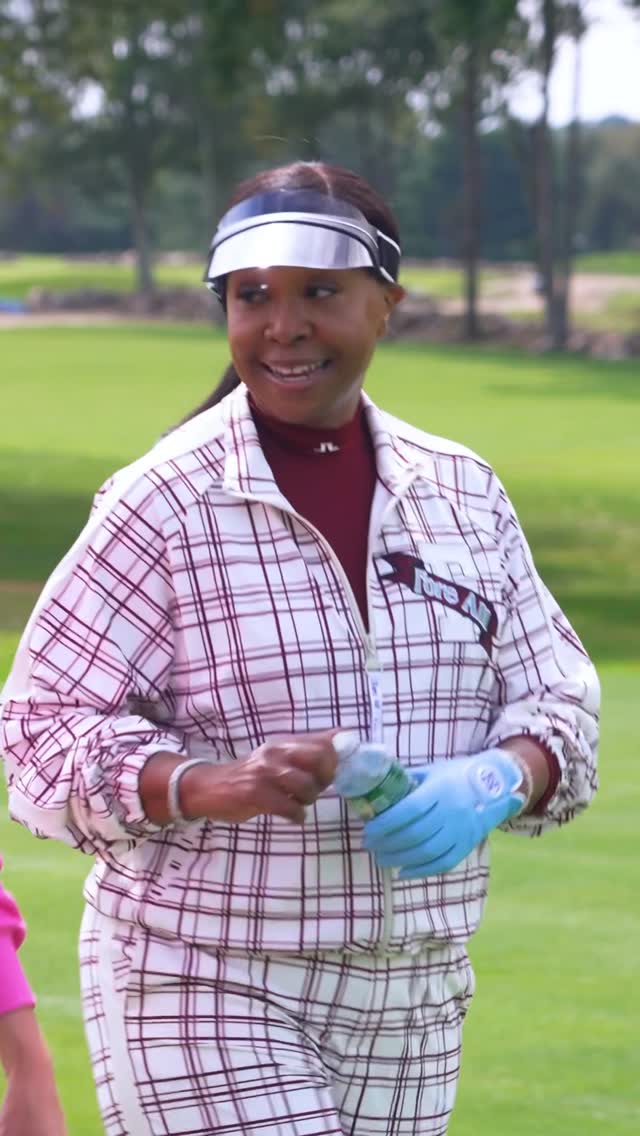
@golfoncbs “You can ask the difficult question without being a jerk about it.” Amanda explains her approach of proper phrasing when asking tough interview questions. Watch Mornings @ the Masters on the Masters YouTube channel. #themasters

View original on Instagram

The edit1 shot · 1 text
Shots Text1:55

Performance

Views
259.3K
Likes
4.2K
Comments
122
Engagement
1.7%
Outlier
27.3×
Length · 12 Apr 2026
1:55

Video #23898 · Clip

Broadcaster explains her interview strategyfrom @golfoncbs

[01]

Overview

Sports broadcaster Amanda Balionis answers a question about her approach to post-round interviews, specifically addressing a recent tense interaction with golfer Scottie Scheffler. She breaks down her professional philosophy, explaining that her job is to ask the tough questions while the player's job is to answer as they see fit. She uses the specific anecdote to illustrate how she balances journalistic duty with empathy, emphasizing that while there are many ways to conduct an interview, phrasing is critical to avoid being a jerk while still getting the story.

[02]

Simple outline

  1. 1Pose high-stakes question
  2. 2State core philosophy
  3. 3Share real-world application
  4. 4Deliver human-centric takeaway
  5. 5Validate expert approach

[03]

Related videos

[04]

Classification

Format
Concepts
Anecdotal PhilosophyBehind The Scenes
Elements
Dynamic Word-by-Word CaptionsSplit ScreenJump Cut

[05]

Hook analysis

What stops the scroll in the first 3 seconds

Title hook · 55%

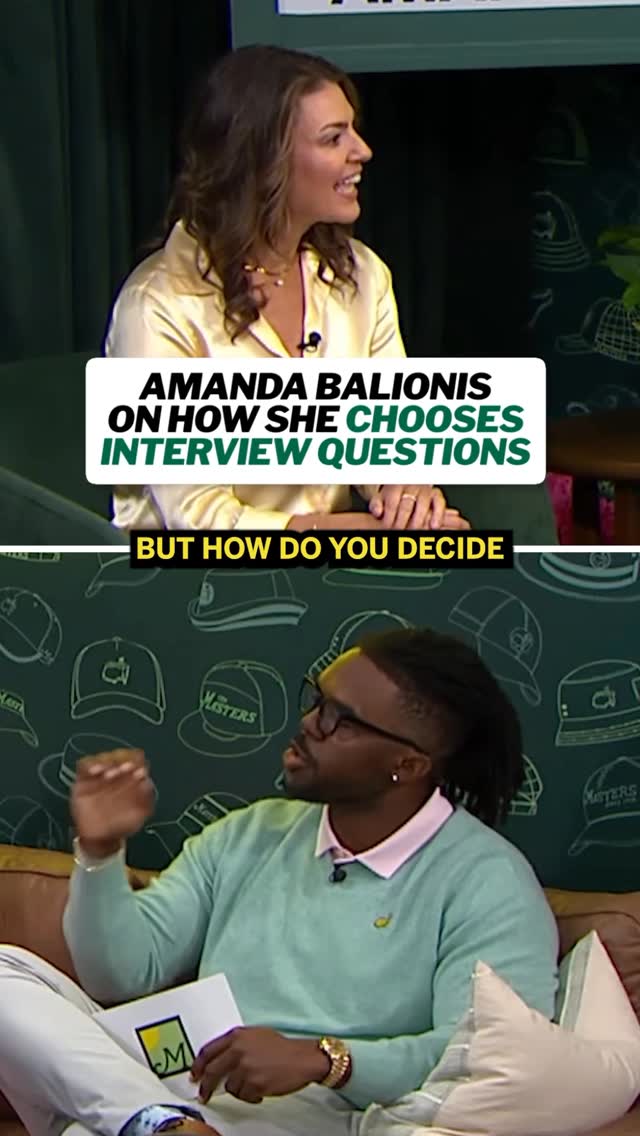
AMANDA BALIONIS ON HOW SHE CHOOSES INTERVIEW QUESTIONS

Verbal hook · 40%

How do you so, you know, there was some some questions that went under scrutiny yesterday, but how do you decide what to ask a player when they're walking off a 18?

Visual hook · 5%

A split-screen layout showing a professional studio setting with distinct Masters branding, featuring the interviewer asking a question while the subject listens attentively.

[07]

Hook and payoff

The promise the opener makes, and how the video pays it back

Hook

The interviewer poses a specific, slightly controversial question about a recent high-profile event, demanding an explanation of the expert's internal process.

Payoff

The interviewer explicitly validates the expert's methodology and skill, reinforcing their authority and concluding the segment on a satisfying, positive note.

[08]

Narrative framework

The structural pattern this video runs on

Framework

The Expert's Philosophy Breakdown

An expert deconstructs their professional methodology by answering a high-stakes question with a core philosophy, backing it up with a real-world anecdote, and concluding with a human-centric takeaway.

  1. 1

    The Direct Acknowledgment

    The expert immediately addresses the specific controversy or subject mentioned in the hook, demonstrating transparency and willingness to engage.

  2. 2

    The Core Philosophy

    The expert states their fundamental rule, boundary, or mindset for their profession, establishing their authority and baseline approach.

  3. 3

    The Empathy Angle

    The expert humanizes their approach, explaining their role as an objective observer or storyteller rather than a critic or judge.

  4. 4

    The Practical Maxim

    The expert distills their complex philosophy into a simple, actionable, and memorable quote or rule of thumb.

  5. 5

    The Real-World Anecdote

    The expert applies their philosophy to the specific situation from the hook, detailing the exact interaction to prove their method works.

  6. 6

    The De-escalation Tactic

    The expert shares the specific technique they use to manage tension, validate the subject, and maintain the relationship during difficult moments.

  7. 7

    The Universal Takeaway

    The expert zooms out from the specific anecdote to provide a broader, relatable lesson about empathy and treating subjects as human beings.

Themes

  • Professionalism
  • Empathy in journalism
  • Handling difficult conversations
  • Behind the scenes of sports media

Techniques

  • Split screen
  • Dynamic captions
  • Jump cuts

Trends

  • Repurposed podcast clips
  • Behind-the-scenes industry insights

Post caption

“You can ask the difficult question without being a jerk about it.” Amanda explains her approach of proper phrasing when asking tough interview questions. Watch Mornings @ the Masters on the Masters YouTube channel. #themasters

Text overlays

  • title · beginning

    AMANDA BALIONIS ON HOW SHE CHOOSES INTERVIEW QUESTIONS

Transcript

How do you so, you know, there was some some questions that went under scrutiny yesterday, but how do you decide what to ask a player when they're walking off a 18? What are you looking for that that goes into what you pose to them? Yeah. I I'm assuming you guys are talking about Scottie not being happy with that question. I'm just curious. Just curious. You know, you have to do your job. Listen. I always say to these players, my job is to ask you the question. Your job is to answer how you see fit. Yes. I'm not here to attack you. I'm not a good golfer. Right? I'm not judging you if you've if you don't have any bird yet on the par fives of second nines. Like, better my job is to help tell the story as to how you have found yourself where you are on the leaderboard or if things don't look the way they usually good. That's my job. Right? So I think I always try to take the position of you can bad ask the difficult question without being a jerk about it. Yes. And that's what I try to do. I said to Scotty, you know, he didn't love the par five question. I'm sure that I asked him yes, but I always end it with Scotty. I'm not worried about you. You're world number one. You have earned the right to tell me that your game is fine. There's nothing to figure out. You know, he's coming off a seven under day, eight strokes bad. Like, it does feel weird to be asking him, better, like, what's wrong? You know what I mean? So I I get where he would be a little bit frustrated with that. It it's I think it's just the way that you phrase it. And at the end of the day, your job is to ask the question. I always say, there's no one right question. I I think there are so many ways you can take an interview, but there are certainly wrong questions to ask or there are wrong ways to phrase it. So I think it's just being cognizant that you're still talking to a human being who is committing their entire life to something. So to be flippant about a question, about something maybe they're not doing well, I promise you no one's more frustrated about that than the player. Than the player. So let's not load, you know, pile on. There's a way to ask them about it without putting them on the defense. And you're really good at that rank Thanks, man. As as as your friend, but as a as a as a fan as well.

Broadcaster explains her interview strategy | Viral Hooks