Viral Hooks
Trending short videosProduct design problem solving process
C

@craighillcompany

Instagram · Talking Head Edit

@craighillcompany Help us design our new desk pad! We've been working on this project for a few months now and thought it would be a good idea to get your input. Please drop any ideas or references below and follow along to see where we take this next.

View original on Instagram

The edit1 shot · 1 text
Shots Text2:36

Performance

Views
2.2M
Likes
69.2K
Comments
1.5K
Engagement
3.2%
Outlier
1.3×
Length · 21 Apr 2026
2:36

Video #24684 · Talking Head Edit

Product design problem solving processfrom @craighillcompany

[01]

Overview

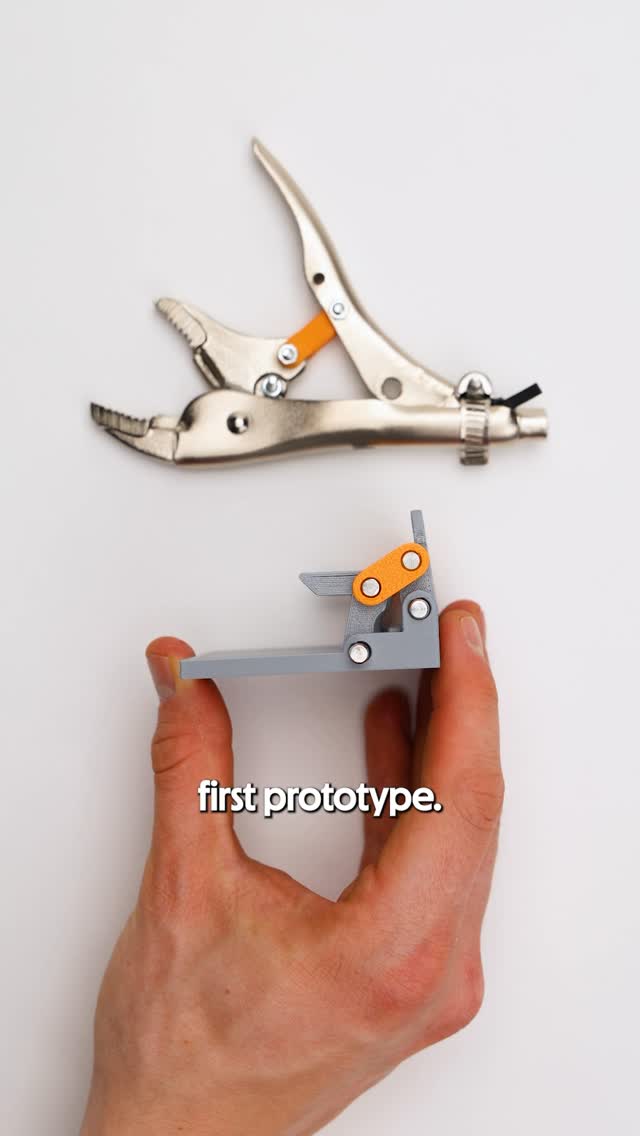
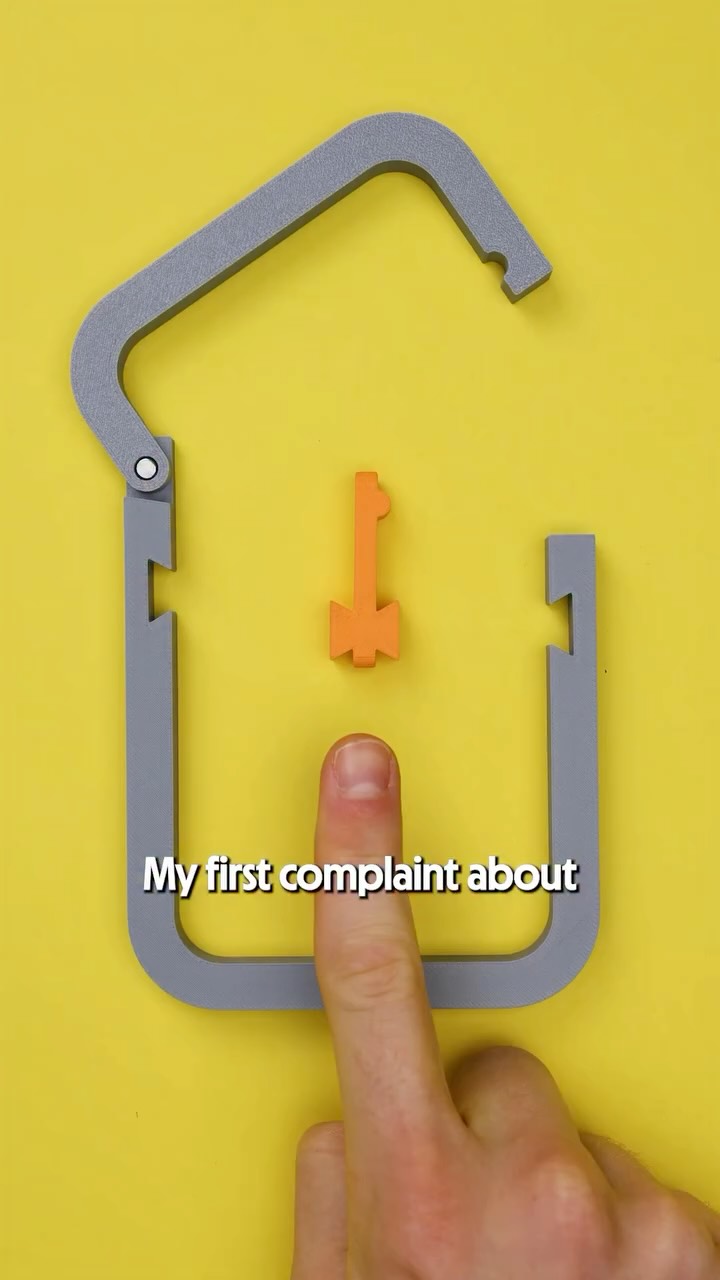
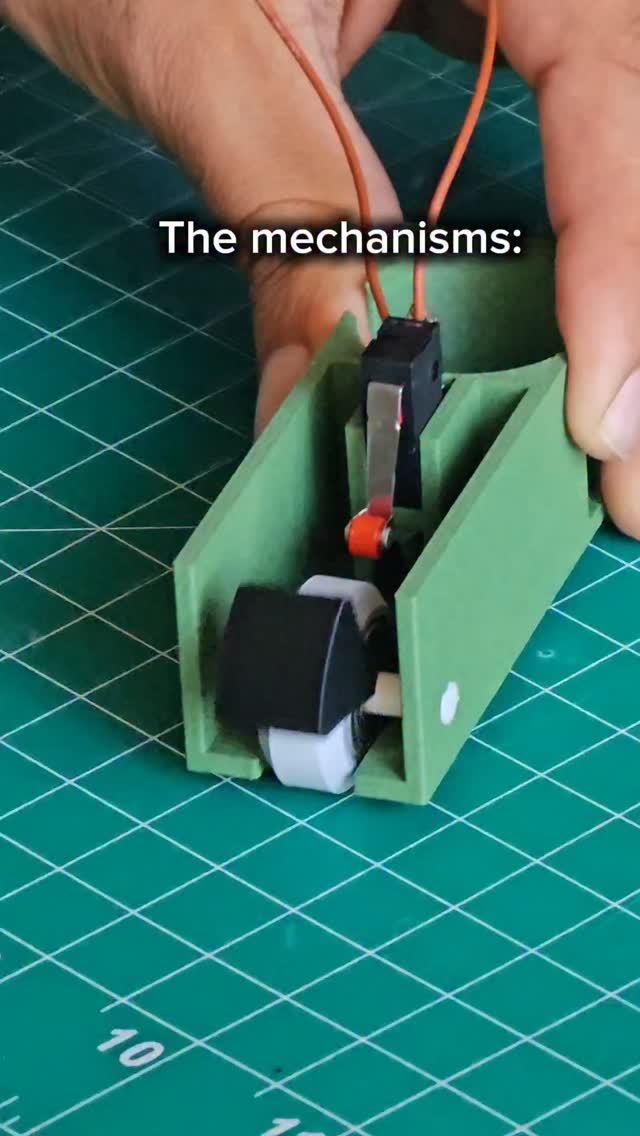
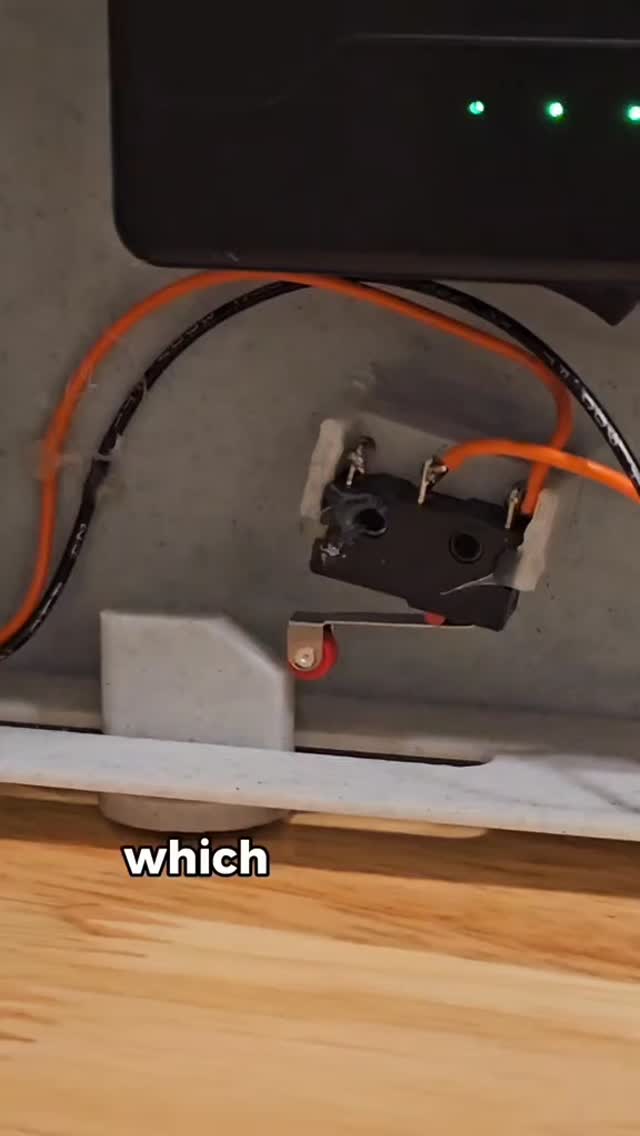
The creator breaks down the problem with existing desk pad clamps and proposes using a vise grip mechanism as a more satisfying solution. He explains the two main design challenges: the length of the tool and the need for automatic tension adjustment for varying paper thicknesses. Using 3D printed models, LEGOs, and a disassembled vise grip, he demonstrates the mechanics of the toggle lock, shows a more compact prototype, and then presents the unsolved problem of adjustability, asking the audience for their ideas.

[02]

Simple outline

  1. 1Present novel solution
  2. 2Deconstruct core mechanic
  3. 3Reveal improved iteration
  4. 4Pose new, harder problem
  5. 5Ask audience for help

[03]

Related videos

[04]

Classification

Concepts
Behind The ScenesBreakdown
Elements
B-Roll CutawayAnnotation OverlayOverhead ShotJump Cut

[05]

Hook analysis

What stops the scroll in the first 3 seconds

Verbal hook · 45%

The reason that we're trying to bring a vice grip to a desk pad is that our current desk pad offering uses a very slow interaction to remove a page of paper.

Visual hook · 55%

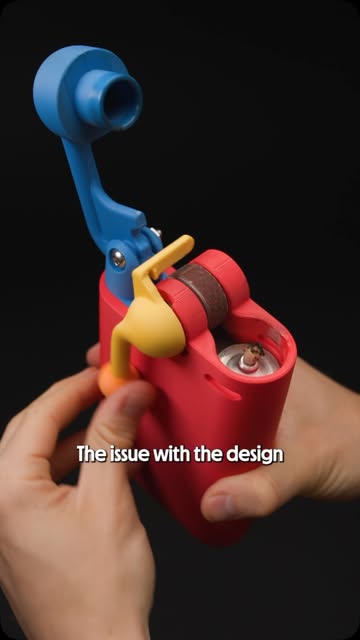
A clean, top-down shot of a hand holding a metal vise grip next to a minimalist desk pad, creating a visually intriguing contrast between an industrial tool and an office supply.

[06]

Hook template

Steal this for your own video

The reason we're putting a [unexpected tool or object] next to a [familiar product] is that the current [familiar product] has a [frustrating design flaw].

  • — The reason we're putting a car jack next to a standing desk is that the current standing desk has a locking mechanism that takes forever to engage.
  • — The reason we're putting a guitar tuner next to a coffee grinder is that the current coffee grinder has no way to measure grind consistency.
  • — The reason we're putting a rock-climbing carabiner next to a camera strap is that the current camera strap release is dangerously slow under pressure.

[07]

Hook and payoff

The promise the opener makes, and how the video pays it back

Hook

Introduce a counter-intuitive or absurd pairing of a problem and a solution to create an immediate 'why?' question in the viewer's mind.

Payoff

The payoff is not a final answer, but an invitation to collaborate. It satisfies the viewer's journey by empowering them to contribute, driving high-quality engagement and community building.

[08]

Narrative framework

The structural pattern this video runs on

Framework

The Collaborative Design Challenge

A narrative that walks the audience through a design/problem-solving process, revealing successive challenges and culminating in an open-ended request for the audience's input to solve the final, most difficult problem.

  1. 1

    The Absurd Premise

    Establish a common, relatable problem and propose a highly unconventional solution, justifying its existence by highlighting a single, superior quality (e.g., speed, satisfaction) over existing alternatives.

  2. 2

    The First Hurdle

    Immediately identify an obvious, primary flaw with the unconventional solution, framing it as the first design constraint that must be overcome.

  3. 3

    The Mechanical Deep Dive

    Pause the problem-solving narrative to deconstruct the core mechanics of the proposed solution. This educational segment uses simplified models to explain *how* it works, building viewer understanding and creator credibility.

  4. 4

    The Re-Engineering Breakthrough

    Demonstrate how the knowledge from the deep dive is applied to create a first-pass iteration that successfully solves the 'First Hurdle,' providing a moment of progress and a mini-payoff.

  5. 5

    The Hidden Flaw

    Introduce a second, more complex problem that is a direct consequence of the first solution. This reveals that the initial fix was incomplete and elevates the overall challenge.

  6. 6

    The Collaborative Cliffhanger

    Frame the 'Hidden Flaw' as the final, unresolved challenge. Directly solicit solutions from the audience, transforming them from passive viewers into active participants in the creative process.

Themes

  • problem-solving
  • design process
  • engineering
  • innovation

Techniques

  • prototyping
  • mechanical analysis
  • audience engagement

Trends

  • behind the scenes
  • process video

Post caption

Help us design our new desk pad! We've been working on this project for a few months now and thought it would be a good idea to get your input. Please drop any ideas or references below and follow along to see where we take this next.

Text overlays

  • call-to-action · end

    Follow along to see where we take this next!

Transcript

The reason that we're trying to bring a vice grip to a yes bad is that our current desk pad offering uses a very slow interaction to remove page of paper. The vice grip, one simple action and your clamp is totally released and sprung open. A meaningful improvement to the traditional clipboard as well that is, I think, less satisfying as an object to deal with. But there's two main issues. The worst, I think we've got a pretty good solution for, but the second one is a bit of an open question. I'm pretty interested to hear if you have ideas for how we could solve this in the best possible way. First problem is length of the vice grip. We wanna bring that closer without losing what makes it such a satisfying interaction. To do that, we need a slightly better understanding of what's going on here. As you are closing the jaws of the vice grip, any pressure pushes that pivot point further away. Best once it crosses that toggle point, it snaps into the better stable arrangement. Any pressure on the jaw suddenly actually locks it further closed. To release it, you have to pry that pivot point back above that imaginary center line by lifting up on this input lever until you rearrangement that can happen. Essentially, flipping the input lever and this coupling rank, the lever arm is now sweeping back towards you. Maybe we can better explain by hacking a part and reassembling a vice grip. Now put something there. It preserves that satisfying snap when it pushes into the second position, and it's way more compact. This leads us to the second problem. Ryan, you took this first rearranged vice grip idea and brought it into this first prototype. You can see it does the same motion over center to hold some worst it notes. It works fine for that amount of paper, but if I want to add more paper suddenly, oh, I will break that. The classic vice tier requires this adjustment screw on the back to change the clamping height. If I'm taking out pages, I don't wanna have to give it a quarter turn on the back to, like, make sure it still has tension. No we want a solution that requires no tuning, but can handle anywhere between one sheet of paper and a 100 sheets of paper All while maintaining that satisfying tactile feeling of a vice grip Anyways, how do we solve this problem? How do we solve this? How would you solve this?