Viral Hooks
Trending short videosDesign lesson using square Babybel
C

@craighillcompany

Instagram 路 Talking Head Edit

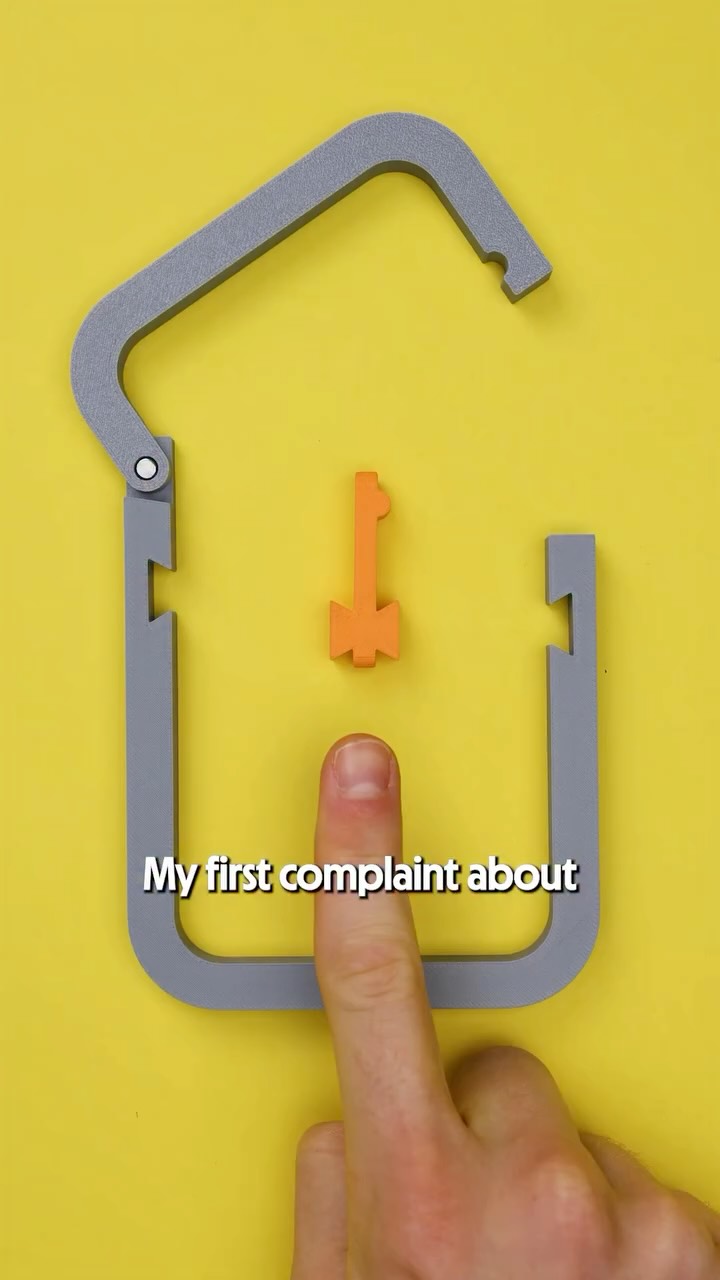
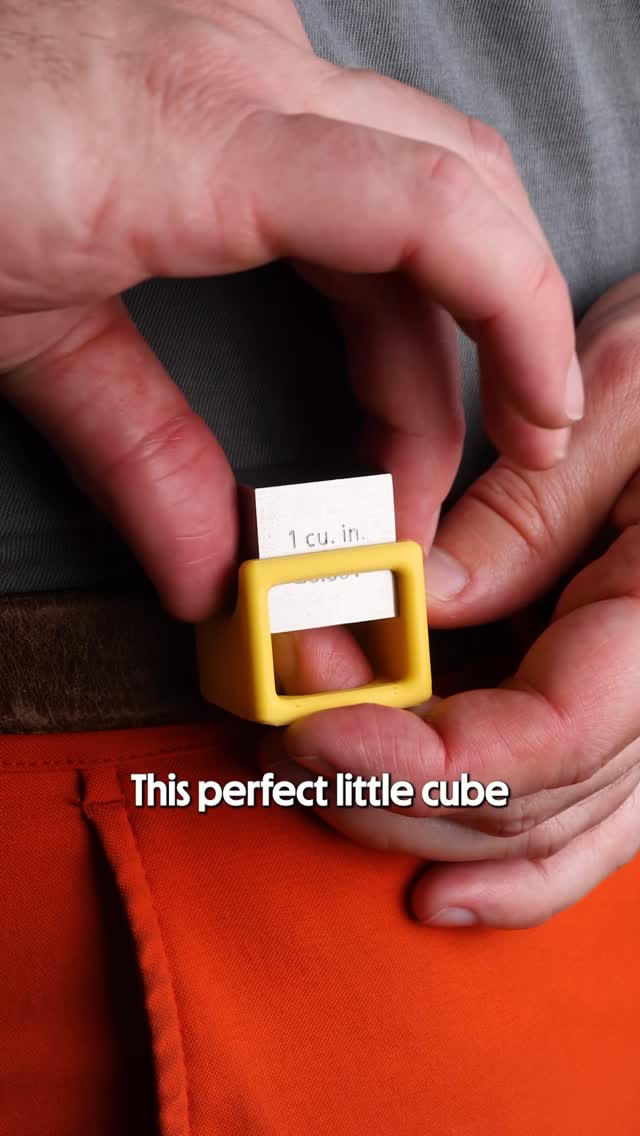
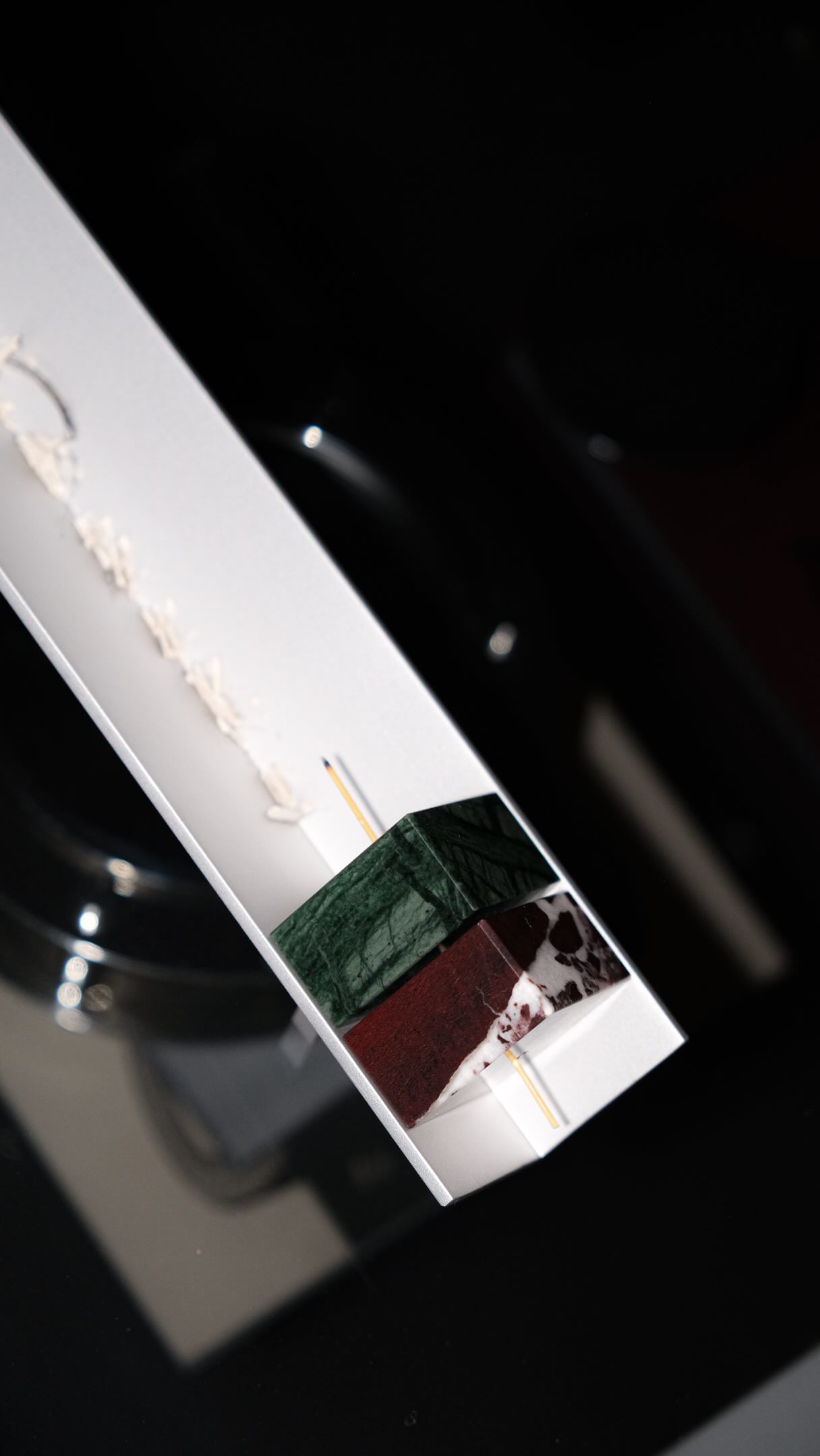
@craighillcompany How to contain a square. To make this video we examined all of the interesting hinged containers in our office: an airpods case, a pack of 馃毈, an old toolbox, and of course our own Summit Card Case. Each of them has its own way of overcoming the problem of lids crossing the interior volume. And so, we encourage you to take a closer look at the hinged things in your life: are they utilizing a higher hinge, dead space, or a swooped lid to make it work? Not all containers are the same. Not all cheese is round.

View original on Instagram

The edit1 shot 路 3 text
Shots Text2:35

Performance

Views
36.5M
Likes
1.9M
Comments
7.2K
Engagement
5.2%
Outlier
1.9脳
Length 路 12 Dec 2025
2:35

Video #19400 路 Talking Head Edit

Design lesson using square Babybelfrom @craighillcompany

[01]

Overview

The creator uses a modified square Babybel cheese to demonstrate the mechanical limitations of standard hinges on rectangular containers. He illustrates the problem with drawings and 3D printed prototypes, explores failed solutions, and reveals a "perfect" hinge design used in his company's card case.

[02]

Simple outline

  1. 1Demonstrate impossible physical constraint
  2. 2Explain why obvious fixes fail
  3. 3Reveal clever engineering solution
  4. 4Prove solution on original object

[03]

Related videos

[04]

Classification

Concepts
BreakdownProduct Promo
Elements
Physical Product DemonstrationB-Roll Cutaway

[05]

Hook analysis

What stops the scroll in the first 3 seconds

Title hook 路 45%

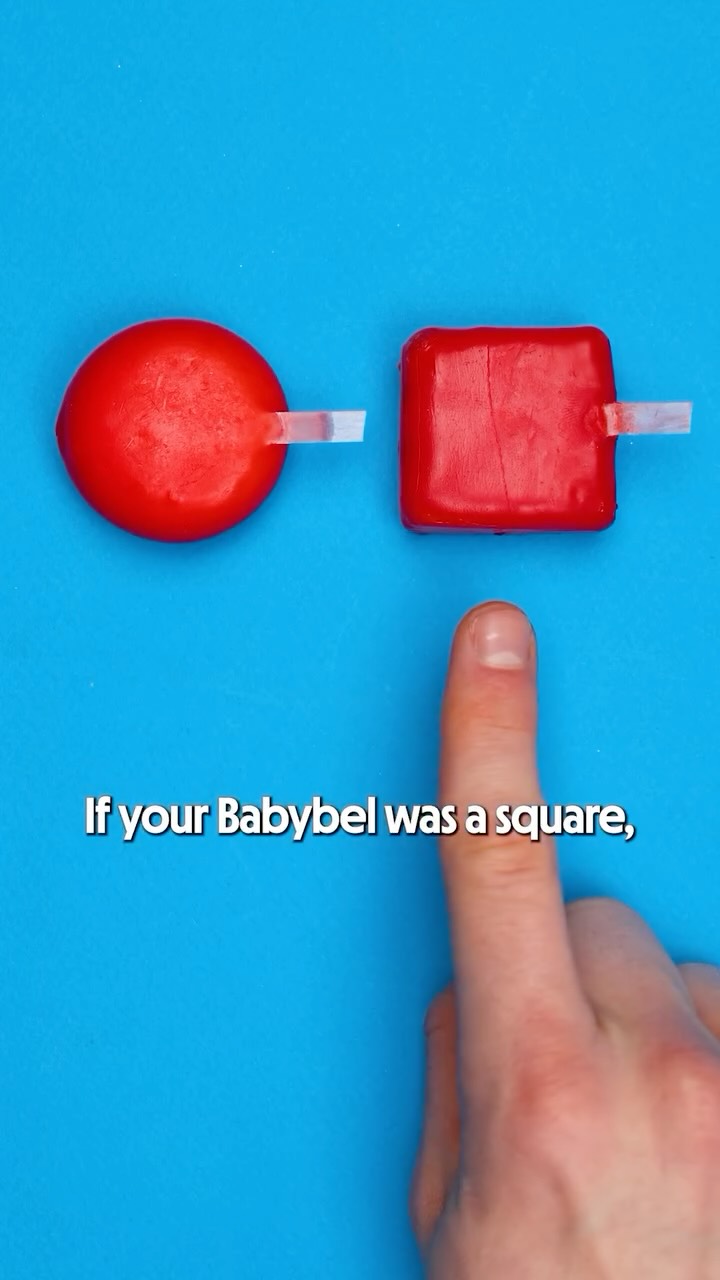
If your Babybel was a square,

Verbal hook 路 40%

If your Babybel was a square, you would not be able to open it.

Visual hook 路 15%

A modified square red wax Babybel cheese sitting next to a standard round one, creating an immediate visual anomaly.

[07]

Hook and payoff

The promise the opener makes, and how the video pays it back

Hook

The Proxy Paradox: A familiar object is modified (square cheese) to physically demonstrate a geometric problem that makes it unusable, creating immediate visual intrigue.

Payoff

The Loop Closure: Returns to the original 'impossible' object (the square cheese) and applies the new solution to make it work, providing satisfying narrative resolution.

[08]

Narrative framework

The structural pattern this video runs on

Framework

The Engineering Detective Arc

Uses a modified familiar object to visualize a hidden design constraint, systematically rules out obvious solutions, and reveals a clever mechanical fix that justifies a product's design.

  1. 1

    The Physics Deconstruction

    Uses visual overlays (marker on table) to explain the invisible geometric forces causing the failure (arc interference).

  2. 2

    The Stakes Translation

    Pivots from the playful proxy object to the actual product category (card cases) to establish why this problem actually matters.

  3. 3

    The Strawman Rejection

    Presents and dismantles the two most obvious solutions (top loading vs. wide body) to show why the problem is harder to solve than it appears.

  4. 4

    The Insight Reveal

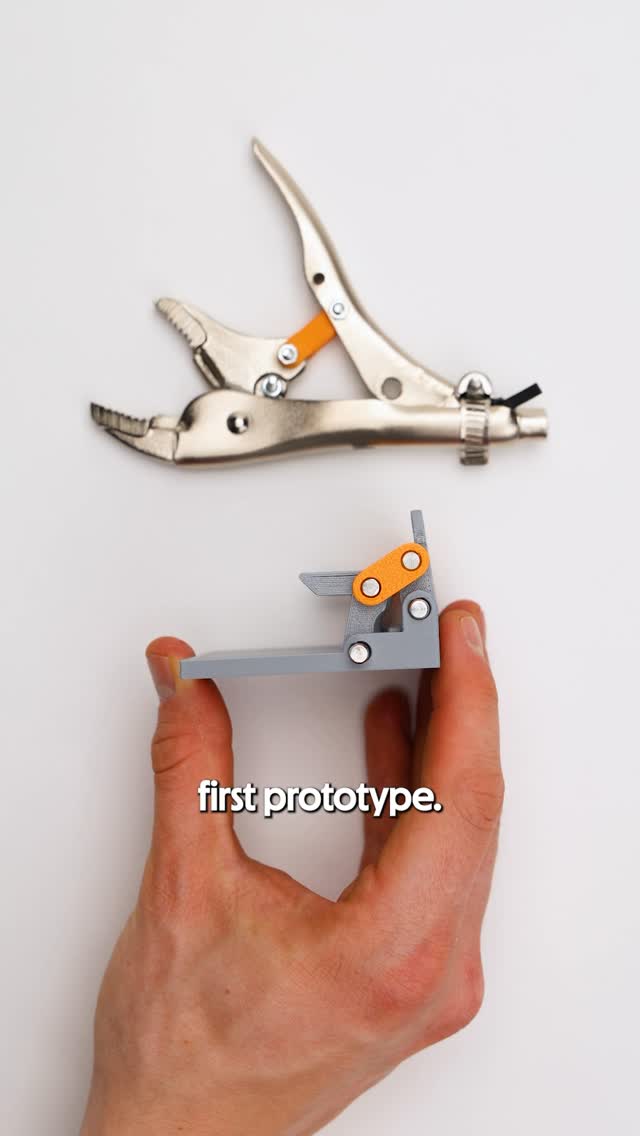
    Introduces the clever mechanical fix (the offset hinge), using a vintage reference object to anchor the solution in established engineering.

  5. 5

    The Product Validation

    Shows the creator's actual product implementing this fix, validating the design choice as a necessity rather than a gimmick.

Themes

  • Problem solving
  • Design thinking
  • Innovation

Techniques

  • Analogy
  • Demonstration
  • Sketching

Trends

  • Educational short-form
  • Design secrets

Post caption

How to contain a square. To make this video we examined all of the interesting hinged containers in our office: an airpods case, a pack of 馃毈, an old toolbox, and of course our own Summit Card Case. Each of them has its own way of overcoming the problem of lids crossing the interior volume. And so, we encourage you to take a closer look at the hinged things in your life: are they utilizing a higher hinge, dead space, or a swooped lid to make it work? Not all containers are the same. Not all cheese is round.

Text overlays

  • title 路 beginning

    If your Babybel was a square,

  • informational 路 beginning

    you would not be able to open it,

  • call-to-action 路 end

    Follow for more.

Transcript

If your baby best was a square, you would not be able to open it. You cannot open it. This is because the path of the hinged lid on a square container is interfering with the top corner of that square block of cheese. You don't have this problem with a circular hinged container, and that's because the arc that the hinged lid follows basically avoids that circular interior volume entirely. Good for you, No. The reason that we care about this problem is because we have been designing cases to hold cards, and rectangles are gonna be even worse than squares. Even if you, like, butt it all the way up against the spine, you're still gonna bang into that card. The obvious first solution, I think, is moving this seam all the way to the top. Basically, it completely avoids the problem. The main drawback here, your cards end up fully seated within the container. It requires you to turn it over and dump out all your cards. So we rolled that one out. The next most common solution, you go back to that lower seam line, but you add more width no that you kind of, like, work around the limitations of that dead space that the rank creates. But, like, the idea that you're carrying around dead space in your pocket. I'm, like, neurotic. I'm, like, a crazy person. Makes me nuts. This is what I consider a perfect hinged container. There's essentially no dead space, and when you open it, you have full access to the contents inside. And there is a way to achieve this for rectangular objects. So I'll give you a second thing about how to solve that problem because I do think it's pretty satisfying and simple, and here is a at least small end. You keep the lip side of the lid exactly where it is, but you move the hinge up to that top corner. The lip now traces an arc that is fully outside of the contents of your container. But because you lowered that lip, you now can easily access cards from inside the container. While we have refined this idea to work for our Summit rank case, there's no interference in the open, easy access for adding and removing cards. The question still remains, will it work for cheese?