@mirandadoesbrands Paloma Wool is a multi-million dollar brand worn by every celebrity it-girl, but the brand’s growth has come from doing the complete opposite of what most brands do. The founder Paloma Lanna has used intimacy as a strategy to build a cult following, keeping things intentionally small and considered, resisting the pull of celebrity influencers, splashy collabs, because she knows it would break the spell around her brand.
Explaining a cult brand's strategyfrom @mirandadoesbrands
[01]
Overview
The creator breaks down the brand strategy of the multi-million dollar fashion brand, Paloma Wool. She explains how the founder, Paloma Lanna, used a strategy of intimacy and artistic integrity—the opposite of mass-market playbooks—to build a cult following, detailing its origins as a creative project, its use of amateurish aesthetics, and its resistance to traditional marketing like influencers and splashy collaborations to maintain its unique brand identity.
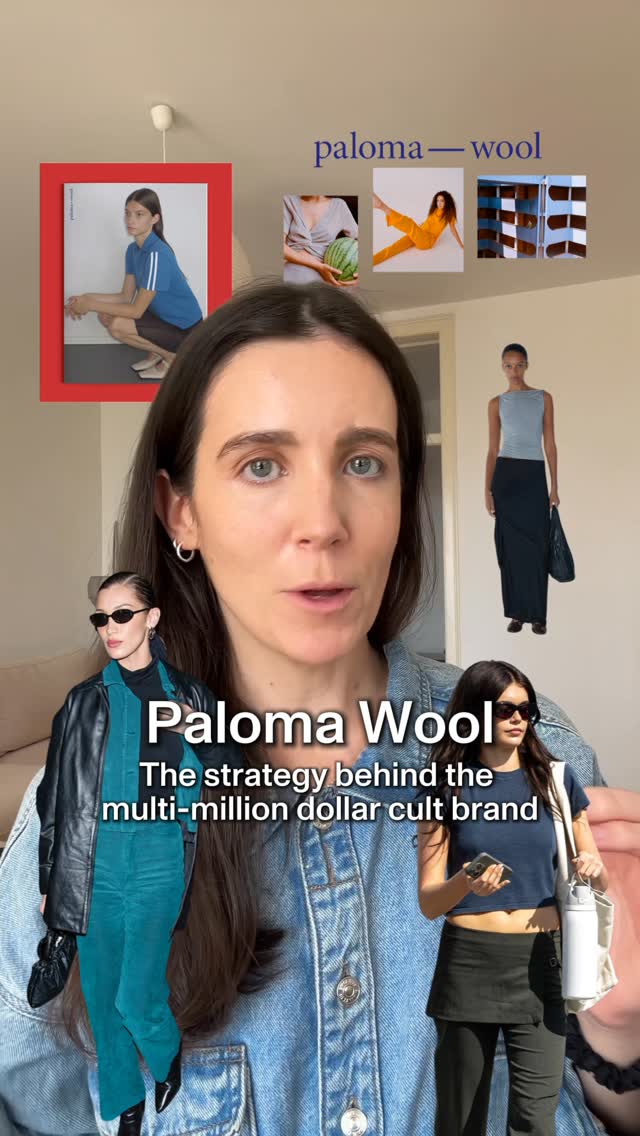
Paloma Wool The strategy behind the multi-million dollar cult brand
Verbal hook · 35%
Paloma Woll's most viral campaign was this one where she depicted her transition into motherhood...
Visual hook · 10%
The speaker is framed by a dynamic digital collage of brand images, logos, and celebrity photos, creating a visually dense and informative opening shot that immediately establishes the topic.
[07]
Hook and payoff
The promise the opener makes, and how the video pays it back
Hook
Opens with a specific, highly successful outcome (a 'viral moment' or major achievement) and connects it to a surprising, counterintuitive method, creating an immediate 'how did they do that?' curiosity gap.
Payoff
Distills the entire narrative into a single, powerful, and memorable principle, framing the subject's success as a direct result of their strategic restraint and commitment to their core philosophy.
[08]
Narrative framework
The structural pattern this video runs on
Framework
The Counter-Playbook Case Study
Deconstructing the success of a subject by revealing how its creator intentionally rejected the conventional industry playbook, proving that a counterintuitive strategy, when consistently applied, can lead to massive, authentic growth.
1
The Unexpected Origin
Establishes the subject's background, highlighting their access to or knowledge of the 'standard playbook,' which creates the expectation that they would follow a conventional path.
2
The Strategic Rejection
Pivots the narrative by revealing the subject's conscious decision to reject the established industry norms and do the 'complete opposite,' establishing the central conflict and thesis of the story.
3
The Counter-Strategy Explained
Details the specific, unconventional tactics and principles that form the subject's unique approach, providing concrete evidence of how they defied the playbook.
4
The Organic Validation
Demonstrates the initial success of the counter-strategy, showing how it generated authentic, community-driven traction precisely because it was different.
5
The Scaling Paradox
Transitions the story to the present day, acknowledging the subject's significant growth and success, which introduces the new tension of whether they can maintain their original ethos at scale.
6
The Consistency Proof
Resolves the new tension by providing multiple, current examples of how the subject continues to adhere to their founding principles, proving the 'spell hasn't broken' and the strategy is sustainable.
Themes
Authenticity in branding
Anti-consumerism
Community building
Creative entrepreneurship
Techniques
Case study analysis
Visual storytelling
Expert commentary
Post caption
Paloma Wool is a multi-million dollar brand worn by every celebrity it-girl, but the brand’s growth has come from doing the complete opposite of what most brands do. The founder Paloma Lanna has used intimacy as a strategy to build a cult following, keeping things intentionally small and considered, resisting the pull of celebrity influencers, splashy collabs, because she knows it would break the spell around her brand.
Text overlays
branding · beginning
paloma—wool
title · beginning
Paloma Wool The strategy behind the multi-million dollar cult brand
contextual · beginning
where she depicted
contextual · beginning
her transition
contextual · middle
fashion nepo baby
contextual · middle
as a creative project
contextual · middle
intentionally amateurish
contextual · middle
it didn't feel
contextual · end
are still shot on film
contextual · end
feature her family
contextual · end
other creatives
contextual · end
like art galleries
contextual · end
to say no
Transcript
Paloma Woll's most viral campaign was this one where she depicted her transition into motherhood, and this is how she used intimacy as a strategy to build a multimillion dollar brand that everyone from Kendall Jenner to Rosalia is obsessed with. Paloma Lana founded the brand in 2014 with her artist friend Tana Latore. And what most people don't know is that Paloma is actually a fashion Nepo baby. Her parents owned the Spanish fashion brand Globe, which was huge in the pre Zara days. But even though she had the mass market brand playbook, she decided to do the complete opposite. From the beginning, Paloma wool was positioned as a creative project. Clothing was just one medium among many, and it was intentionally amateurish. Grainy no fi imagery, her friends posing as models, like minded creatives started discovering the pieces online and tagging them unprompted precisely because it didn't feel like a brand. Fast forward ten years, and Paloma Will now has runway shows and flagship stores, but the spell still hasn't broken. Her campaigns are still shot on film and frequently feature her family. Instead of working with influencers, she works with other creatives. The stores were intentionally designed to feel like art galleries instead of commercial spaces. She's resisted every pull towards bigger names and splashier collabs. She understands that preserving the magic of her brand requires her to say no.