Viral Hooks
Trending short videosCEO brand transformation case study
T

@the.ryanexperience

Instagram · Talking Head Edit

@the.ryanexperience Rosewood hotels (@rosewoodhotels) has scaled from a sleepy luxury brand into a global powerhouse in the hospitality space, with @rosewoodhongkong ranked as the number one hotel in the world. This wasn’t by accident. @soniachengcm took over as a young adult in 2011, and completely revamped by the brand and guest experience by constructing a brand world attractive to modern, young luxury travellers. She knew what most brands didn’t at the time (and still don’t know); that young luxury buyers want identity, local experiences and complete worlds they never want to leave. Everything else on top of that is just an add. #hospitality #hotels #hotel #rosewoodhotels

View original on Instagram

The edit1 shot · 8 text
Shots Text2:30

Performance

Views
484.3K
Likes
21.4K
Comments
245
Engagement
4.5%
Outlier
37.6×
Length · 5 Mar 2026
2:30

Video #32248 · Talking Head Edit

CEO brand transformation case studyfrom @the.ryanexperience

[01]

Overview

The creator presents a detailed case study on Sonia Cheng, the CEO of Rosewood Hotels. He explains how she transformed a small, North American-focused luxury hotel brand into a global powerhouse by implementing three core principles: weaponizing the brand's 'sense of place,' creating a comprehensive 'lifestyle ecosystem,' and ditching formal, pretentious service for authentic connection. The creator uses a combination of direct narration, illustrative B-roll, and screenshots of articles to break down these strategies and demonstrate their success in attracting modern luxury travelers.

[02]

Simple outline

  1. 1State dramatic transformation
  2. 2Introduce visionary leader
  3. 3Reveal strategic blueprint
  4. 4Provide definitive proof
  5. 5Deliver universal insight

[03]

Related videos

[04]

Classification

Concepts
Case Study BreakdownBreakdown
Elements
Picture-in-PictureB-Roll CutawayImage OverlayText Overlay

[05]

Hook analysis

What stops the scroll in the first 3 seconds

Title hook · 25%

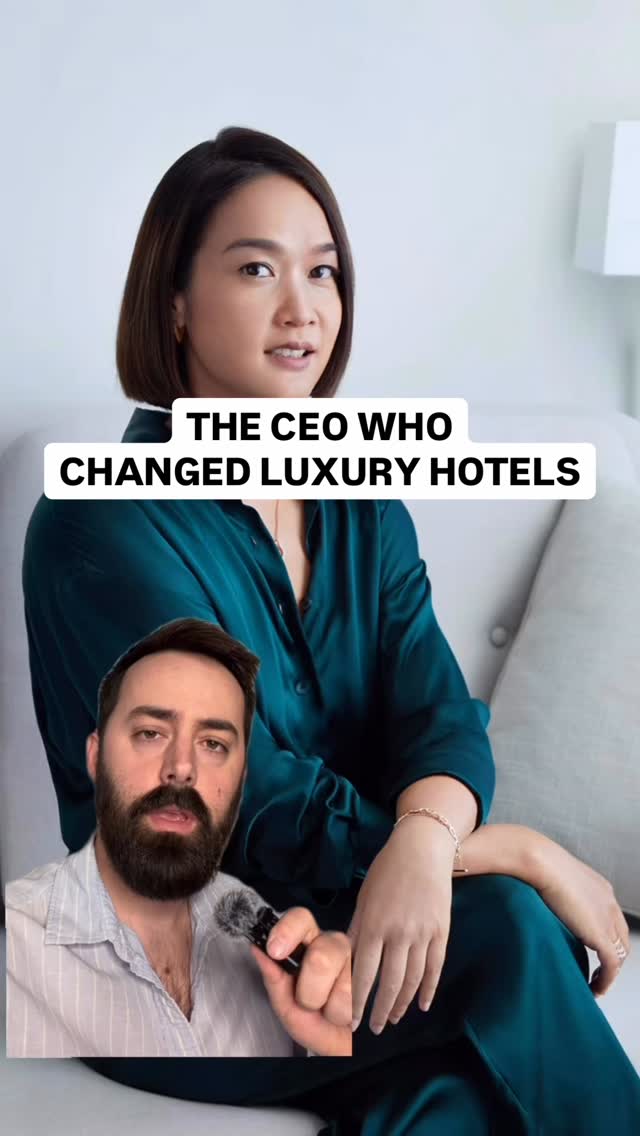
THE CEO WHO CHANGED LUXURY HOTELS

Verbal hook · 65%

In 2011, a 30 year old became CEO of a sleepy American hotel brand her family just bought for 229,000,000.

Visual hook · 10%

A picture-in-picture overlay of the creator speaking in the bottom left corner over a full-screen, professionally shot image of the video's subject, Sonia Cheng.

[06]

Hook template

Steal this for your own video

In [year], a [age]-year-old became CEO of [struggling brand] after it was bought for [dollar amount]—then transformed it.

  • — In 2011, a 30-year-old became CEO of a sleepy hotel brand after it was bought for $229 million—then transformed it.
  • — In 2018, a 27-year-old became CEO of a struggling skincare brand after it was bought for $12 million—then transformed it.
  • — In 2020, a 35-year-old became CEO of a fading bookshop chain after it was bought for $4 million—then transformed it.

[07]

Hook and payoff

The promise the opener makes, and how the video pays it back

Hook

Juxtapose a humble or stagnant 'before' state with an extraordinary 'after' state, creating an immediate intrigue gap and promising to reveal the secret methodology ('Here's how').

Payoff

Validate the entire strategy by presenting undeniable proof of success (e.g., a #1 ranking, a major award, a massive sales figure). Conclude by extracting a single, powerful, universal lesson from the story, giving the viewer a memorable and applicable takeaway.

[08]

Narrative framework

The structural pattern this video runs on

Framework

The Transformation Case Study

Deconstructing a remarkable success story by revealing the specific, replicable principles or strategies that fueled the transformation from an undesirable 'before' state to a triumphant 'after' state.

  1. 1

    The Authority Frame

    The narrator establishes credibility and context by introducing the overarching theme or series, positioning themselves as an expert guide for the story that follows.

  2. 2

    The 'Old World' Problem

    Detail the specific limitations and challenges of the subject in its initial state, establishing the stakes and the scale of the problem that needed to be solved.

  3. 3

    The 'New Guard' Catalyst

    Introduce the protagonist or the key change agent and the inciting incident that officially began the transformation journey.

  4. 4

    The Mission Statement

    Clearly articulate the protagonist's ambitious vision or goal, defining what success would look like and setting a clear direction for the narrative.

  5. 5

    The Strategic Framework Reveal

    Explicitly transition into the core explanation by announcing a numbered list of principles or strategies, creating anticipation and a clear structure for the viewer to follow.

  6. 6

    Principle #1 Explained

    Present the first core strategy, defining the concept and providing specific, visual examples of how it was implemented to achieve a part of the overall vision.

  7. 7

    Principle #2 Explained

    Present the second core strategy, building on the first by revealing another layer of the methodology, again supported by concrete examples.

  8. 8

    Principle #3 Explained

    Present the final core strategy, often addressing a more nuanced or emotional aspect of the transformation, completing the 'how-to' blueprint for the viewer.

Themes

  • Brand transformation
  • Modern luxury
  • Business innovation
  • Female leadership

Techniques

  • Picture-in-picture narration
  • Case study breakdown
  • Visual storytelling with B-roll

Post caption

Rosewood hotels (@rosewoodhotels) has scaled from a sleepy luxury brand into a global powerhouse in the hospitality space, with @rosewoodhongkong ranked as the number one hotel in the world. This wasn’t by accident. @soniachengcm took over as a young adult in 2011, and completely revamped by the brand and guest experience by constructing a brand world attractive to modern, young luxury travellers. She knew what most brands didn’t at the time (and still don’t know); that young luxury buyers want identity, local experiences and complete worlds they never want to leave. Everything else on top of that is just an add. #hospitality #hotels #hotel #rosewoodhotels

Text overlays

  • title · beginning

    THE CEO WHO CHANGED LUXURY HOTELS

  • contextual · beginning

    In 2011, a 30-year-old became CEO of a sleepy American hotel brand her family just bought for $229 million

  • title · beginning

    The Architecture of Experience

  • contextual · beginning

    Today, we are talking about Rosewood Hotels and their CEO, Sonia Cheng

  • contextual · middle

    Take this sleepy collection of historic mansions and turn it into the Four Seasons for millennials

  • title · middle

    Sense of place

  • title · end

    Lifestyle ecosystem

  • title · end

    Ditching formality

Transcript

In 2011, a 30 year old became CEO of a sleepy American hotel brand her family just bought for 229,000,000. And today, she's transformed the brand into a status symbol for modern wealth. Here's how. Welcome to tier architecture of experience, a new series where I deep dive into hospitality brands and how they create their world class guest experiences. Today, we are talking about Rosewood Hotels and their CEO, Sonia Rank. Before Sonia stepped in back in 2011, Rosewood Hotels was a small better legendary collection of hotels, but the brand had very limited global recognition. It was small, traditional, and mostly based in North America. And then Sonya Cheng and her family's Hong Kong based investment group purchased Rosewood Hotels. At just 30 years old, she was announced CEO, and she had an ambitious vision. Take this sleepy collection of historic mansions and turn it into the four seasons for millennials. In other words, affluent travelers worse modern luxury seekers. Here are the three core principles Sonia used to re engineer Rosewood's DNA and turn it into a global leader in hospitality. Number one is that she weaponized the brand's sense of place. No, Sonia didn't invent that concept. It was actually trademarked by the brand's original founder, Carolyn Rose Hunt. The sense of place concept essentially means that every location should reflect its local history, culture, and lineage. Sonia stayed true to this model, but she took it to the extreme. She committed to world building and shifted Rosewood away from global generic luxury and commissioned architectural masterpieces, like the vertical forest at Rosewood Sao Paulo by Jean Nouvelle, or of course the stunning Rosewood Hong Kong. Under Sonia, Rosewood Hotels became cultural hubs, a place where locals want to be seen and travelers feel the local vibe. The second principle is the lifestyle ecosystem. Sonia understood that luxury buyers don't consume products, they seek identities. So Sonia shifted Rosewood from a hotel operator to a lifestyle curator. She launched entire ecosystems around the best, like Assaya, a cutting edge longevity and wellness concept, or Carlyle and Co, a highly exclusive membership club. She cultivated an extensive brand world with no plot holes that you never wanna step out of. The third principle and as important is they ditched pretentious service. Modern and young luxury travelers hate stiff, pretentious, or rigid service. She ditched the old rules of pretentious luxury and encouraged her staff to show up with their true authentic selves. She replaced stuffy, aristocratic formality with true emotional connection. It's all part of the brand world. You can't claim to be local if your service best stuffy and doesn't reflect the local emotional culture and people of the area. Sonia took a fragmented luxury hotel chain, made it global, and turned it into a powerhouse, which was ranked number one last year for their Hong Kong location. From my perspective, what she proved is that to attract the next generation of luxury better, you have to stop relying on heritage and start building culture.

CEO brand transformation case study | Viral Hooks