Viral Hooks
Trending short videosExplaining the luxury status trap
O

@orenmeetsworld

Instagram · Talking Head Edit

@orenmeetsworld This video is to inspire men in particular to think about what we buy, why and who we’re doing it for. The key to a future you want is often trapped in screen time and car payments. Porsche and Rolex are merely example brands that are easy to make the point but it’s a bigger look at where we’ve been trained to spend our money. Recognizing the forces behind your decisions is the first step towards liberation-and its time for men in particular to embrace individualism far more strongly to break the cycle of domination for future generations- as we’ve come particularly vulnerable to the herd effects of algorithmic capitalism. Study I mention is by MaritzCX.

View original on Instagram

The edit1 shot · 1 text
Shots Text1:35

Performance

Views
331.4K
Likes
10.9K
Comments
638
Engagement
3.5%
Length · 22 Mar 2026
1:35

Video #27028 · Talking Head Edit

Explaining the luxury status trapfrom @orenmeetsworld

[01]

Overview

The speaker presents a cultural critique arguing that mainstream luxury brands like Porsche and Rolex are "cooked" or played out as status symbols due to their mass production. He supports this with statistics, introduces the sociological theory of 'symbolic violence' to explain why people buy into these systems, and contrasts these brands with what high-earners actually drive, concluding that true status now lies in unique or vintage items.

[02]

Simple outline

  1. 1Pose provocative comparison
  2. 2Devalue the common choice
  3. 3Introduce intellectual framework
  4. 4Reveal counter-intuitive truth
  5. 5Propose new status signal

[03]

Related videos

[04]

Classification

Concepts
Cultural RantBreakdown
Elements
B-Roll CutawayPodcast SetupImage OverlayVoiceoverTitle Text Hook

[05]

Hook analysis

What stops the scroll in the first 3 seconds

Title hook · 35%

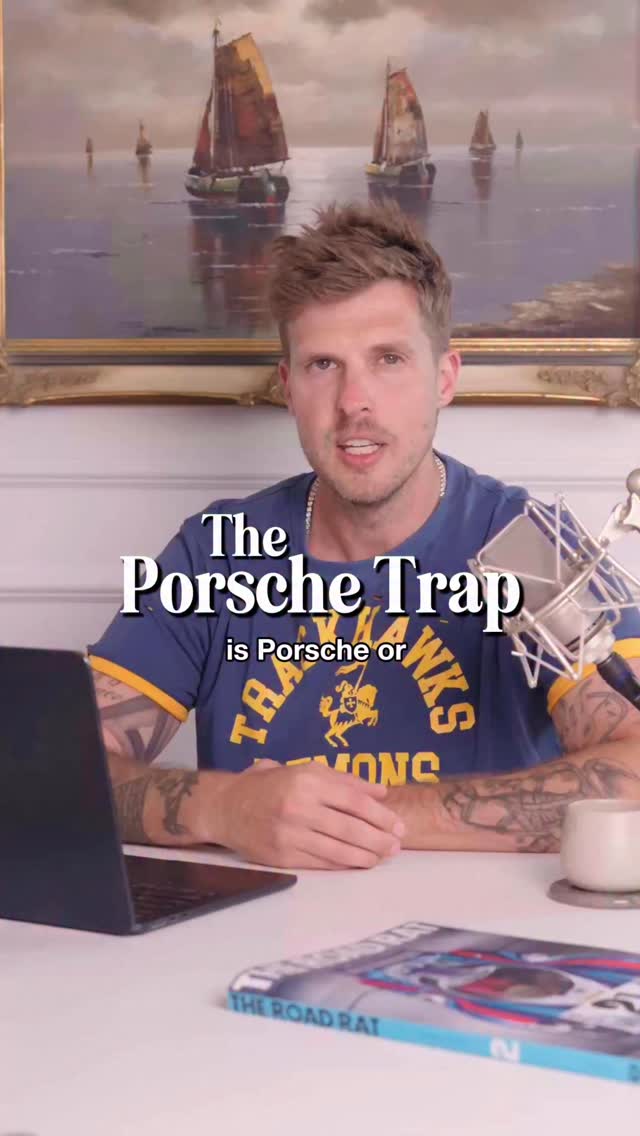
The Porsche Trap

Verbal hook · 50%

Is Porsche or Rolex more cooked?

Visual hook · 15%

A direct-to-camera shot of the speaker in a well-lit setting, immediately followed by a quick cut to a high-end Rolex watch, creating a pattern interrupt and establishing the topic.

[06]

Hook template

Steal this for your own video

Which is more [negative status descriptor] right now — [mainstream brand A] or [mainstream brand B]?

  • — Which is more played out right now — a business degree or a LinkedIn influencer?
  • — Which is more cringe right now — a Peloton or a meal prep service?
  • — Which is more cooked right now — NFTs or drop culture sneakers?

[07]

Hook and payoff

The promise the opener makes, and how the video pays it back

Hook

A polarizing binary question that pits two popular, aspirational items against each other, forcing the viewer to take a side and await a verdict.

Payoff

The Ultimate Reframe: Conclude by asserting that the most valuable form of status is not a purchasable object but an earned skill or a deeper form of understanding, providing the viewer with a new, more empowering perspective.

[08]

Narrative framework

The structural pattern this video runs on

Framework

The Intellectual Reframe

To deconstruct a popular status symbol or belief by revealing its ubiquity, explaining the psychological trap behind it using an intellectual framework, and then offering a more sophisticated, 'in-the-know' alternative.

  1. 1

    The Ubiquity Proof

    Use surprising, large-scale data to demonstrate that a popular aspirational item is far more common than perceived, immediately undermining its exclusivity.

  2. 2

    The Parallel Devaluation

    Link the first item's problem of over-saturation directly to the second item, reframing them not as competitors but as two symptoms of the same core issue.

  3. 3

    The Generalization of the Problem

    Broaden the argument from the specific items to the abstract concept they represent (e.g., 'status symbols'), establishing a larger, more impactful thesis.

  4. 4

    The Academic Framing

    Introduce a high-level theory or psychological concept to explain the underlying mechanism driving the problematic behavior, lending intellectual authority to the argument.

  5. 5

    The Entry-Level Trap

    Identify the specific, accessible products or behaviors that serve as the entry point for the masses into this flawed system.

  6. 6

    The Counter-Intuitive Reality

    Present data or evidence showing that the truly successful or sophisticated group actively avoids the popular choice, opting for a surprising, often more practical alternative.

  7. 7

    The New Status Signal

    Introduce the 'real' signifiers of taste and status, which are often more about knowledge, niche appreciation, or skill rather than overt expense.

Themes

  • consumerism
  • status anxiety
  • sociology
  • masculinity
  • anti-consumerism

Techniques

  • direct address
  • statistical evidence
  • sociological theory

Trends

  • cultural commentary
  • de-influencing

Post caption

This video is to inspire men in particular to think about what we buy, why and who we’re doing it for. The key to a future you want is often trapped in screen time and car payments. Porsche and Rolex are merely example brands that are easy to make the point but it’s a bigger look at where we’ve been trained to spend our money. Recognizing the forces behind your decisions is the first step towards liberation-and its time for men in particular to embrace individualism far more strongly to break the cycle of domination for future generations- as we’ve come particularly vulnerable to the herd effects of algorithmic capitalism. Study I mention is by MaritzCX.

Text overlays

  • title · beginning

    The Porsche Trap

Transcript

Is Porsche or Rolex more cooked? Let's play a game. How many Porsche nine elevens have been built? Over a million. There are more nine elevens on American roads than adult residents of San Francisco. Half the orthodontists in America have a Porsche of some kind parked in the garage. The most aspirational car of the twentieth century is now the Rolex Submariner of automobiles. Technically excellent, completely played out. Rolex makes a million watches a year. It's an tier signaler at the top. This leads to the fundamental problems with status symbols. They work until everyone has them and consumer men, the lowest on the totem pole despite their tweets about the taste economy, are the last ones to get the memo. The average monthly car payment in America is now $748 and it's a prime example of the theory of symbolic violence. It describes when dominated groups participate in their own domination, not through worse, through culture. When the system makes you feel inadequate and you respond by trying to buy your way into identity with a fucking Macan. Man must work commercial real estate instead of hunt. Man make up with fast car, he drives slow. There's a specific tier of luxury vehicles designed specifically for this purpose. Leasable luxury. The Porsche Cayenne, the BMW x three to x five, the Rank Rover Sport. These are the entry points. The monthly payments that just barely fit if you stretch, that signal only to the opposite sex that don't know any better. It perpetuates a best system unknowingly. They haven't graduated to the write off class yet. A consumer research firm conducted a study on what male Americans who make over 200 k actually drive. The answer, the Ford f one fifty. For Americans earning over 500, the same answer. Long live the Better. And now the taste economy signals the vintage Land Rover or American muscle with a fully restored engine. Real ones are more excited about the minivan with the Hellcat engine, in a world where 90% of those Porsches never see a track day and disregard all of this for the ones that do and driverless means lots of kids will never learn to drive, period. Perhaps the biggest flex of all is being able to drive stick with a little bit of ice in your veins.

Explaining the luxury status trap | Viral Hooks