Viral Hooks
Trending short videosScientist explains why swamp stinks
K

@kidflamess

Instagram · Speaker address

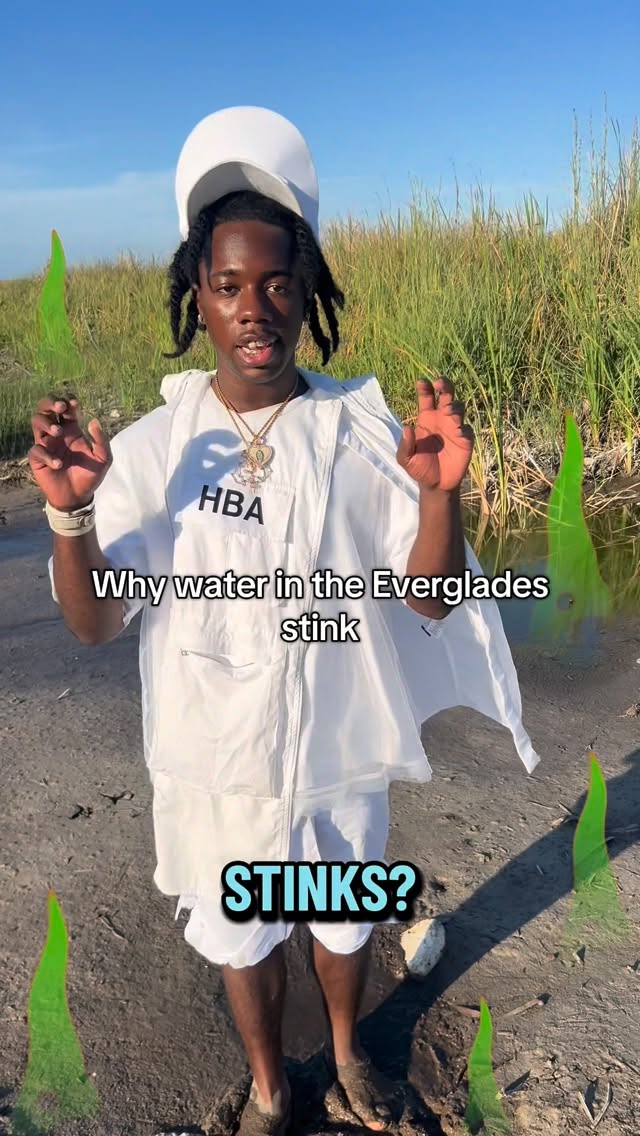
@kidflamess The water in wetlands smell the way they do mainly because of microbial activity. Microbes decompose material in the system which releases a gas known as hydrogen sulfide and that tends to smell like rotten eggs. #researcher #wetlands #microbiology #biology #stem

View original on Instagram

The edit1 shot · 7 text
Shots Text0:37

Performance

Views
230.6K
Likes
16.8K
Comments
279
Engagement
7.4%
Outlier
9.7×
Length · 7 May 2026
0:37

Video #28117 · Speaker address

Scientist explains why swamp stinksfrom @kidflamess

[01]

Overview

A creator, presenting himself as a scientist, stands in the Everglades to explain the biological reason for the water's smell. He breaks down how microbes decompose organic matter in low-oxygen conditions, releasing hydrogen sulfide gas, and explains that this natural process is essential for the ecosystem's health.

[02]

Simple outline

  1. 1Pose an intriguing question
  2. 2State the primary cause
  3. 3Detail the underlying mechanism
  4. 4Reframe with a positive outcome

[03]

Related videos

[04]

Classification

Concepts
BreakdownStrange but True
Elements
Graphic OverlayText Overlay

[05]

Hook analysis

What stops the scroll in the first 3 seconds

Title hook · 50%

Why water in the Everglades stink

Verbal hook · 45%

Why water in the Everglades stinks.

Visual hook · 5%

A man standing barefoot in a muddy, swamp-like environment, immediately establishing the video's topic and setting.

[07]

Hook and payoff

The promise the opener makes, and how the video pays it back

Hook

Pose a direct, relatable question about a common observation to create an immediate knowledge gap, while simultaneously establishing the speaker's authority to answer it.

Payoff

The final beat delivers a satisfying reinterpretation of the initial problem, leaving the viewer with a novel piece of knowledge and a sense of intellectual discovery.

[08]

Narrative framework

The structural pattern this video runs on

Framework

The Curiosity Reframe

Answering a common 'why' question about a seemingly negative phenomenon, then systematically explaining its cause and mechanism before reframing it as a sign of a positive or essential process.

  1. 1

    The Macro Explanation

    Provide the high-level, easily digestible cause of the phenomenon, identifying the main actors involved (e.g., 'decomposing material' and 'microbes').

  2. 2

    The Micro-Mechanism Reveal

    Drill down into the specific scientific or technical process, naming the key component (e.g., 'hydrogen sulfide') and using a strong sensory analogy (e.g., 'smells like rotten eggs') to make the abstract concept concrete.

  3. 3

    The Contextual Intensifier

    Explain why the specific environment or context amplifies the effect, adding a layer of nuance that answers 'why is it so strong here?'

  4. 4

    The Purposeful Payoff

    Reframe the entire phenomenon by revealing its hidden, beneficial purpose. This transforms the viewer's understanding from negative/neutral to positive/insightful, connecting the initial observation to the health of the larger system.

Themes

  • Science education
  • Ecology
  • Environmental science

Techniques

  • On-location explanation
  • Visual aids

Trends

  • Science communication
  • Edu-tainment

Post caption

The water in wetlands smell the way they do mainly because of microbial activity. Microbes decompose material in the system which releases a gas known as hydrogen sulfide and that tends to smell like rotten eggs. #researcher #wetlands #microbiology #biology #stem

Text overlays

  • title · throughout

    Why water in the Everglades stink

  • title · beginning

    WHY WATER IN THE EVERGLADES

  • contextual · beginning

    I'M A SCIENTIST THAT DID RESEARCH

  • informational · middle

    DECOMPOSING PLANT AND ANIMAL

  • informational · middle

    HYDROGEN SULFIDE LIKE ROTTEN EGGS.

  • informational · middle

    SLOW MOVING RIVER,

  • informational · end

    RELEASES NUTRIENTS BACK INTO THE ENVIRONMENT,

Transcript

Why water in the Everglades stinks. I'm a scientist that they're researching the Everglades, and the water smells like that because of all the decomposing plant and animal and also the organic material in the system that's being broken down by microbes. Now when microbes break these things down, especially in low oxygen environments, it creates this gas called hydrogen sulfide that smells like rotten eggs. And the fact that those system is also slow moving river, it prevents all these things from washing away causing the scent to build up. Now this is important because when microbes break these things down, it releases nutrients back into the environment, which keeps it healthy and stable in the long run.