Viral Hooks
Trending short videosExpert explains looming economic crisis
B

@bfmradio

Instagram · Clip

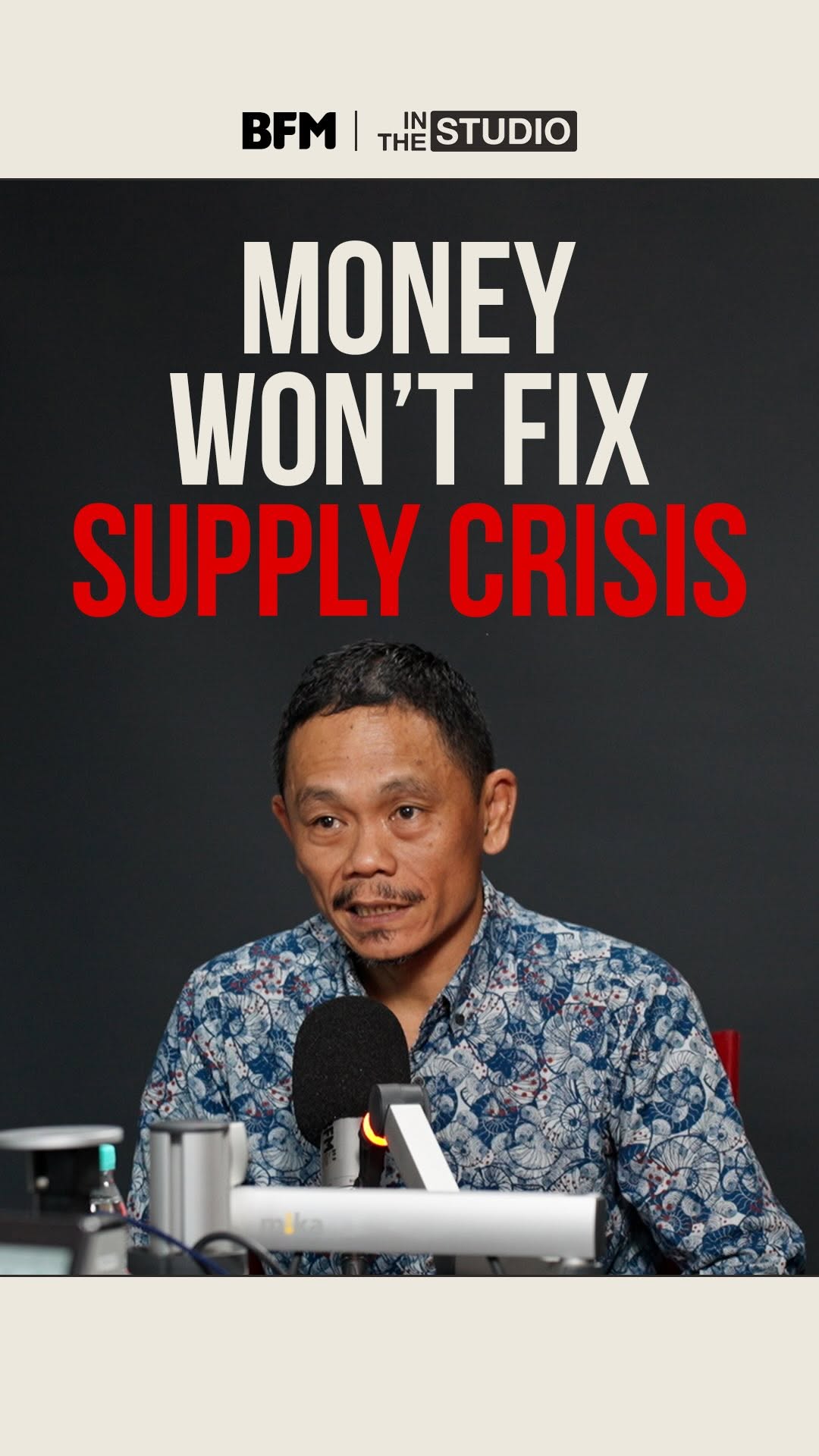
@bfmradio 📍🟡 “I think it’s going to hit us in June. We’re going to start seeing production stoppages, people losing overtime, shift reductions…” The Economic Adviser to the Prime Minister’s Office Nurhisham Hussein joins The Breakfast Grille to answer: • Why oil supply will not resume immediately after the war ends • Why this shortage will impact every aspect of our lives beyond petrol prices • Budget cuts to the Ministry of Health and Ministry of Education Watch the full podcast on BFM’s YouTube channel or via the link in our bio. The Breakfast Grille is powered by U Business. @umobile, Malaysia’s No.1 5G Network. 5G makes business sense. #BFMInTheStudio

View original on Instagram

The edit1 shot · 5 text
Shots Text3:58

Performance

Views
637.7K
Likes
17.5K
Comments
172
Engagement
2.8%
Outlier
17.6×
Length · 13 May 2026
3:58

Video #28688 · Clip

Expert explains looming economic crisisfrom @bfmradio

[01]

Overview

An economic adviser begins by drawing a parallel between the current economic climate and the period just before the 2020 COVID-19 crisis, suggesting a false sense of normalcy. An interviewer then pivots the conversation to the topic of fuel shortages, referencing a specific geopolitical event, and asks the expert to explain the complexities of the global oil supply chain. The expert starts to break down the logistical challenges that prevent an immediate resumption of oil supply after a disruption.

[02]

Simple outline

  1. 1State ominous comparison
  2. 2Introduce specific problem
  3. 3Pose clarifying question
  4. 4Begin insider explanation

[03]

Related videos

[04]

Classification

Format
Concepts
BreakdownAsk an Expert
Elements
Lower ThirdJump CutSplit ScreenPodcast Setup

[05]

Hook analysis

What stops the scroll in the first 3 seconds

Title hook · 55%

I FEEL LIKE WE'RE

Verbal hook · 40%

I feel like we're in February 2020.

Visual hook · 5%

A medium close-up shot of a speaker in a professional podcast studio, looking directly towards the interviewer with a serious and engaging expression. The shot has a shallow depth of field, focusing attention on the speaker.

[06]

Hook template

Steal this for your own video

I FEEL LIKE WE'RE IN [historical crisis moment] ALL OVER AGAIN

  • — I FEEL LIKE WE'RE IN 2008 ALL OVER AGAIN
  • — I FEEL LIKE WE'RE IN THE DOT-COM BUBBLE ALL OVER AGAIN
  • — I FEEL LIKE WE'RE IN 1929 ALL OVER AGAIN

[07]

Hook and payoff

The promise the opener makes, and how the video pays it back

Hook

An expert makes a startling comparison to a recent, shared major crisis to create immediate emotional resonance and a sense of high stakes.

Payoff

The expert begins to deliver the promised insider information, citing authoritative sources, but the segment ends before the full consequences are revealed, creating a cliffhanger that functions as a call to action to consume the full content.

[08]

Narrative framework

The structural pattern this video runs on

Framework

The Expert Cliffhanger

An expert uses a powerful analogy to frame a current problem, creating a sense of urgency. An interviewer then asks a clarifying question, and the expert begins to provide an insider explanation, with the video cutting off to create a cliffhanger that drives viewers to a longer piece of content.

  1. 1

    The Ominous Parallel

    The subject matter expert establishes a sense of impending doom by comparing the current situation to the period just before a well-known historical crisis.

  2. 2

    The Complacency Warning

    The expert observes that the public is not changing its behavior, implying a dangerous lack of awareness that heightens the tension.

  3. 3

    The Concrete Catalyst

    A second speaker (interviewer) pivots from the abstract feeling to a specific, tangible problem, grounding the threat in a real-world event.

  4. 4

    The Knowledge Gap Question

    The interviewer highlights the complexity of the issue, framing it as something the average person wouldn't understand, and asks the expert for a specific explanation.

Themes

  • Economic forecasting
  • Geopolitical risk
  • Crisis management

Techniques

  • Expert interview
  • Analogical reasoning
  • Current events analysis

Post caption

📍🟡 “I think it’s going to hit us in June. We’re going to start seeing production stoppages, people losing overtime, shift reductions…” The Economic Adviser to the Prime Minister’s Office Nurhisham Hussein joins The Breakfast Grille to answer: • Why oil supply will not resume immediately after the war ends • Why this shortage will impact every aspect of our lives beyond petrol prices • Budget cuts to the Ministry of Health and Ministry of Education Watch the full podcast on BFM’s YouTube channel or via the link in our bio. The Breakfast Grille is powered by U Business. @umobile, Malaysia’s No.1 5G Network. 5G makes business sense. #BFMInTheStudio

Text overlays

  • contextual · beginning

    PRIME MINISTER'S ECONOMIC ADVISER

  • branding · throughout

    BFM @BFMRADIO

  • contextual · middle

    Filmed on 11th May 2026

  • contextual · middle

    Sharaad Kuttan Presenter | The Breakfast Grille

  • contextual · end

    Nurhisham Hussein Economic Adviser | Prime Minister's Office

Transcript

I feel like we're in February 2020. The virus is just about to hit. We're hearing all this news. Everything's going on normally, but next month we are in a major crisis. While I won't say that this is something as dramatically impactful as that was, I do get the same feeling in the sense that we tier are taking a while. I wouldn't say taking this lightly, but people are just going on and not changing their behaviors. I think in the question of fuel shortages, you know, today we had news because that Trump has rejected the Iranian offer for, for a ceasefire for a long term peace in the in The Gulf. No what does that mean for supplies? Because there are things that are you know, unless you're in the industry, you don't quite understand. The spigot just doesn't get turned on immediately when, you know, pieces are now. So please talk us through that. So what we were good, and and this is, both, from the industry itself as well as direct communication between RPM and and the Middle Eastern leaders is that because the supply was shut off, the oil couldn't move out.