Viral Hooks
Trending short videosCultural trend analysis using visuals
D

@deathtostock

Instagram · Split screen

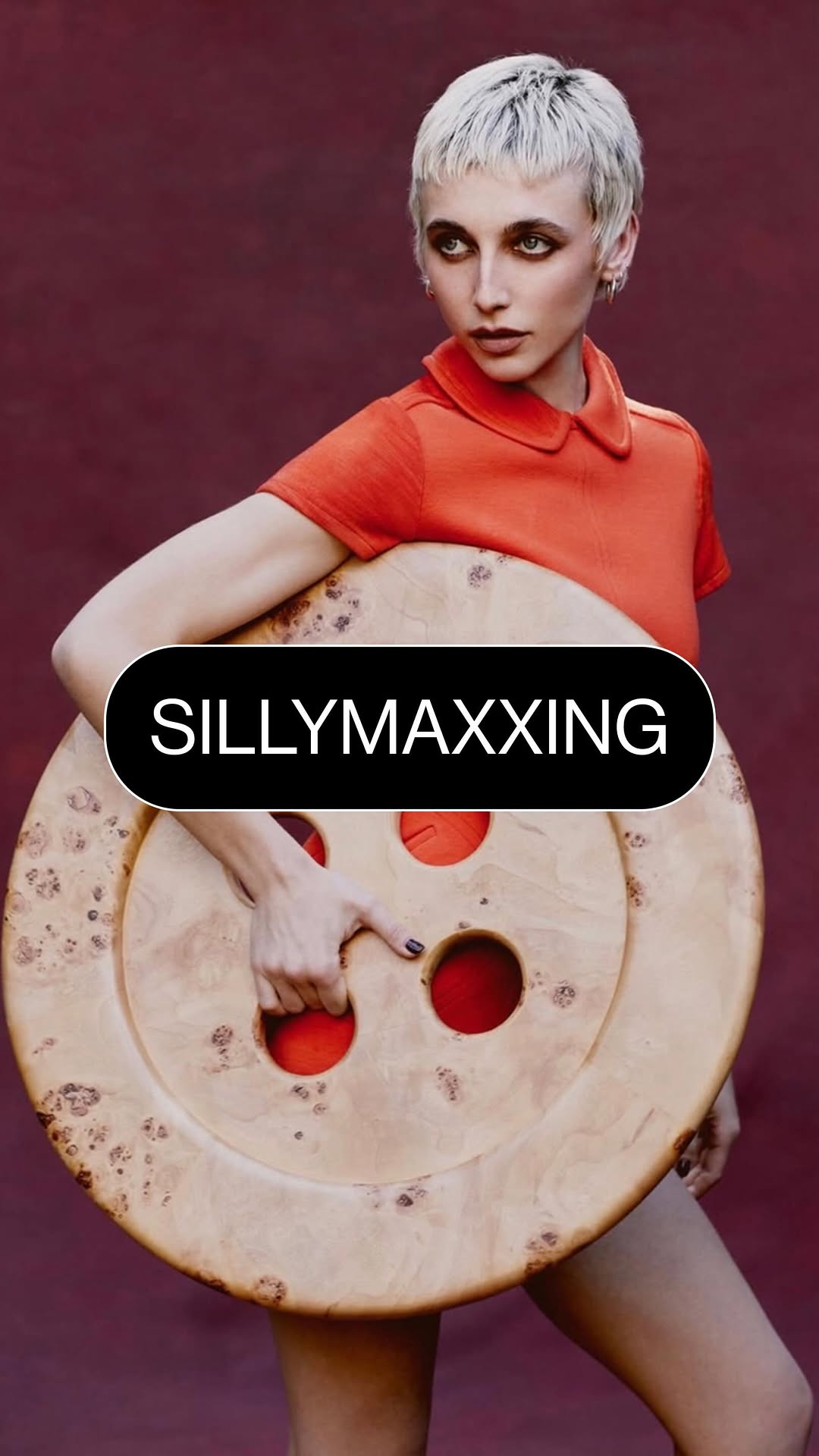
@deathtostock I bring a sort of silly vibe to the function that the performativity police don’t really like 🎀 Emma Chamberlain’s home decor, Rachel Sennott’s latest cover: we’re seeing exaggerated scale, playful design, and theatrical styling across fashion, branding, and visual culture. Last year, we predicted that the authenticity bubble would burst, and in its wake reveal that play is the new stamp of brand trustworthiness. Because if reality is already staged, we might as well treat it like a game 🎮 Comment ‘THIS IS SO SILLY’ to get our sillymaxxing inspo board 🤪

View original on Instagram

The edit1 shot · 7 text
Shots Text1:45

Performance

Views
442.1K
Likes
27.3K
Comments
1.3K
Engagement
6.5%
Outlier
1.4×
Length · 8 Apr 2026
1:45

Video #32036 · Split screen

Cultural trend analysis using visualsfrom @deathtostock

[01]

Overview

The creator analyzes the emerging cultural trend of 'giganticism' and 'playfulness' in fashion, art, and design. She presents numerous visual examples, from Emma Chamberlain's decor to runway fashion, and connects the trend to a broader societal shift away from performative authenticity online towards open theatricality and fun. She supports her argument with historical context from art and theory, and concludes with a call-to-action for an inspiration board.

[02]

Simple outline

  1. 1Identify a specific trend
  2. 2Provide intellectual context
  3. 3Reveal the underlying problem
  4. 4Present trend as solution
  5. 5Offer a value-based CTA

[03]

Related videos

[04]

Classification

Concepts
BreakdownHeadlines
Elements
Picture-in-PictureB-Roll CutawayText OverlayDM / Comment-for-Info CTA

[05]

Hook analysis

What stops the scroll in the first 3 seconds

Title hook · 45%

Do you notice something weird

Verbal hook · 35%

Do you notice something weird with Emma Chamberlain's recent home wear line?

Visual hook · 20%

A wide shot of a woman (Emma Chamberlain) in a stylish room with a giant, oversized wooden button hanging on the brick wall behind her, creating immediate visual intrigue through scale contrast.

[07]

Hook and payoff

The promise the opener makes, and how the video pays it back

Hook

Pose a direct, curiosity-piquing question about a specific, recent, and culturally relevant example of a trend.

Payoff

Translate the complex analysis into a simple, empowering takeaway for the viewer and immediately follow with a specific call-to-action that offers further value (a lead magnet).

[08]

Narrative framework

The structural pattern this video runs on

Framework

The Cultural Thesis

To deconstruct a current, seemingly frivolous cultural trend by revealing its deeper meaning as a reaction to a larger, underlying societal pressure, thereby positioning the creator as a cultural authority.

  1. 1

    The Pattern Reveal

    Broaden the scope from the initial example to other disparate instances, establishing the observation as a widespread pattern or trend.

  2. 2

    The Authority Claim

    Assert that this trend is a symptom of a larger shift that the creator had previously forecasted, establishing credibility and framing the analysis as an expert insight.

  3. 3

    The Intellectual Framing

    Anchor the trend in historical, artistic, or academic theory to explain its mechanics and add intellectual weight to the argument.

  4. 4

    The Core Conflict

    Articulate the underlying societal problem or pressure that the observed trend is a direct reaction against.

  5. 5

    The Grand Synthesis

    Connect the trend directly to the problem, positioning it as a cultural solution, rebound, or coping mechanism that resolves the core conflict.

Themes

  • Performativity
  • Authenticity
  • Cultural trends
  • Playfulness
  • Social commentary

Techniques

  • Visual essay
  • Trend forecasting
  • Theoretical analysis

Trends

  • Giganticism
  • Sillymaxxing
  • De-influencing authenticity

Post caption

I bring a sort of silly vibe to the function that the performativity police don’t really like 🎀 Emma Chamberlain’s home decor, Rachel Sennott’s latest cover: we’re seeing exaggerated scale, playful design, and theatrical styling across fashion, branding, and visual culture. Last year, we predicted that the authenticity bubble would burst, and in its wake reveal that play is the new stamp of brand trustworthiness. Because if reality is already staged, we might as well treat it like a game 🎮 Comment ‘THIS IS SO SILLY’ to get our sillymaxxing inspo board 🤪

Text overlays

  • title · beginning

    Do you notice something weird

  • title · beginning

    with Emma Chamberlain's recent homeware line?

  • title · beginning

    Let's talk about: PLAY AND THE GIGANTIC.

  • informational · middle

    He said that: "jesters remind kings of their vulnerability"

  • informational · middle

    But why is culture reaching for this kind of silliness right now?

  • informational · middle

    As a result? Everything 'feels' performative

  • call-to-action · end

    Comment "THIS IS SO SILLY" for access.

Transcript

Do you notice something weird with Emma Chamberlain's recent home wear line? This also showed up in Rachel Zenit's days cover, and we're seeing it across fashion too. From clothing to jewelry to hair accessories. It's a symptom of a wider cultural shift. When I predicted a year ago and now everyone is talking about it as the defining force of 2026. Let's talk about play and the gigantic. From viral creators online to artists like Claes Oldenburg, exaggerated scale has long been used to distort everyday objects or behaviors until they stop feeling natural. No that by pushing recognizable gestures and signs out of proportion, gestures profane seriousness and authority itself. But why is culture reaching for this kind of silliness right now? Last year, I talked about how the pressure to appear legibly authentic has become a kind of trap online, with people scrambling to prove their own realness through increasingly staged signals of honesty and relatability. As a result, everything feels performative. And to quote this absolute queen Baby, you can't even ride in the elevator without looking at your phone. That's why everything feels performative to you. Back then, I predicted that our notion of authenticity was collapsing under this pressure. And so culture, we start to turn towards play, storytelling, and theatricality more openly. The popularity of gigantic forms feel like a part of that shift. When ordinary objects like zippers, hair clips, buttons, and apples are blown out of proportion, their cartoonish scale makes it easier to see that normal behavior has always had some level of performance. This may not change things at large, but it does give you permission to experiment more. We went deeper into a shift and how it's affecting visuals and made an inspiration board with examples across culture and commerce. Comment, this is so silly, for access.