@mike_sunday
Instagram · Talking Head Edit

@mike_sunday BLEACHED MAIN CHARACTERS IS MORE THAN A TROPE • IT’S TIED TO SOCIETAL CONFORMITY • 👱👱♀️ DO YOU HAVE A FAV BLONDE PROTAGONIST IN ANIME?

@mike_sunday
Instagram · Talking Head Edit
@mike_sunday BLEACHED MAIN CHARACTERS IS MORE THAN A TROPE • IT’S TIED TO SOCIETAL CONFORMITY • 👱👱♀️ DO YOU HAVE A FAV BLONDE PROTAGONIST IN ANIME?
Performance
Video #36862 · Talking Head Edit
[01]
The creator explains the sociological reasons behind the prevalence of blonde-haired protagonists in anime. He begins by linking the trope to the cultural tension between individualism and collectivism in Japan, where non-conformity is discouraged. He provides historical context, explaining how dyeing hair blonde became an act of rebellion for Japanese youth subcultures in the 70s and 80s. The creator then connects this to specific anime examples, like Goku's Super Saiyan form in Dragon Ball (which also had a practical artistic reason) and Naruto's Western-coded appearance, to illustrate how blonde hair visually signifies a character's status as a special outsider.
[02]
[03]
 290.6K2.6×Split-screen anime art analysis@kellybadakdesign · Breakdown
 5MCreator explains niche art aesthetic@kellybadakdesign · What Is X?
 644.5K70.8×Explaining an aesthetic trope's appeal@mike_sunday · Breakdown
 218.7K2.5×Explaining a fashion trend's history@thealgorythm · Breakdown
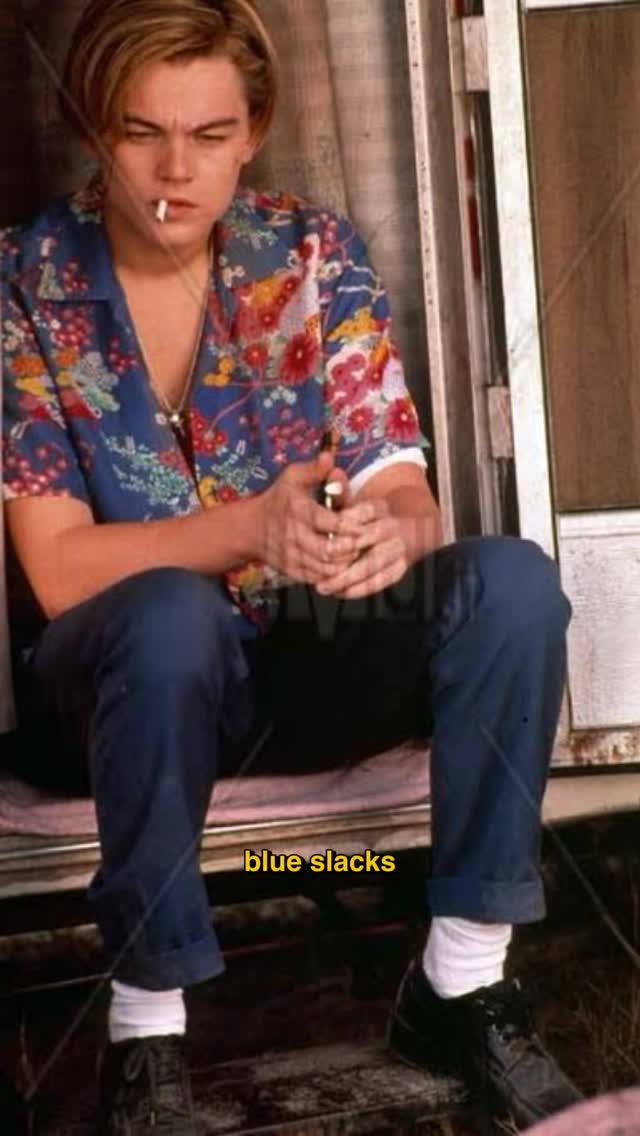 103.1K1.1×Explaining Hawaiian shirt style history@henrythekidd_ · Rapid Fire Listicle
 799.1K448.9×Explaining male trends through history@bhadshah_khango · Breakdown
 788.3K1.9×Comparing royal dress codes' cultural meanings@frontoffice.co · Breakdown
 842.1K13.6×Data analysis of a fashion trend@databutmakeitfashion · Breakdown
 118K18.3×Explaining fashion's influence on anime@gsnwilliams · Breakdown
 99.4K1.8×Explaining ornamentalism via Equinox ad@glass__museum · Breakdown
 459.8K87.6×History of rebel fashion explainer@henrythekidd_ · Breakdown
 128.8KCultural commentary on beauty trends@orenmeetsworld · Breakdown
[04]
[05]
What stops the scroll in the first 3 seconds
Verbal hook · 65%
Have you always wondered why so many protagonists in anime have blonde hair?
Visual hook · 35%
The creator holds up a Naruto manga volume and points at it while speaking directly to the camera, with a background filled with anime figures and books, immediately establishing the topic and his expertise.
[06]
Steal this for your own video
Have you ever wondered why in ?
[07]
The promise the opener makes, and how the video pays it back
Hook
A direct question that taps into a niche audience's latent curiosity about a common trope, promising a definitive explanation.
Payoff
A concise, powerful summary statement that reframes the trope as a meaningful symbol, followed by a direct question to the audience to convert passive viewing into active engagement.
[08]
The structural pattern this video runs on
Framework
The Cultural Deconstruction
Answering a common 'why' question about a popular trope by revealing its deeper cultural and historical significance, culminating in a surprising practical origin story.
The Sociological Framework
Introduce a high-level academic or societal concept (e.g., individualism vs. collectivism) as the primary lens for the explanation.
The Cultural Proof
Ground the abstract framework with a concrete, relatable piece of cultural evidence, like a common proverb or saying.
The Historical Precedent
Add credibility by providing a specific, real-world historical example that demonstrates the cultural framework in action.
The Counter-Culture Catalyst
Show the real-world consequence of this cultural pressure, often by highlighting a subculture that rebelled against the norm.
The Pragmatic Twist
Introduce a foundational example of the trope and reveal a surprising, practical, or mundane reason for its creation, which subverts the purely symbolic explanation.
The Trope Synthesis
Connect all the preceding points (sociological, historical, practical) back to the modern-day trope, explaining how these forces shaped its meaning.
BLEACHED MAIN CHARACTERS IS MORE THAN A TROPE • IT’S TIED TO SOCIETAL CONFORMITY • 👱👱♀️ DO YOU HAVE A FAV BLONDE PROTAGONIST IN ANIME?
branding · throughout
SABUKARUI
You always wondered why so many protagonists in anime have blonde hair? Well, there's actually a surprising amount of psychology behind it, and it really stems between this tension of individualism and collectivism or conformity in Japan. And to understand this, we need to know that a central tenet in Japanese society is the preservation of group harmony. You may have heard the term the nail that sticks out will be hammered down. And so understanding the structural dynamic makes a lot of sense when the trajectory of many shonen and anime protagonists are about escaping this conformity. Because oftentimes, these characters are special. They're unique. That's why we like them. And actually, in the seventies and eighties, Japan had systematic tools to try and curb juvenile delinquency, mandating natural straight black hair. And so adopting kinpatsu or golden hair was the ultimate act of rebellion. And you may have heard the term rank or gyaru, and some of these subcultures really go against the grain of Japanese society. Now, while blonde hair in real life has this sociological weight of rebellion, No, while blonde hair in real life has this sociological weight of rebellion, the manga and anime part, there's a slight nuance. And one of the worse instances is Good going Super Saiyan in Akira Toriyama's Dragon Ball. Better, allegedly, because inking Goku's black spiky hair was so arduous, going Super Saiyan was actually a way to save time. And when the manga was translated into anime, he became his iconic blonde. No, of course, usually the protagonist is pinned as an outsider bullied at school, hiding some secret latent power. Or even if we look at Naruto, spiky blonde hair, blue eyes, orange jumpsuit, he has very better coded visuals further cementing him as an outsider in a very Japanese setting, the Hidden Leaf Village in Naruto. And even further than that in anime, the special person or outsider or foreigner is often loud, nonconforming, further separating them from this idea of conforming Japanese society. So in Japanese cultural history, kimpatsu is far more than a cosmetic choice. It is a visual signifier of social friction. And in a society that really is structured around collectivist ideals, bleaching your hair can be the ultimate act, declaring that you do not want to fit in. So do you have a favorite blonde protagonist in anime? If so, let's have a discussion down in the comments.