@ournewengland
Instagram · Talking Head Edit
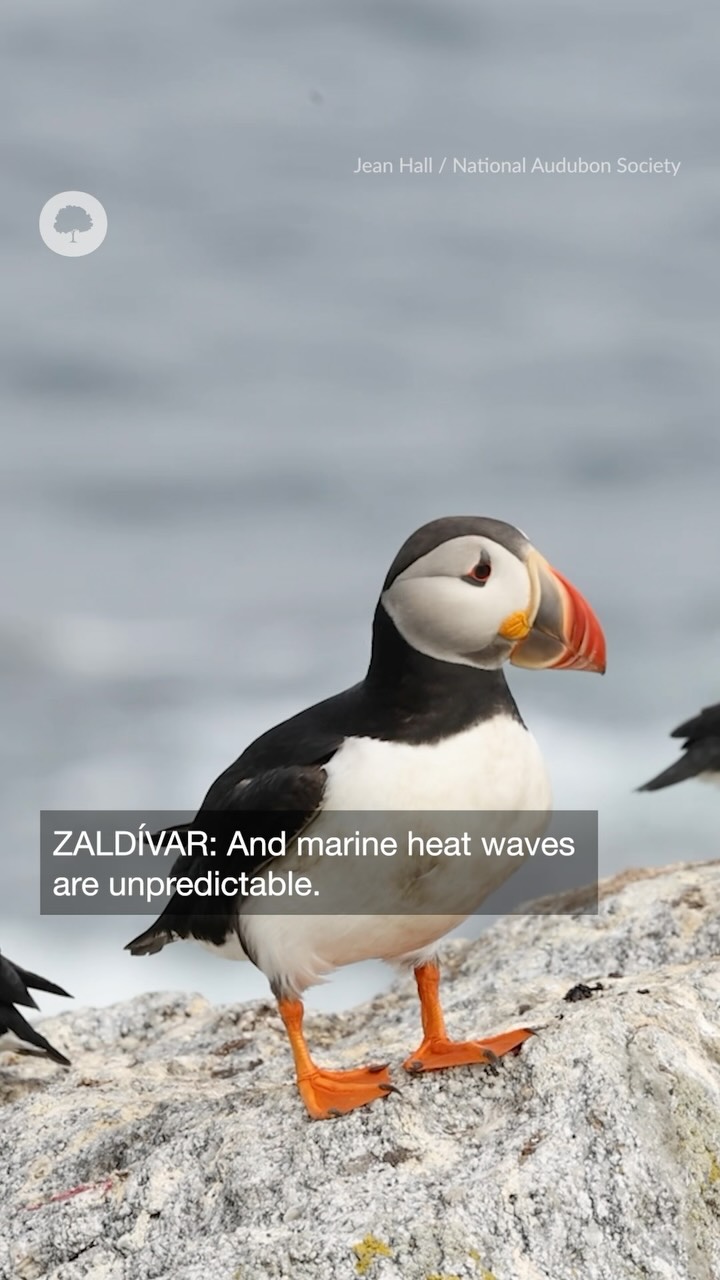
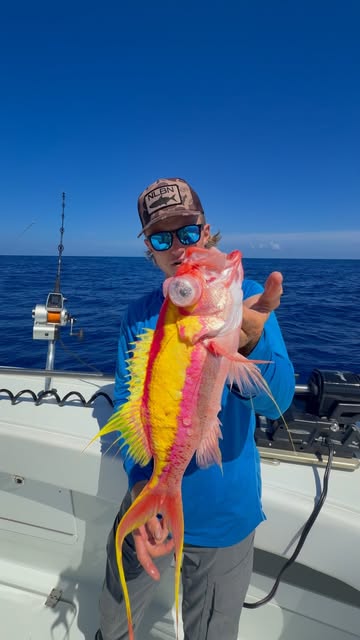
@ournewengland As oceans warm with climate change, marine heat waves are becoming more frequent. This can be a big problem for seabirds, like Atlantic puffins. Rapidly warming waters can make fish species that live in cooler water, like herring, scarce. Puffins have to swim farther to find those fish, or choose other, warmer water fish they might not usually eat and which are harder for their chicks, or pufflings, to eat. Puffins are also mostly loyal to their nesting areas. “If the food situation around that island changes and is not so good anymore, they don’t pack up and move to the next island. They keep trying at the same place they’ve always tried,” said Don Lyons, the Director of Conservation Science of Audubon’s Seabird Institute. And marine heat waves are unpredictable. They can last a week, a few months or even a few years or longer. “It’s like one day it’s normal temperatures and three days later it’s quite warm. So this phenomena happens very suddenly,” said marine ecologist and University of Washington (@uw_safs) professor Julia Parrish. “And so that’s kind of hard to plan for. You start a breeding season, everything’s fine. The system is fine. There’s a lot of food. And then suddenly in the middle of breeding it is not fine.” 🎤 Hosted, produced & edited by Raquel C. Zaldívar • @raqzal @ournewengland 📹 Visuals by Raquel C. Zaldívar, Zydalis Bauer @ournewengland, & Jean Hall @audubonsociety @seabirdinstitute 🎥 Additional visuals by the Cornell Lab of Ornithology | Macaulay Library @cornellbirds