Video #6550 · Vlog
Ancient ocean life educational showcasefrom @naturalhistorymuseum
The narrator explains what the area of modern-day Tennessee looked like 70 million years ago, showing a CGI recreation of an ancient ocean. They describe the ammonites that lived there, their characteristics, and their relation to modern squid, before transitioning to museum footage of fossils to correct a common misconception about when ammonites went extinct, citing new fossil evidence.
- 1State surprising historical context
- 2Introduce the key subject
- 3Present the established theory
- 4Reveal the updated truth
ConceptsBreakdownStrange but True
ElementsVoiceoverB-Roll CutawayText OverlayMotion Graphics
[05]
Hook analysis
What stops the scroll in the first 3 seconds
Title hook · 45%
This is what Tennessee looked like some 70 million years ago:
Verbal hook · 15%
This is what Tennessee looked like some seventy million years ago.
Visual hook · 40%
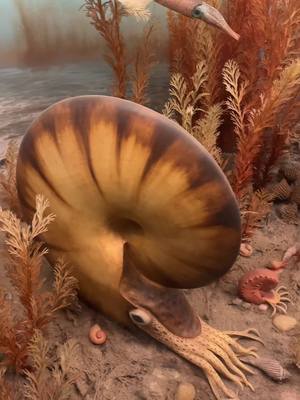
A high-quality CGI rendering of an ancient underwater ecosystem, featuring a large, shelled ammonite in the foreground and other extinct sea creatures swimming in the background.
[06]
Hook template
Steal this for your own video
This is what [familiar place] looked like [time period] ago:
- — This is what New York City looked like 10,000 years ago:
- — This is what the Sahara Desert looked like 6,000 years ago:
- — This is what your hometown looked like 200 million years ago:
[07]
Hook and payoff
The promise the opener makes, and how the video pays it back
Hook
Presents a familiar place or concept in an utterly alien historical context, creating immediate curiosity and cognitive dissonance (e.g., 'This is what [modern place] looked like [X] million years ago').
Payoff
Delivers the final, corrected piece of information, resolving the intellectual tension and leaving the viewer with a 'Knowledge Upgrade'—a new, surprising fact that replaces an old one.
[08]
Narrative framework
The structural pattern this video runs on
Framework
The Myth-Buster Funnel
To guide the viewer from a surprising, broad statement to a specific, myth-busting revelation about a single subject, creating a sense of intellectual discovery and satisfaction.
- 1
The World-Building Context
Provides the essential background information (the 'why' or 'how') that makes the hook plausible and establishes the setting for the main subject.
- 2
The Subject Introduction
Zooms in from the broad context to introduce the specific person, object, or concept that is the focus of the story.
- 3
The Definitional Deep Dive
Delivers key characteristics, attributes, and interesting facts about the subject, giving the viewer the necessary vocabulary and understanding to appreciate the coming revelation.
- 4
The Common Misconception
States the widely held belief, old theory, or common assumption about the subject, setting up an intellectual expectation that will be subverted.
- 5
The Evidentiary Reversal
Presents new evidence or a new perspective that directly challenges the common misconception, creating the narrative's climax.
Themes
- extinction
- scientific discovery
- deep time
- paleontology
Techniques
- CGI animation
- museum exhibit showcase
Trends
- educational content
- fact-based storytelling
Post caption
Ammonites were some of the most diverse organisms in the ancient ocean. The Museum holds one of the world’s largest collections of ammonites, containing nearly two million specimens that represent 300 million years of Earth’s history! #NaturalHistory #STEM #ammonites #fossils #creatorsearchinsights
Text overlays
title · beginning
This is what Tennessee looked like some 70 million years ago:
informational · beginning
During the Late Cretaceous,
contextual · beginning
TENNESSEE IN THE LATE CRETACEOUS PERIOD
PRESENT-DAY TENNESSEE
contextual · middle
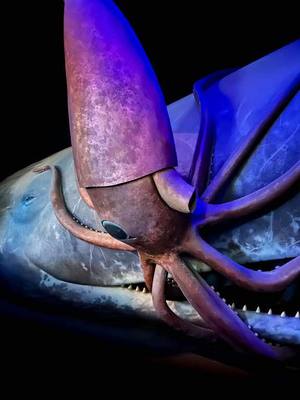
📍Milstein Hall of Ocean Life
informational · middle
Ammonites are extinct relatives of modern squid.
informational · middle
Until recently, most scientists thought ammonites went extinct around 66 million years ago, at the same time as large non-avian dinosaurs.
informational · end
Thanks to fossils from New Jersey and elsewhere, we now know that ammonite species may have lived thousands of years longer!
Transcript
This is what Tennessee looked like some seventy million years ago. During the late Cretaceous, sea levels were higher and much of North America was covered by water. Some of the animals seen here are ammonites. Amonites are extinct relatives of modern squid. They came in many different shapes and sizes and were among the ancient ocean's most common inhabitants. Shells protected their soft bodies while numerous tentacles emerged from the shell to catch prey, which ammonites ate with sharp beak like jaws. Until recently, most scientists thought ammonites went extinct around sixty six million years ago, at the same time as large no avian dinosaurs. Thanks to fossils from New Jersey and elsewhere, we now know that ammonite species may have lived thousands of years longer.