@orenmeetsworld
Instagram · Talking Head Edit
@orenmeetsworld Buying the thing gives the same brain response as doing the thing - the sociology and psychology of consumption

@orenmeetsworld
Instagram · Talking Head Edit
@orenmeetsworld Buying the thing gives the same brain response as doing the thing - the sociology and psychology of consumption
Performance
Video #39040 · Talking Head Edit
[01]
The speaker defines 'Gear Acquisition Syndrome,' a phenomenon where people buy expensive gear for hobbies instead of doing the actual work. He provides illustrative examples from running, photography, and coffee-making, explains the underlying brain chemistry that makes purchasing feel like accomplishment, and critiques how brands market identity over action, concluding with advice to start with the tools you already have.
[02]
[03]
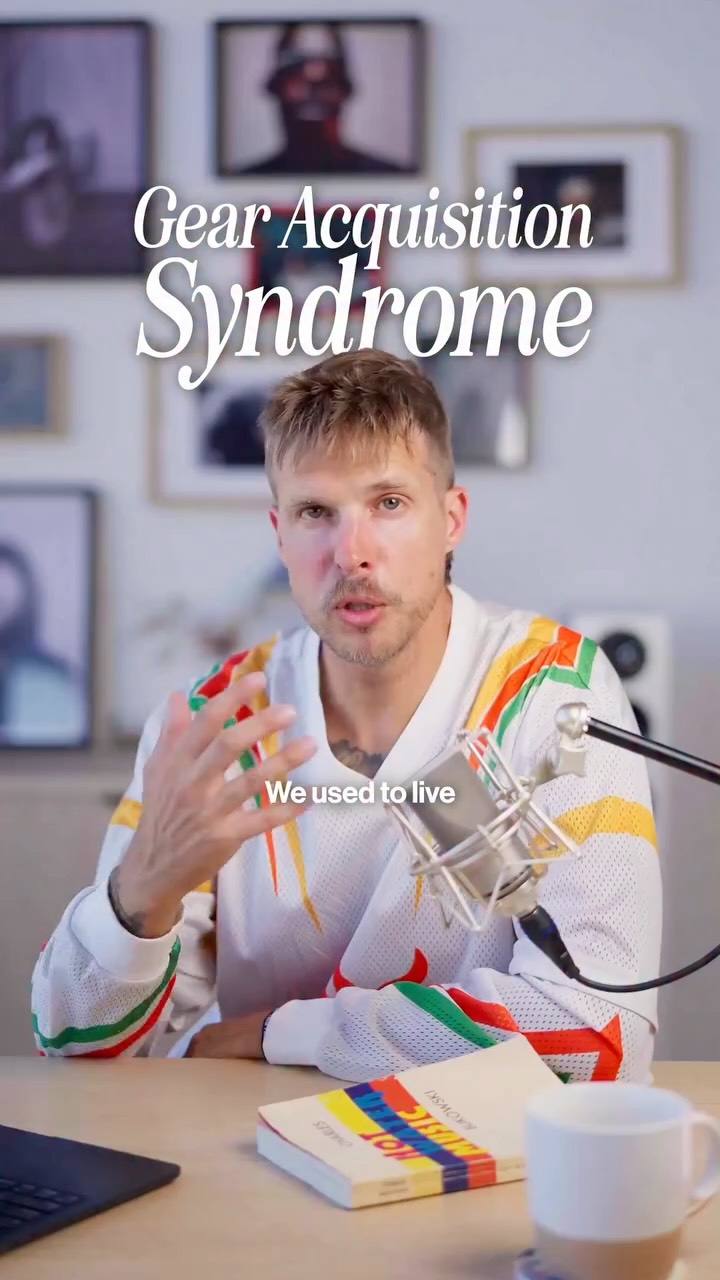 566.3K28.8×Critiquing consumerism in modern hobbies@orenmeetsworld · Breakdown
 1M55.6×Monologue over B-roll montage@wearecalamity_ · Cultural Rant
 4.2M108×Creator lists niche self-improvement habits@jun_yuh · Rapid Fire Listicle
 2M10.1×Aspirational montage arguing for using possessions@gstaadguy · Brand Manifesto
 249.8K31.4×Direct monologue about material attachment@sensei.nick · Anecdotal Philosophy
 392.7K16.8×Turn life goals into tangible projects@angel.agree · Motivational Mantra
 6.8M426.1×Philosophical monologue over aesthetic B-roll@wearecalamity_ · Brand Manifesto
 356.7KMonologue advice on dream jobs@bradley.thor · Hot Take
 126K15.8×Direct talking head mindset advice@sensei.nick · Hot Take
 259.3K1×Personal story about hobbies becoming work@anushcache · Vulnerable Monologue
 103.9K13.1×Greenscreen rant against hustle culture@iamfieldnotes · Cultural Rant
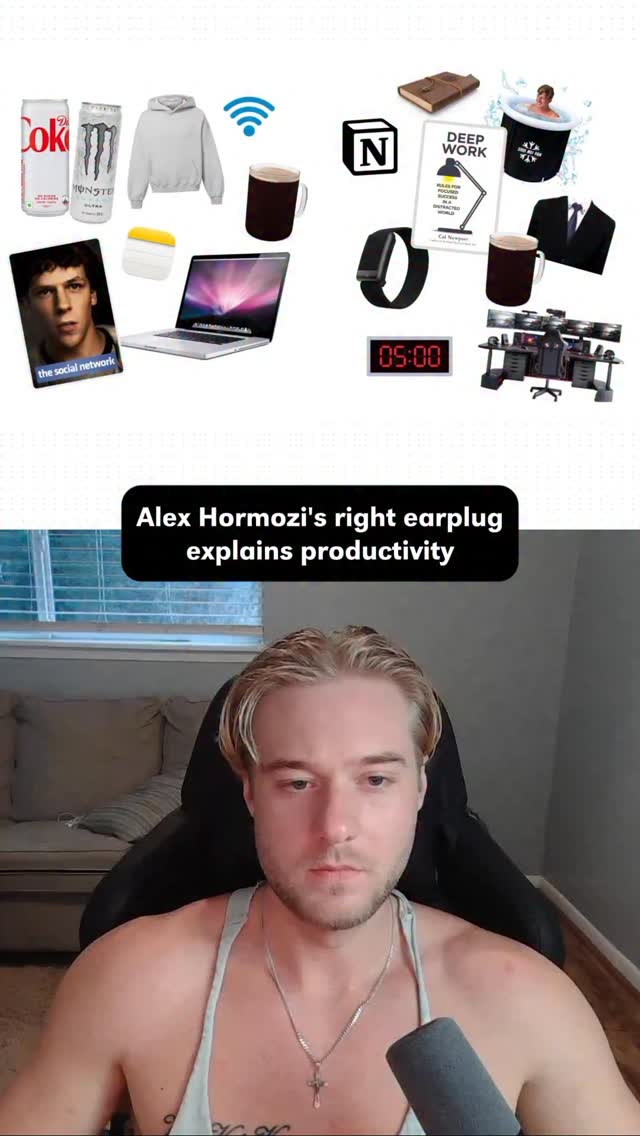 3.3M31.4×Comparing two different productivity styles@reecebrah · Hot Take
[04]
[05]
What stops the scroll in the first 3 seconds
Title hook · 55%
Gear Acquisition Syndrome
Verbal hook · 40%
We used to live our hobbies.
Visual hook · 5%
A medium shot of a speaker addressing the camera directly in a well-lit room, using expressive hand gestures to emphasize his point.
[06]
Steal this for your own video
We stopped . We started .
[07]
The promise the opener makes, and how the video pays it back
Hook
A provocative 'then vs. now' statement that introduces a cultural shift and a relatable problem, immediately positioning the viewer's experience within a larger trend.
Payoff
The Simple Antidote: After thoroughly deconstructing the problem, present a clear, simple, and empowering call to action that serves as the solution, leaving the viewer with an actionable takeaway and a sense of hope.
[08]
The structural pattern this video runs on
Framework
The Syndrome Diagnosis
To identify a common but unnamed behavioral pattern, give it a formal name, deconstruct the psychological reasons and external forces that cause it, and then provide a simple, empowering solution.
The Hyper-Specific Parable
Creates a fictional avatar to illustrate the problem with concrete, brand-specific details and quantifiable negative outcomes (e.g., money spent vs. progress made), making the abstract concept visceral and undeniable.
The Pattern Generalization
Explicitly states that the initial example is not an isolated case but a universal pattern, then provides 2-3 rapid-fire examples from different domains to prove its ubiquity and broaden the video's appeal.
The Direct Challenge
Pauses the narrative to pose a direct, introspective question to the audience, forcing them to shift from passive observation to active self-reflection.
The Syndrome Diagnosis
Gives the behavior a formal, credible-sounding name, which validates the viewer's feelings and transforms a personal failing into a recognized phenomenon.
The Effort vs. Expense Dichotomy
Frames the choice as a binary: the difficult, time-consuming 'real' path versus the easy, expensive 'shortcut' path, highlighting the illusion of progress through consumption.
The Neurological Explanation
Reveals the underlying psychological or biological reason why the shortcut is so tempting, explaining it as a 'brain trap' or 'glitch' that makes the viewer feel both understood and informed.
The Antagonist Reveal
Identifies an external entity (e.g., brands, marketers) that knowingly exploits this psychological weakness, shifting blame and creating a common enemy for the viewer and creator.
The Internal Monologue
Voices the viewer's own internal justifications for the behavior, demonstrating a deep understanding of their mindset and building a stronger connection.
Buying the thing gives the same brain response as doing the thing - the sociology and psychology of consumption
title · beginning
Gear Acquisition Syndrome
informational · beginning
HE HAS SPENT $1100
informational · beginning
AND RAN 0 MILES
title · beginning
THIS IS NOT A RUNNING STORY
title · middle
THE EXISTENTIAL QUESTION
title · middle
GEAR ACQUISITION
informational · middle
FREE 2-DAY DELIVERY
title · middle
IT IS OUR LITERAL BRAIN CHEMISTRY
title · end
AND THE BRANDS UNDERSTAND THIS PERFECTLY
title · end
ISN'T THAT WORTH EVERYTHING?
call-to-action · end
CHASING YOUR GOALS WITH WHAT YOU HAVE FIRST
call-to-action · end
YOU'LL BE SURPRISED HOW FAR YOU GET
Used to live our hobbies. Now we just buy into them. Mike decides he's becoming a runner. Before he logs a single mile, he buys Tracksmith Half Tights, a Garmin Phoenix Bandit Socks Satisfye Mothtech, and a pair of carbon plated AlphaFlys designed for a marathon he has not signed up for. He has spent $1,100 and ran zero miles. This is not a running story. The guy who wants to get into photography buys a Fuji x 105. How those photos coming, bro? He shot his coffee at best, and the coffee incidentally comes from a La Marzocco micro on his better, purchased during his espresso phase. He still gets most of his coffee from Rank Street. The existential question, are you buying something you need or are you procrastinating doing the work? Musicians named this decades ago, gear acquisition syndrome, but stopped being a musician problem and has become the default way we relate to almost every hobby. Becoming a runner worst six months of unglamorous mornings. Becoming a person who owns running gear worst $500 Free two day delivery. The purchase gives you the identity immediately. It's a trap because our brains treat the purchase or the post like doing the act. It is our literal brain chemistry. Announce you're writing a novel and the urge to write it drops. And the brands understand this perfectly. They're selling the person you plan to be on Monday. The outfit looks best. It looks sick. The color profiles on this camera, they make everything look good. The camera's how they did it. Future you is gonna be fit. Isn't that worth everything? Future you is gonna make money taking photos. The cameras are worth it. I'm going to start social media once I get the Osmo. In a world of insane over consumption, I can recommend nothing more than chasing your goals with what you have first. You'll be surprised how far you get.